To create a welcoming dining room atmosphere, choose music that matches the occasion—soft instrumentals for intimacy or lively tunes for energy—and keep the volume at a level that encourages conversation. Incorporate acoustic treatments like soft furnishings and sound-absorbing materials to balance sound and prevent echoes. Consider your room’s size and shape to optimize acoustics, ensuring your sound design enhances mood and comfort. Keep exploring to discover more ways to craft the perfect dining ambiance.
Key Takeaways
- Choose music that matches the desired atmosphere, such as soft instrumentals for intimacy or lively tunes for energy.
- Use acoustic treatments like carpets, wall hangings, and panels to balance sound and reduce echo.
- Adjust music volume to support conversation without overpowering diners or causing distraction.
- Incorporate soft furnishings and sound-absorbing materials to improve sound clarity in various room sizes and shapes.
- Select soundscapes or ambient music that complement decor and lighting to enhance the overall dining experience.
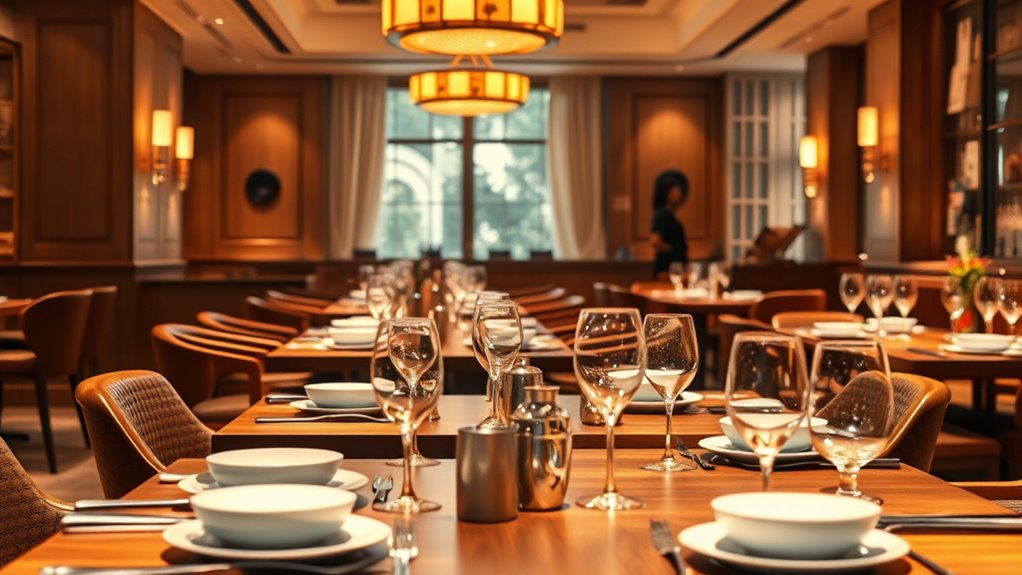
Creating the right atmosphere in a dining room often depends on more than just the decor and lighting—it also involves thoughtful music and sound design. The background ambiance you choose can profoundly influence the mood, making your space feel inviting, relaxed, or lively. To achieve this effectively, you need to contemplate how sound interacts with your environment, which brings acoustic treatment into focus. Proper acoustic treatment ensures that sound levels are balanced, echo is minimized, and the overall experience is comfortable for your guests.
Creating an inviting dining atmosphere relies on music, sound design, and proper acoustic treatment.
When you select background ambiance, think about how the music complements the setting. Soft instrumental tunes or ambient soundscapes can foster a calm, intimate atmosphere, perfect for quiet dinners or romantic evenings. Conversely, a more lively playlist might energize a bustling family gathering or celebratory event. The key is to choose music that aligns with your desired vibe and plays at a volume that allows conversation without shouting. This is where acoustic treatment plays a crucial role. By strategically adding sound-absorbing materials—such as fabric wall hangings, carpets, or acoustic panels—you can prevent sound from bouncing off hard surfaces, which often leads to excessive echo and muddled conversations.
Implementing acoustic treatment isn’t just about reducing noise; it’s about creating a balanced sound environment. You want your background ambiance to be present but not overpowering. When sound is absorbed properly, you get clearer clarity and a more refined listening experience. This allows background music to serve as a subtle enhancement rather than a distraction. If your dining space has reflective surfaces like glass or tile, these can amplify sound, making acoustic treatment even more necessary. Consider adding plush furnishings or decorative elements that double as acoustic softeners.
Furthermore, the right sound design considers the size and shape of your room. Larger spaces may need more extensive acoustic treatment to prevent sound from dissipating or echoing. Smaller rooms might require less, but even then, strategic placement of soft furnishings can make a noticeable difference. By controlling the background ambiance with the right acoustic treatment, you ensure that music enhances the atmosphere without overwhelming conversation. The goal is a harmonious environment where sound complements the dining experience, making every meal more enjoyable and memorable. Additionally, incorporating sound absorption materials can significantly improve the acoustics by reducing unwanted reflections and ensuring clearer sound quality throughout the space.
Frequently Asked Questions
How Does Background Music Influence Diners’ Eating Pace?
You’ll find that music tempo directly affects your eating pace—faster tempos encourage quicker bites, while slower ones make you linger longer. Sound volume also plays a role; louder music can energize or distract, potentially speeding up your meal, whereas softer sounds create a relaxed atmosphere, encouraging you to savor your food. By adjusting these elements, you influence how quickly or slowly you dine, shaping your overall experience.
What Are the Best Soundproofing Options for Noisy Dining Spaces?
You can effectively reduce noise in your dining space by installing acoustic panels, which absorb sound and minimize echoes. Additionally, sealing gaps around doors with high-quality door seals prevents sound from entering or escaping, creating a quieter environment. Combining these options offers a practical, cost-effective solution to improve comfort and acoustics, ensuring your diners enjoy a peaceful, enjoyable experience without distractions from outside noise.
How Can Sound Design Enhance the Restaurant’s Ambiance?
Did you know that good sound design can boost customer satisfaction by 20%? You can enhance your restaurant’s ambiance by carefully selecting background music that complements your brand and creates acoustic comfort. Use sound branding to reinforce your theme, and adjust sound levels to maintain a pleasant environment. Thoughtful sound design makes diners feel relaxed and engaged, transforming an ordinary meal into a memorable experience.
What Genres of Music Are Most Suitable for Fine Dining?
You should choose genres like classical melodies and jazz improvisations for fine dining. These styles create a sophisticated, relaxed atmosphere that encourages conversation without overpowering the senses. Classical melodies bring elegance and calm, while jazz improvisations add a touch of spontaneity and charm. Both options help set a refined tone, making your guests feel comfortable and pampered, enhancing their overall dining experience.
How Does Sound Design Impact Customer Satisfaction and Return Rates?
You notice that well-crafted sound design boosts customer satisfaction and return rates. For example, a restaurant using sound branding and music therapy creates a relaxing atmosphere, encouraging diners to linger and revisit. When the ambiance aligns with your brand, it enhances the overall experience, making guests feel valued. This emotional connection increases loyalty, highlighting how thoughtful sound design directly influences customer retention and positive reviews.
Conclusion
By thoughtfully selecting music and sound design for your dining room, you create a welcoming atmosphere that encourages conversation and relaxation. Did you know that background music can increase dining time by up to 20%? When you choose the right sounds, you not only elevate your guests’ experience but also boost your overall ambiance. So, experiment with different tunes and textures—you might be surprised at how much a well-crafted soundscape can transform your space.