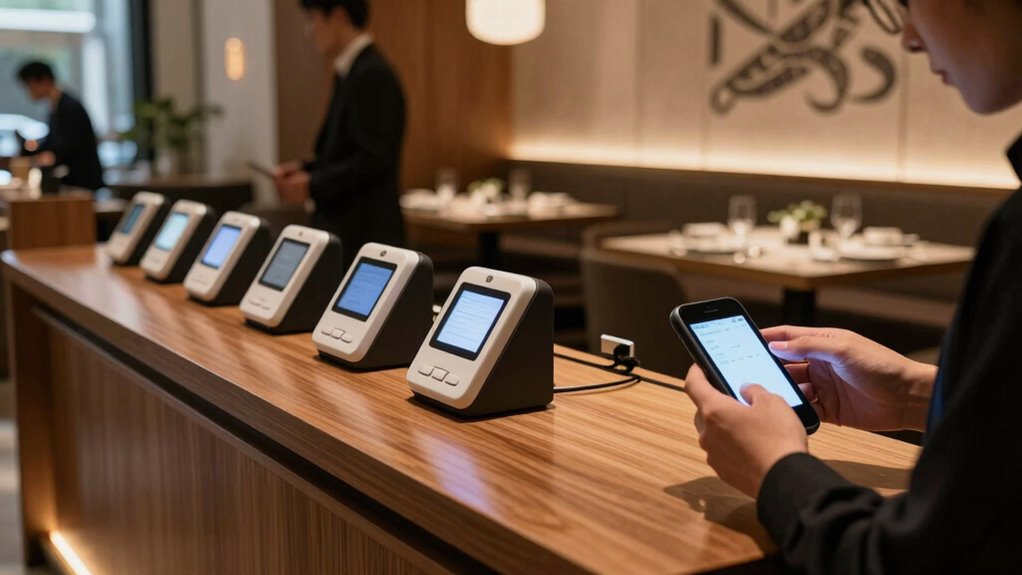
Restaurant pager systems improve your waiting experience by allowing you to relax, browse menus, or visit the restroom without feeling crowded or exposed. They keep you discreetly informed when your table is ready through silent alerts like lights or vibrations, reducing chaos and frustration. These systems also help staff work more efficiently, focusing on service rather than crowd control. Want to discover how this modern solution can seamlessly fit your restaurant? Stay tuned for more insights.

Get kitchen staples and gadgets delivered free with Prime
- Fast, free delivery on millions of items
- Prime Video, Amazon Music and more included
- Member-only deals all year
Key Takeaways
- They allow customers to relax, browse menus, or visit restrooms during wait times without crowding the host stand.
- Silent alerts like vibrations or lights discreetly notify diners when their table is ready, ensuring privacy.
- Integration with digital platforms provides real-time updates and automatic notifications, streamlining communication.
- By reducing congestion and wait-related chaos, they enable staff to focus more on quality service.
- Overall, they create a smoother, more pleasant waiting experience that balances efficiency with customer comfort.

Ever wondered how restaurants keep their customers waiting happily while managing busy dining rooms? The answer lies in the clever use of restaurant pager systems. These devices streamline the waiting experience, allowing customers to relax without constantly checking the door or crowding the host stand. With a pager in hand, you’re free to browse the menu, chat with your companions, or visit the restroom, knowing that you’ll be notified as soon as your table is ready. This approach minimizes frustration and makes the entire process more pleasant for everyone involved.
Restaurant pager systems make waiting enjoyable and discreet, letting customers relax while staying informed about their table.
One of the key advantages of modern restaurant pager systems is their focus on customer privacy. Unlike traditional call-in methods, which can sometimes create a noisy or chaotic environment, pagers keep the waiting process discreet. When your number or name is called, you’re alerted silently with vibrations or lights, so you don’t feel singled out or exposed in front of other diners. This privacy boost enhances your overall experience, making the wait feel less like an inconvenience and more like a seamless part of the dining journey. Additionally, the use of technology integration ensures these systems are reliable and easy to manage. Incorporating biodiversity and sustainable practices into the design and operation of these systems can also promote environmentally friendly initiatives within the restaurant industry.
Technology integration plays a major role in making these pager systems effective and easy to use. Many systems now connect to digital platforms, allowing restaurants to track wait times, send automatic updates, or even send reminders via text message. This integration means you don’t need to be glued to your seat or the host stand. Instead, you’re empowered to enjoy your time, knowing that the system is working behind the scenes to keep you informed. If your table is ready, the pager vibrates or flashes, and you can head back whenever you’re ready, without any fuss. Online timers and time-tracking tools can help restaurants monitor and optimize their wait management, further improving the customer experience. Incorporating reliable technology is crucial to ensure these systems perform consistently and effectively.
Restaurants benefit from this setup as well. It reduces congestion at the host stand, freeing up staff to focus on delivering excellent service rather than managing crowds. It also enables staff to communicate more efficiently with guests, providing updates or estimated wait times through integrated systems. This not only enhances customer satisfaction but also improves overall operational flow. Moreover, this system can help restaurants manage peak hours more smoothly, reducing the stress on staff and improving overall efficiency.
In the end, restaurant pager systems are a smart solution for balancing customer privacy, leveraging technology, and maintaining a smooth, efficient dining environment. They turn what used to be a potentially frustrating wait into a more comfortable, transparent, and enjoyable experience. Whether you’re a diner seeking convenience or a restaurant owner aiming for better service management, these systems make waiting a little easier and a lot more discreet.
As an affiliate, we earn on qualifying purchases.
Frequently Asked Questions
How Do Restaurant Pager Systems Integrate With Existing Reservation Software?
You can integrate restaurant pager systems with your reservation software through reservation synchronization, ensuring bookings automatically update the pager system. Most modern pager systems are designed for system compatibility, allowing seamless data sharing between platforms. You simply connect the two via APIs or compatible software plugins, reducing manual input and minimizing errors. This integration streamlines your workflow, improves guest experience, and keeps wait times efficiently managed without overcomplicating your service.
What Is the Typical Lifespan of a Restaurant Pager Device?
You can expect a restaurant pager device to last around 2 to 5 years, depending on battery longevity and device durability. High-quality models often have rechargeable batteries and sturdy builds, extending their lifespan. Proper care, like avoiding water exposure and gentle handling, can also enhance longevity. Regular maintenance and choosing reliable brands help guarantee your pagers stay functional and effective, providing a smooth waiting experience for your customers.
Are Restaurant Pager Systems Cost-Effective for Small Establishments?
Like a well-tuned rotary phone, restaurant pager systems can be cost-effective for small establishments. They offer a clear cost analysis, highlighting savings on staff time and customer satisfaction. When considering budget considerations, these systems streamline operations without adding complexity. While initial investment might seem high, the improved guest experience often outweighs costs, making pagers a smart, efficient choice for small venues aiming to modernize without overextending their resources.
Can Pager Systems Be Customized for Branding Purposes?
Yes, pager systems can be customized for branding purposes. You can incorporate your visual identity through branding customization options, such as adding your logo, colors, or unique designs to the pagers. This not only reinforces your restaurant’s branding but also creates a cohesive look that enhances the customer experience. Customizable pagers make your establishment stand out, ensuring your branding remains consistent and memorable during every wait.
What Security Measures Protect Guest Information in Pager Systems?
You’re protected by security measures like data encryption, which safeguards guest information during transmission. Additionally, strict privacy policies guarantee guest privacy, limiting access to personal data. Many systems also anonymize data, so even if a breach occurs, sensitive details remain secure. These measures work together to keep your information safe, allowing you to enjoy the convenience of pager systems without worrying about privacy breaches or unauthorized access.
Conclusion
Implementing a restaurant pager system truly transforms the waiting experience. For instance, imagine you’re dining at a busy café, and the pager buzzes softly when your table is ready, letting you explore nearby shops without worry. This simple technology keeps customers relaxed and engaged, boosting satisfaction and loyalty. By streamlining communication, you not only enhance service efficiency but also create a more enjoyable, stress-free atmosphere—making every visit memorable and encouraging repeat business.
NFL season / tailgating Picks
team gear
As an affiliate, we earn on qualifying purchases.