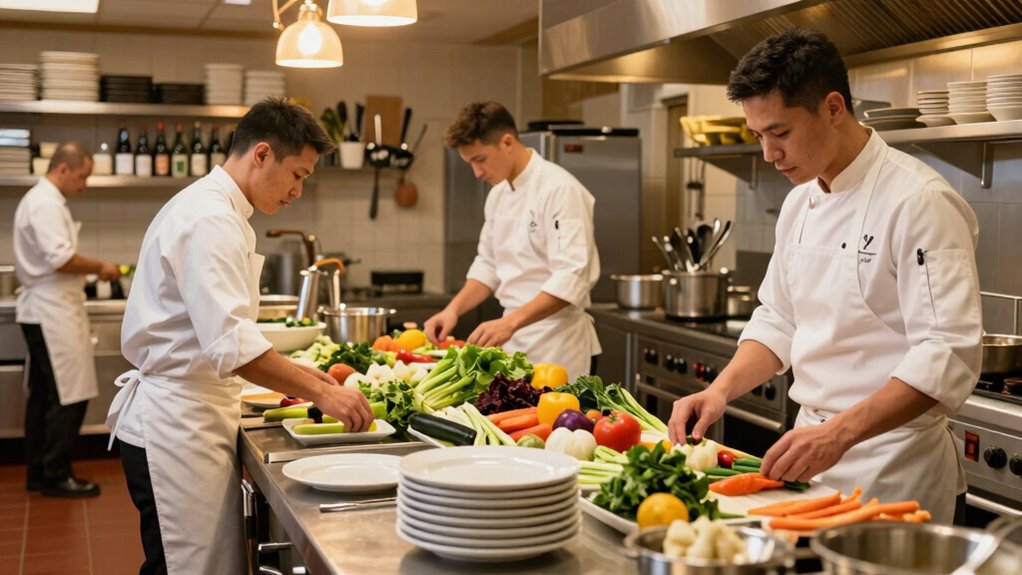

To prepare your restaurant for seasonal volume shifts, focus on flexible staffing, cross-training employees, and adjusting schedules to prevent burnout. Simplify your menu to highlight seasonal ingredients and quick-to-prepare items, boosting efficiency and customer satisfaction. Use technology to streamline operations and manage inventory effectively. Planning ahead for supply chain fluctuations and making strategic operational adjustments guarantees smooth service during busy or slow periods. Keep exploring for more strategies to stay resilient year-round.

Get kitchen staples and gadgets delivered free with Prime
- Fast, free delivery on millions of items
- Prime Video, Amazon Music and more included
- Member-only deals all year
Key Takeaways
- Cross-train staff to ensure flexible coverage and prevent burnout during seasonal fluctuations.
- Streamline the menu to focus on seasonal ingredients and quick-to-prepare items for efficiency.
- Utilize technology and automation to enhance operational efficiency and manage busy periods smoothly.
- Adjust inventory levels proactively based on seasonal demand and supply chain variability.
- Develop strategic plans anticipating demand changes, enabling quick operational and service adjustments.
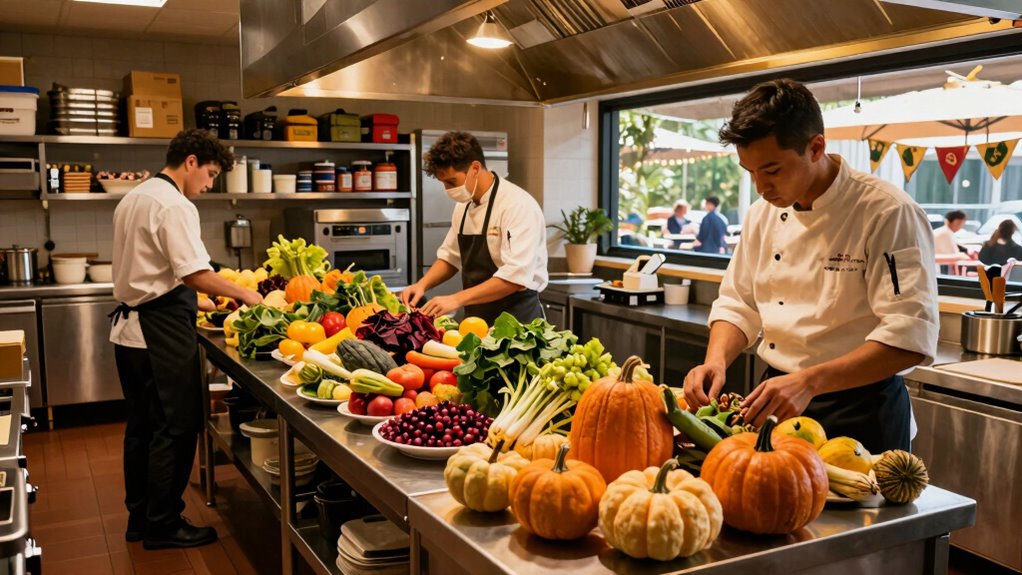
As seasonal volume shifts approach, it’s essential to proactively prepare your restaurant to handle fluctuating customer demand. These periods can bring a surge of guests or a slowdown, and your ability to adapt quickly can make or break your success. One of the most effective ways to do this is by focusing on staff training. Ensuring your team is well-prepared means more than just reviewing procedures; it involves cross-training employees so they can seamlessly fill multiple roles. During busy times, this flexibility keeps service smooth and maintains quality, preventing staff burnout and customer dissatisfaction. Additionally, training should emphasize efficiency, communication, and upselling techniques, which can boost revenue even when customer volume shifts unexpectedly.
Along with staff readiness, you need to contemplate menu adjustments that cater to seasonal changes. This doesn’t mean completely overhauling your offerings but refining your menu to highlight items that are in season or easier to prepare during peak times. Simplifying or streamlining menu options can improve kitchen throughput, reduce wait times, and enhance the overall guest experience. If you anticipate a surge, think about introducing specials or limited-time dishes that are quick to prepare and popular with your clientele. Conversely, during slower periods, you can promote high-margin items or comfort foods to encourage spending. Flexibility in your menu also allows you to manage inventory more effectively and reduce waste, which is vital during seasonal transitions when supply chains may fluctuate. Incorporating automated cleaning solutions can also help maintain hygiene standards efficiently during high-volume periods, ensuring a safe environment for both staff and guests. Staying updated on technology advancements can further streamline operations and improve overall efficiency during these times. Moreover, understanding how to manage seasonal supply fluctuations can help prevent shortages and excess inventory, ultimately supporting smoother operations. Recognizing the importance of staff adaptability can also contribute significantly to maintaining a resilient and responsive team during unpredictable shifts.
Preparing your restaurant for seasonal volume shifts is a balancing act that requires strategic planning and execution. By investing in thorough staff training, you empower your team to handle busy periods confidently while maintaining high service standards. Simultaneously, making thoughtful menu adjustments ensures your kitchen can operate efficiently without sacrificing quality. These proactive measures not only help you manage the immediate demands of seasonal changes but also position your restaurant for sustained success during unpredictable times. The key is staying adaptable—anticipating changes before they happen and adjusting your operations accordingly. With the right combination of staff training and menu flexibility, you’ll be better equipped to weather seasonal fluctuations and keep your customers satisfied year-round.
Products Worth Considering

Instant Pot InstantChill Ice Cream Maker with Rolled Ice Cream Cold Plate, 2-Pint

De’Longhi Classic Matte Black Espresso Machine with Milk Frother

Le Creuset Signature Enameled Cast Iron Round Dutch Oven, 5.5 qt, Deep Teal
As an affiliate, we earn on qualifying purchases.
Frequently Asked Questions
How Can Technology Help Manage Seasonal Staffing Fluctuations?
Technology helps you manage seasonal staffing fluctuations by utilizing predictive analytics, which forecast busy periods based on historical data. You can then optimize staff scheduling accordingly, ensuring you have enough employees during peak times without overstaffing during slow periods. This proactive approach minimizes labor costs, improves service quality, and reduces burnout. By leveraging these tools, you stay adaptable and maintain smooth operations despite seasonal volume shifts.
What Are Cost-Effective Ways to Increase Inventory Flexibility?
You can drastically boost your inventory flexibility through smart inventory management and strong supplier relationships. Negotiate flexible contracts and build partnerships that allow quick adjustments in order quantities. Utilize just-in-time ordering to reduce excess stock and respond swiftly to changing demand. These strategies help you avoid costly overstocking or shortages, making your inventory adaptable without breaking the bank, ensuring you’re ready for any seasonal surge with agility and efficiency.
How Should Menu Offerings Change Seasonally?
You should adapt your menu offerings seasonally by incorporating seasonal ingredient sourcing, which keeps your dishes fresh and appealing. Focus on menu diversification to highlight ingredients like pumpkins in fall or fresh berries in summer, attracting diverse customers. Regularly update your menu to reflect these seasonal shifts, ensuring you optimize your inventory and meet customer expectations while maintaining culinary excitement throughout the year.
What Training Methods Improve Staff Adaptability?
Ever wondered how to boost your staff’s adaptability? You should implement staff cross training and flexible scheduling. Cross training allows your team to handle various roles, making them more versatile during busy seasons. Flexible scheduling guarantees coverage during peak times without burnout. This combination keeps your restaurant agile, improves service quality, and prepares your team for seasonal volume shifts, ensuring smooth operations no matter the season.
How Can Marketing Strategies Be Adjusted for Seasonal Peaks?
To adjust marketing strategies for seasonal peaks, you should focus on boosting customer engagement through targeted promotions and timely campaigns. Use promotional timing to align offers with seasonal trends, ensuring they reach customers when they’re most receptive. Leverage social media, email, and local advertising to create buzz. By engaging your audience actively and scheduling promotions strategically, you’ll attract more patrons and maximize revenue during busy seasons.
Conclusion
Preparing for seasonal volume shifts might seem overwhelming, but with proactive planning, you’ll stay ahead of the rush. Just remember, it’s not about overstocking or overstaffing—focus on flexibility and smart inventory management. Some worry it’s too complex, but breaking tasks into manageable steps makes it easy. Embrace the change, adapt quickly, and your restaurant will thrive no matter the season. Staying ready ensures a smooth experience for your staff and your guests alike.