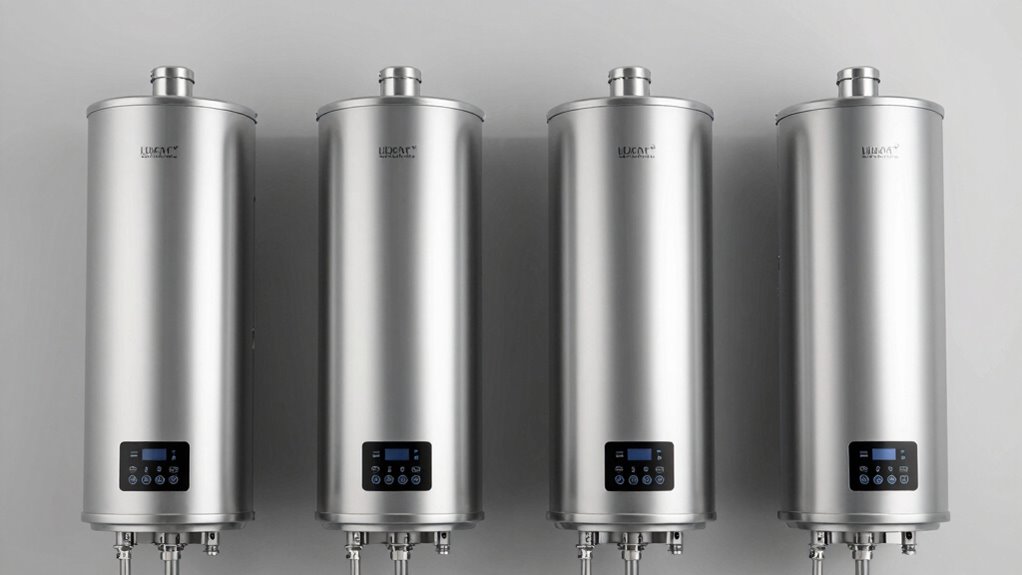

If you’re searching for an 80-gallon commercial water heater, you’ll find a range of options that balance capacity, efficiency, and cost. Among the top picks, the Rinnai REHP65 stands out for its high capacity and energy efficiency, making it ideal for larger businesses or busy facilities. The Senville Hybrid Heat Pump offers excellent energy savings but comes with a higher upfront cost and installation considerations. Meanwhile, the Rheem PROE50 provides dependable performance suitable for mid-sized needs but lacks some of the advanced efficiency features of the premium models. Each of these choices involves specific tradeoffs, whether in initial investment, installation complexity, or energy savings, helping you narrow down based on your priorities.

Get kitchen staples and gadgets delivered free with Prime
- Fast, free delivery on millions of items
- Prime Video, Amazon Music and more included
- Member-only deals all year
Key Takeaways
- The Rinnai REHP65 offers the highest capacity and efficiency but requires professional installation and a 240V supply.
- Hybrid heat pump models like Senville and Rinnai REHP50 excel in energy savings but come at a higher purchase and installation cost.
- For smaller budgets or simpler setups, Rheem‘s PROE50 provides reliable hot water without the advanced efficiency features.
- Capacity and energy efficiency are the main tradeoffs; larger, more efficient units often demand more complex installation.
- Choosing the right model depends on balancing upfront costs, energy savings, and household or business size.
| Senville Hybrid Heat Pump Electric Water Heater, 50 Gallon, ENERGY STAR |  | Best for Energy Efficiency and Long-Term Savings | Capacity: 50 Gallons | UEF Rating: 3.75 | First Hour Rating: 69 gallons | VIEW ON AMAZON | See Our Full Breakdown |
| Rinnai REHP50 Electric Heat Pump Water Heater, 50 Gallon, Energy Star |  | Best for Residential Efficiency and Reliability | Capacity: 50 gallons | UEF: 3.75 | First-hour delivery: 73 gallons | VIEW ON AMAZON | See Our Full Breakdown |
| Rinnai REHP65 Electric Heat Pump Water Heater 65 Gallon Energy Star |  | Best for Larger Households and High Capacity | Capacity: 65 gallons | UEF: 4.00 | First-hour delivery: Up to 91 gallons | VIEW ON AMAZON | See Our Full Breakdown |
| Rheem PROE50 M2 RH95 50-Gallon Residential Electric Water Heater |  | Best for Dependability and Budget-Friendly Performance | Capacity: 50 gallons | Amperage: 18.75 Amps | Features: Automatic thermostat, Anode rod, Enhanced-flow brass drain valve | VIEW ON AMAZON | See Our Full Breakdown |
| Rinnai REHP65 Electric Heat Pump Water Heater 65 Gallon Energy Star |  | Best for High Efficiency and Demanding Large Households | Capacity: 65 gallons | UEF: 4.00 | First-hour delivery: Up to 80 gallons | VIEW ON AMAZON | See Our Full Breakdown |
| commercial water heater 80 gallon | Capacity | Warranty | UEF | First-hour delivery |
|---|---|---|---|---|
| Senville Hybrid Heat Pump Elec | 50 Gallons | 7-year parts, 10-year compressor | — | — |
| Rinnai REHP50 Electric Heat Pu | 50 gallons | 10 years on tank and parts | 3.75 | 73 gallons |
| Rinnai REHP65 Electric Heat Pu | 65 gallons | 10 years on tank and parts, 1 year labor | 4.00 | Up to 91 gallons |
| Rheem PROE50 M2 RH95 50-Gallon | 50 gallons | — | — | — |
| Rinnai REHP65 Electric Heat Pu | 65 gallons | 10 years on tank and parts, 1 year labor | 4.00 | Up to 80 gallons |
More Details on Our Top Picks
Senville Hybrid Heat Pump Electric Water Heater, 50 Gallon, ENERGY STAR
The Senville Hybrid Heat Pump distinguishes itself with its exceptional energy-saving capabilities, extracting heat from the air to cut electricity use by up to 70%. This makes it a compelling choice for those prioritizing lower utility bills and environmental impact. Compared to traditional electric models, it’s more complex to install and has a higher upfront cost, partly due to its hybrid technology and certifications. Its 50-gallon capacity is suitable for medium to large households but might fall short for very high-demand commercial settings. The reliance on ambient air temperature means performance can vary, especially in colder environments.
Pros:- Energy-saving technology reduces electricity bills by up to 70%
- High efficiency with a 3.75 UEF rating
- Long-lasting with extensive warranties
Cons:- Higher upfront cost compared to standard electric water heaters
- May require professional installation due to complexity
- Performance depends on ambient air temperature
Best for: Medium to large households seeking significant energy savings
Not ideal for: Businesses or environments requiring larger capacity or in colder climates
- Capacity:50 Gallons
- UEF Rating:3.75
- First Hour Rating:69 gallons
- Certifications:UL, AHRI, ENERGY STAR
- Warranty:7-year parts, 10-year compressor
Our verdict“A smart choice for eco-conscious households willing to invest in long-term savings.”
Rinnai REHP50 Electric Heat Pump Water Heater, 50 Gallon, Energy Star
The Rinnai REHP50 offers a balanced mix of capacity, efficiency, and durability, making it well-suited for residential use. Its high first-hour delivery of 73 gallons ensures ample hot water, even during peak demand. As a heat pump model, it extracts heat from the air, significantly reducing energy costs—especially attractive for eco-conscious homeowners. Its 10-year warranty on the tank and parts adds peace of mind. Installation requires a 240V, 30A electrical connection, which might elevate initial setup costs and complexity. This model’s focus on residential environments limits its suitability for larger commercial facilities.
Pros:- High UEF of 3.75 for excellent energy efficiency
- High first-hour delivery, suitable for busy households
- Durable glass-lined steel tank with long warranty
Cons:- Requires 240V / 30A electrical connection
- Potentially higher initial installation cost
- Limited to residential use
Best for: Homeowners or small businesses seeking reliable, efficient hot water
Not ideal for: Large commercial settings or scenarios needing very high capacity
- Capacity:50 gallons
- UEF:3.75
- First-hour delivery:73 gallons
- Warranty:10 years on tank and parts
- Voltage:240V
Our verdict“A dependable, efficient option perfect for residential use with moderate hot water needs.”
Rinnai REHP65 Electric Heat Pump Water Heater 65 Gallon Energy Star
The Rinnai REHP65 extends capacity to 65 gallons while maintaining impressive energy efficiency, with a UEF of 3.90 and a high first-hour delivery of up to 91 gallons. Designed for bigger households or small commercial environments, it offers demand-response capabilities that can cut costs during peak hours. Its durable glass-lined tank and 10-year warranty ensure longevity. However, the model requires a 240V, 30A connection, and installation complexity can be a concern. Its higher capacity and efficiency make it a strong contender for larger households, but it might be overkill for smaller setups.
Pros:- High UEF of 4.00 for maximum energy savings
- Large capacity with high first-hour delivery
- Demand-response feature reduces costs during peak times
Cons:- Requires professional installation and 240V/30A supply
- Higher initial cost compared to smaller units
- Limited refrigerant options
Best for: Large households or small commercial operations needing high hot water volume
Not ideal for: Small households or environments with limited electrical capacity
- Capacity:65 gallons
- UEF:4.00
- First-hour delivery:Up to 91 gallons
- Warranty:10 years on tank and parts, 1 year labor
- Refrigerant:R134a
Our verdict“Ideal for larger households prioritizing efficiency and capacity, with some installation complexity.”
Rheem PROE50 M2 RH95 50-Gallon Residential Electric Water Heater
The Rheem PROE50 provides reliable hot water for households with 3-5 people, offering a straightforward, space-saving design. While it doesn’t feature advanced energy-saving tech like heat pumps, it’s a proven performer with essential features such as an automatic thermostat, anode rod, and a durable tank. Its 50-gallon capacity makes it suitable for medium-sized households but might fall short under very high demand. The absence of a specific energy efficiency rating means it’s more about dependability than cutting-edge savings, making it an appealing option for budget-conscious buyers or those with simple installation needs.
Pros:- Reliable performance with essential features
- Compact, space-saving design
- Durable tank with anode protection
Cons:- Limited to electric models without advanced efficiency
- No specific energy efficiency rating provided
- Capacity may be insufficient for high-demand scenarios
Best for: Homes needing dependable hot water with lower upfront investment
Not ideal for: Large households or energy-conscious users
- Capacity:50 gallons
- Amperage:18.75 Amps
- Features:Automatic thermostat, Anode rod, Enhanced-flow brass drain valve
- Tank Material:Steel
- Certifications:UL
Our verdict“A straightforward, reliable choice for smaller households seeking dependable hot water at a lower cost.”
Rinnai REHP65 Electric Heat Pump Water Heater 65 Gallon Energy Star
The Rinnai REHP65 stands out for its high efficiency with a UEF of 4.00 and a 65-gallon capacity, making it ideal for large families or commercial settings. It leverages demand-response technology to optimize energy use, which can significantly cut operational costs. The model’s durable glass-lined tank and 10-year warranty provide peace of mind, but its installation demands a 240V/30A connection and professional setup. Its advanced features and large capacity make it a strong contender for those who need a high-performing, energy-efficient solution but are prepared for the installation complexity.
Pros:- Highest UEF of 4.00 among these options
- Large capacity suitable for demanding use
- Demand-response capabilities reduce costs
Cons:- Requires professional installation and a 240V/30A supply
- Higher upfront cost
- Limited refrigerant options
Best for: Large households or small commercial setups prioritizing efficiency
Not ideal for: Smaller households or users with limited electrical capacity
- Capacity:65 gallons
- UEF:4.00
- First-hour delivery:Up to 80 gallons
- Warranty:10 years on tank and parts, 1 year labor
- Refrigerant:R134a
Our verdict“A premium, high-capacity choice for those focused on maximum efficiency and performance.”
How We Picked
Our selection process centered on key factors like capacity, energy efficiency, durability, and ease of installation. We prioritized models with proven certifications such as ENERGY STAR, high first-hour delivery rates, and long warranties. To ensure relevance, we compared performance metrics like the Uniform Energy Factor (UEF) and user-friendly features for residential and light commercial use. Each product was evaluated for tradeoffs like upfront cost versus long-term savings, installation complexity, and suitability for different household sizes or business needs. This approach ensures that the recommended products cover a broad spectrum of requirements, from budget-conscious buyers to those seeking high-end, high-capacity units.
Factors to Consider When Choosing Commercial Water Heater 80 Gallon
Choosing an 80-gallon commercial water heater involves balancing capacity, energy efficiency, installation requirements, and your specific hot water needs. Understanding these factors helps ensure you select a unit that not only meets your demand but also minimizes operational costs over time. In this guide, I’ll walk you through key considerations to help you narrow down your options and find the best model for your setting.Capacity and Hot Water Demand
For commercial or larger household use, capacity is fundamental. An 80-gallon unit typically suits medium to large households or small businesses. Consider your peak hot water demand—if you often run multiple fixtures simultaneously or have high occupancy, a larger capacity or higher first-hour delivery rate becomes more important. Keep in mind that oversizing can lead to unnecessary energy costs, while undersizing risks running out of hot water during peak times.
Energy Efficiency and Operating Costs
Energy-efficient models like heat pump water heaters significantly reduce long-term operating costs, though they often come with higher upfront prices. Look for certifications such as ENERGY STAR and high UEF ratings. These features indicate better performance and lower utility bills. However, efficiency can depend on ambient conditions, so consider your environment when choosing a heat pump model. For budget-minded buyers, traditional electric models offer simplicity and reliability but might cost more to operate over time.
Installation and Space Considerations
Some units require 240V electrical connections and professional installation, especially heat pump models with higher capacity. Ensure your space can accommodate the unit’s size and that your electrical system can support the power requirements. Compact models or those with straightforward setup are better suited for limited spaces or DIY installations. Be prepared for potential extra costs if sophisticated plumbing or electrical work is needed.
Cost and Long-Term Savings
While high-efficiency units like heat pumps cost more initially, they often pay for themselves through lower energy bills. Conversely, less expensive traditional models offer predictable upfront costs but may lead to higher operational expenses. Think about your budget, energy savings goals, and how long you plan to keep the unit—longer-term investment in efficient models tends to be more economical over time.
Frequently Asked Questions
What is the typical capacity needed for a commercial 80-gallon water heater?
An 80-gallon unit is generally suitable for medium-sized businesses, large households, or settings with high simultaneous hot water demand. If you expect multiple fixtures or appliances to run at once, this capacity provides a comfortable buffer. Smaller households or low-demand environments might find it excessive, leading to unnecessary energy costs.
Are heat pump water heaters more expensive to install than traditional electric models?
Yes, heat pump models tend to have higher initial purchase prices and more complex installation requirements, including space for air circulation and electrical connections. Professional installation is often recommended to ensure optimal performance. However, their lower operating costs can offset these initial expenses over time, especially in energy-conscious settings.
How important are energy efficiency ratings when choosing a commercial water heater?
Energy efficiency ratings like UEF and ENERGY STAR certification are critical for reducing long-term operational costs. Units with higher ratings extract more heat from the environment, lowering electricity bills. For commercial setups or larger households, investing in these models can significantly decrease energy expenses, making them more economical over their lifespan.
Can I install a 80-gallon water heater myself?
Most 80-gallon units, especially heat pump or high-capacity electric models, require professional installation due to their electrical, plumbing, and space needs. DIY installation is generally not recommended because improper setup can affect performance, safety, and warranty coverage. Consult a licensed technician to ensure compliance with local codes and optimal operation.
What should I consider when choosing between a heat pump and a traditional electric water heater?
The main considerations include initial cost, energy savings, environmental impact, and installation complexity. Heat pump models are more expensive upfront but offer substantial energy savings and eco-friendly operation. Traditional electric models are simpler and cheaper to install but tend to have higher operational costs. Your choice depends on your budget, environmental priorities, and available space for installation.
Conclusion
For larger households or small commercial operations, the Rinnai REHP65 offers the best combination of capacity, efficiency, and durability. Homeowners or small businesses with moderate hot water needs might prefer the Rinnai REHP50 for its reliability and energy savings. Budget-conscious buyers or those with straightforward installation conditions could opt for the Rheem PROE50, which provides dependable performance without the bells and whistles of more advanced models. Ultimately, your choice hinges on balancing capacity, energy efficiency, and upfront costs against your specific hot water requirements.
Halloween Picks
halloween
As an affiliate, we earn on qualifying purchases.