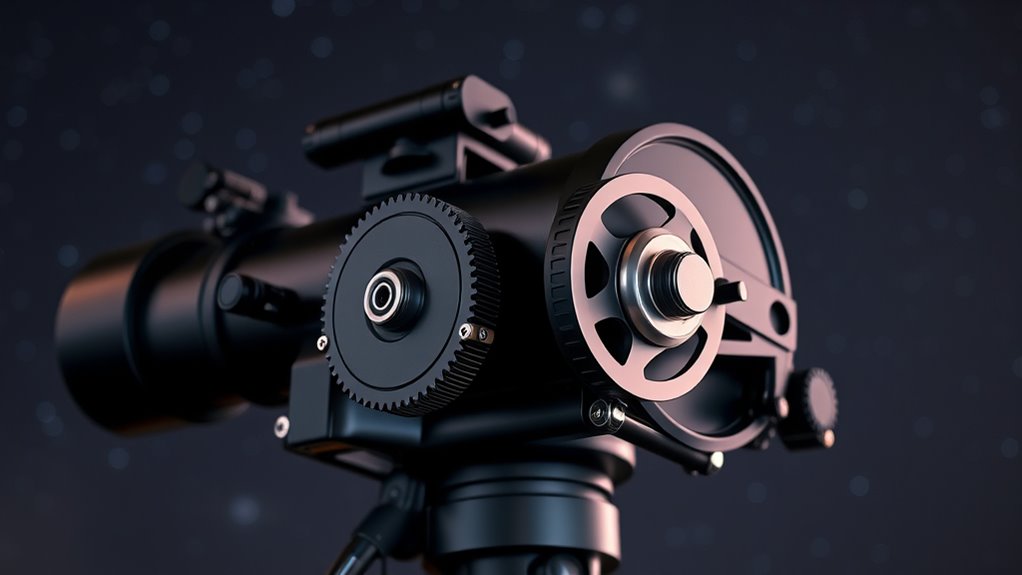

Based on expert insights, the iEXOS-100-2 PMC-Eight Equatorial Tracker is the top choice for belt drive astrophotography mounts. It offers precise tracking, excellent stability, quiet operation, and reliable performance, making it perfect for capturing sharp images. Its sturdy design and advanced control software simplify setup and use. If you want to learn about other top options and important factors, there’s more to explore to help you make the best choice.
Key Takeaways
- Look for mounts with high-quality, low-backlash belt drives for smooth, precise tracking during long-exposure astrophotography.
- Prioritize models with rigid, stable construction using materials like aluminum or carbon fiber to minimize vibrations.
- Ensure compatibility with advanced control software, WiFi connectivity, and firmware updates for enhanced usability and accuracy.
- Choose lightweight, portable designs with quick assembly features for easy outdoor setup and field portability.
- Opt for reputable brands offering reliable performance, durable components, and proven long-term stability at a reasonable price point.
iEXOS-100-2 PMC-Eight Equatorial Tracker System for Astrophotography
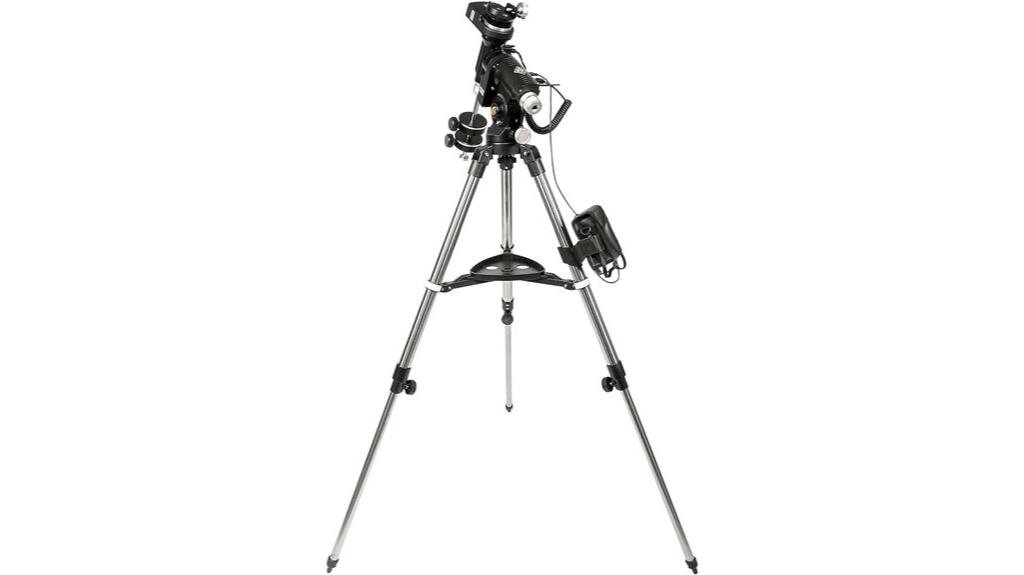
The iEXOS-100-2 PMC-Eight Equatorial Tracker System is an excellent choice for amateur astronomers seeking a lightweight and highly responsive mount for astrophotography. Weighing just 20 pounds, it offers precise control thanks to clutched dual-axis worm gears with quiet belt drives. Its PMC-Eight system features eight independent CPUs, ensuring fast, reliable responses. Control is simple via the ExploreStars app on multiple devices, and it integrates smoothly with guiding software. While assembly can be straightforward, some users may want to upgrade stability or add azimuth adjustments. Overall, it delivers accurate tracking and smooth movement, making it a solid budget-friendly option for astrophotographers.
Best For: amateur astronomers and astrophotographers seeking a lightweight, responsive, and budget-friendly equatorial tracker for capturing celestial images with precision.
Pros:
- Lightweight and portable at only 20 pounds, easy to transport and set up.
- Features advanced PMC-Eight system with eight independent CPUs for fast and reliable responsiveness.
- Compatible with multiple control devices via the ExploreStars app, simplifying operation and guiding.
Cons:
- Assembly may require modifications for added stability or azimuth adjustment.
- Initial setup and calibration can be challenging for beginners, including issues with accuracy and firmware updates.
- Tripod quality may be less sturdy, potentially affecting stability during extended imaging sessions.
Factors to Consider When Choosing Equatorial Mounts With Belt Drive Systems

When choosing an equatorial mount with a belt drive, I consider factors like precision and stability to guarantee smooth tracking. I also check if the power supply is compatible and if the mount is portable enough for my setup. Finally, I evaluate control software options to find a system that’s user-friendly and reliable during astrophotography sessions.
Belt Drive Precision
Choosing a belt drive system for your equatorial mount hinges on several critical factors that directly impact tracking accuracy. The quality of the belt and pulleys plays a significant role—high-quality components ensure smoother operation and better synchronization. Proper belt tension is essential; too tight or too loose can cause tracking errors. Synchronization between the belt and pulleys determines how precisely the mount tracks celestial objects, especially during long exposures. Belt drives are capable of achieving sub-arcsecond accuracy, crucial for astrophotography, but they still need calibration and tuning for peak performance. They also eliminate the periodic error common in worm gear systems, yet consistent adjustments are necessary to maintain precision. Overall, the flexibility and fine-tuning capabilities of belt drives make them a top choice for serious astrophotographers.
Mount Stability Factors
Mount stability in belt drive equatorial mounts depends heavily on the material and design of their tripod or base, as heavier, more rigid structures provide better support. A solid, well-constructed base minimizes vibrations and flexure, which are critical for precise tracking during astrophotography. Proper balancing of your equipment also plays a key role, reducing stress on the belt drive system and preventing unnecessary vibrations. Incorporating dual-axis worm gears with high-quality bearings helps minimize backlash and flexure, ensuring steadier movement. Adjustable tripod legs and azimuth controls allow for leveling and secure positioning, further enhancing stability. External factors like wind, uneven surfaces, and weight distribution also impact performance, so choosing a sturdy, well-designed mount is essential for achieving *ideal* stability during your imaging sessions.
Power Supply Compatibility
Ensuring your equatorial mount with belt drive system has compatible power supply is essential for reliable astrophotography. A stable, adequate power source guarantees smooth and consistent tracking, which is critical for sharp images. Compatibility with various power options, like rechargeable batteries, AC adapters, or portable power tanks, offers flexibility during field sessions. It’s important to follow the recommended voltage and current specifications to prevent damage to the mount’s motor controllers and electronics. Some mounts come with built-in battery packs, while others depend on external sources, so verifying compatibility beforehand saves setup time. Proper power management, including backup options and voltage regulation, helps guarantee uninterrupted operation, especially during long exposures. This reduces data loss and makes your astrophotography sessions more productive and enjoyable.
Portability and Size
When selecting an equatorial mount with a belt drive system for astrophotography, portability and size are crucial factors to contemplate. These mounts typically weigh between 10 to 30 pounds, making them easy to transport for outdoor sessions. Their compact design often allows them to fit in standard backpacks or carry cases, simplifying travel. Most models measure under 30 inches when collapsed, balancing stability with reduced bulk. Lightweight materials like aluminum or carbon fiber help cut weight without sacrificing durability. Keep in mind, smaller, portable mounts may have limited payload capacities, but they’re perfect for lightweight telescopes and accessories. Overall, choosing a compact and lightweight mount enhances mobility, enabling seamless astrophotography on the go.
Control Software Options
Choosing the right control software options can considerably impact how smoothly your equatorial mount with a belt drive system performs during astrophotography sessions. Compatibility is key, as it affects ease of operation and integration with your gear. Many mounts support multiple control options, such as dedicated apps, ASCOM drivers, and open-source software, allowing flexibility based on your technical skill level. Features like automated alignment, goto functions, autoguiding support, and firmware updates directly influence tracking accuracy and usability. Wireless control via WiFi or Bluetooth adds convenience but may require specific firmware or software versions. Open-source options offer customization and remote operation capabilities, though they may demand more technical know-how. Overall, selecting software that suits your needs guarantees a smoother, more reliable astrophotography experience.
Ease of Assembly
Because assembly complexity can vary widely, selecting an equatorial mount with a belt drive system that’s easy to set up can save you time and frustration. Many models feature quick-release or modular components, making assembly straightforward. Detailed instructions or video tutorials are often included, guiding you through setting up the tripod, attaching counterweights, and installing drive belts. The design of belt drive mounts typically reduces the number of moving parts, simplifying the process compared to gear-driven systems. Proper assembly involves aligning the polar axis and balancing the telescope, which is essential for accurate tracking. Some mounts even incorporate user-friendly features like snap-in belt connections and adjustable tensioners, making setup more accessible for beginners and saving you effort during initial assembly.
Noise Levels During Operation
Belt drive systems are known for their quiet operation, which is a significant advantage for astrophotographers seeking minimal disturbances during sessions. The reduced noise levels help keep the environment peaceful and prevent vibrations that could interfere with precise imaging. The noise produced mainly depends on the quality of the belts and pulleys; high-quality components minimize vibrations and sound. Proper tensioning is essential—if the belts are too loose or too tight, noise can increase, and tracking accuracy may suffer. While belt drives are generally very quiet, worn or poorly maintained parts can make noise more noticeable. Overall, the quiet operation of belt drive mounts helps maintain stability, ensuring that vibrations don’t compromise the clarity of your astrophotography images.
Price and Value
The affordability of belt drive equatorial mounts makes them an attractive option for many amateur astronomers. They often cost less than traditional gear-driven mounts while still delivering smooth, reliable tracking—ideal for astrophotography. Entry-level models are particularly budget-friendly, providing excellent value without sacrificing essential performance. High-quality belt drives tend to operate more quietly and have less backlash, which means less maintenance and fewer adjustments over time. The price-to-performance ratio is favorable, especially for those wanting dependable tracking without the hefty price tag of advanced gear systems. Additional features like WiFi control, precise polar alignment, and integrated CPUs can increase the overall value, making some models a smarter investment depending on your specific needs and goals.
Frequently Asked Questions
How Do Belt Drives Improve Mount Stability?
Belt drives improve mount stability by reducing gear backlash and eliminating the slack that often causes vibrations. I’ve noticed my astrophotography becomes much smoother and more precise since upgrading to a belt drive system. They provide quieter operation and maintain consistent motion, which minimizes jitter and keeps my images sharp. Overall, belt drives give me greater control, better tracking, and more reliable results during long exposures.
Are Belt Drive Systems Compatible With All Telescope Types?
Imagine a smooth, flowing river—belt drive systems are similarly versatile, offering compatibility across many telescope types. I’ve found that most modern equatorial mounts with belt drives work well with refractors, reflectors, and even some specialized astrophotography setups. However, it’s always wise to double-check specifications because certain mounts may favor specific designs or sizes. Overall, belt drives are quite adaptable, making them a great choice for diverse telescopes.
What Maintenance Is Required for Belt Drive Equatorial Mounts?
Belt drive equatorial mounts need regular maintenance to stay in top shape. I recommend checking the belts for any wear or looseness every few months and tightening or replacing them as needed. Keep the gears and belt pathways clean from dust and debris. Lubricate moving parts sparingly, only with recommended lubricants, to prevent rust and ensure smooth operation. Regular inspections help maintain precision and extend the mount’s lifespan.
How Do Belt Drives Affect Astrophotography Exposure Times?
Belt drives can substantially improve astrophotography exposure times by providing smoother, more precise tracking. Their reduced backlash and higher torque capacity mean I can capture longer exposures without star trails or image shifts. This stability allows me to photograph faint objects with greater detail. Overall, belt drives boost my confidence in achieving sharp, high-quality images, especially during extended imaging sessions where accuracy is essential.
Can Belt Drive Mounts Be Upgraded From Gear Drives?
Yes, you can upgrade your mount from gear drives to belt drives, but it’s not always straightforward. I’ve done it myself, and it often involves replacing or modifying the gear system and ensuring compatibility. Some mount manufacturers offer upgrade kits, which make the process smoother. Just remember, upgrading can improve tracking accuracy and reduce backlash, but it may require technical skills or professional assistance for a successful conversion.
Conclusion
If you’re serious about capturing the cosmos in stunning detail, these belt drive equatorial mounts are game-changers. They’ll transform your astrophotography from decent shots to mind-blowing masterpieces—so precise, stable, and whisper-quiet, you’ll feel like you’re teleporting among the stars! Don’t settle for less; invest in one of these top systems and unleash celestial perfection. Your ultimate night sky adventure awaits—are you ready to elevate your stargazing to legendary status?