
Parents comparing smart baby monitors with breath tracking will find two distinct choices here: the Owlet Dream Duo 3, which pairs a health-tracking sock with a 2K camera, and the Owlet Dream Sock, a more focused option for pulse and oxygen tracking. I rank the Duo first because it combines wearable monitoring with a dedicated wide-angle video feed, while the standalone Sock makes more sense if video is already covered or not a priority. The tradeoff is straightforward: the Duo gives you a more complete monitoring setup, but it depends on stable Wi-Fi and may take more effort to configure; the Sock is simpler and has fewer components, but its video capabilities are not part of the package.

Get kitchen staples and gadgets delivered free with Prime
- Fast, free delivery on millions of items
- Prime Video, Amazon Music and more included
- Member-only deals all year
Neither option should be treated as a substitute for medical care or as a guarantee of a baby’s safety. I focus this comparison on what the listed features provide, how each setup fits different households, and the practical constraints—especially age range, connectivity, and U.S.-only compatibility—that can decide the purchase.
Key Takeaways
- Choose the Owlet Dream Duo 3 if you want pulse-oximetry tracking and a 2K camera in one coordinated system.
- Choose the Dream Sock if your priority is wearable pulse and oxygen monitoring and you do not need a bundled camera.
- The Duo supports 2.4 GHz and 5 GHz Wi-Fi; the standalone Sock is listed as incompatible with 5 GHz Wi-Fi.
- Both Owlet options are listed for U.S. use only, so international buyers should check regional compatibility before choosing either.
- The Dream Sock products are aimed at a defined infant age and size window, so plan for the monitoring period to end as your child grows.
| Owlet Dream Duo 3 Smart Baby Monitor System, Dream Sock + 2K HD Camera |  | Best Overall: wearable health tracking with a full camera setup | Monitoring system: Dream Sock + 2K HD camera | Video quality: 2K HD | Camera lens: 130-degree wide-angle with 4x zoom | VIEW ON AMAZON | See Our Full Breakdown |
| Owlet Dream Sock Smart Baby Monitor |  | Best for Wearable Tracking: focused monitoring without a bundled camera | Suitable age: 1–18 months | Weight range: 6–30 lbs | Health tracking: Pulse rate and oxygen levels | VIEW ON AMAZON | See Our Full Breakdown |
| smart baby monitors with breath tracking | Connectivity | Health tracking | Monitoring system | Video quality |
|---|---|---|---|---|
| Owlet Dream Duo 3 Smart Baby M | Dual-band Wi-Fi: 2.4 GHz and 5 GHz | Pulse oximetry via Dream Sock | Dream Sock + 2K HD camera | 2K HD |
| Owlet Dream Sock Smart Baby Mo | Bluetooth and 2.4 GHz Wi-Fi | Pulse rate and oxygen levels | — | — |
More Details on Our Top Picks
Owlet Dream Duo 3 Smart Baby Monitor System, Dream Sock + 2K HD Camera
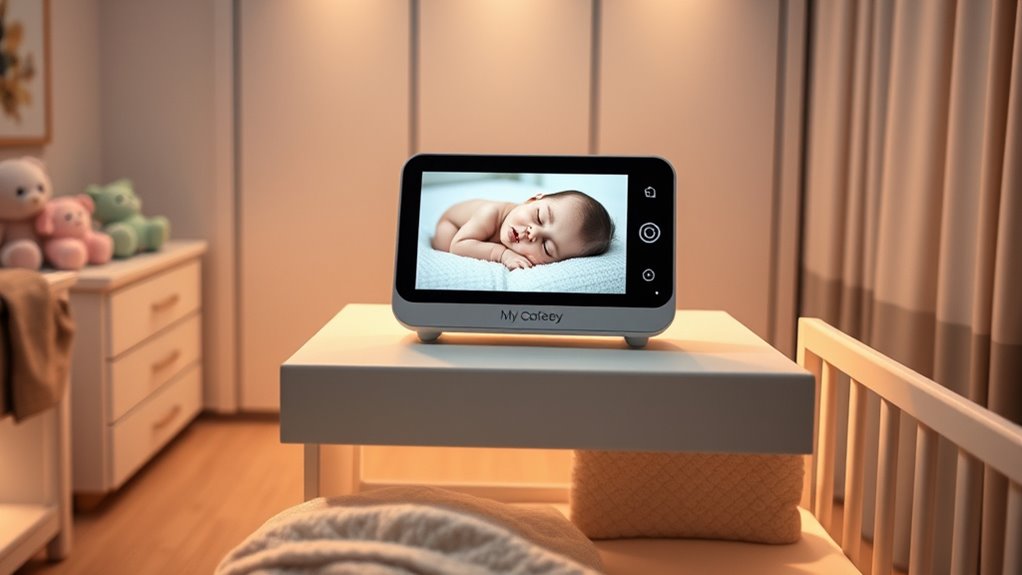
The Owlet Dream Duo 3 is my first choice for parents who want one coordinated system rather than a sock plus a separately chosen camera. Its Dream Sock tracks pulse and oxygen levels, while the 2K HD camera adds a clear visual view of the nursery. A 130-degree lens can cover more of a crib area from one position, and 4x zoom gives parents a closer look without relying on the wearable alone. Compared with the standalone Dream Sock, this model is better suited to a household that wants both kinds of monitoring from the outset.
Its broader feature set also adds temperature and humidity tracking and customizable notifications for sound, movement, and crying. Those details make the Duo more useful as a nursery monitoring hub than a health-tracking sock by itself. Dual-band Wi-Fi is another practical distinction: the listing supports both 2.4 GHz and 5 GHz networks, while the standalone Sock is not compatible with 5 GHz Wi-Fi. That may make the Duo easier to fit into a home network that relies on the newer band, though a stable connection is still needed for the system to work well.
The tradeoff is complexity. A wearable, camera, and connected alerts create more setup steps than the Sock alone, and the product information notes that initial setup may be challenging for some households. It is also a U.S.-only version, so international families should not assume it will work in their region. The sock is listed for use up to 18 months, meaning the most distinctive health-tracking part has a limited age window. I rank it above the standalone Sock for completeness, but parents who already have reliable video monitoring may prefer not to add another camera.
As with any consumer monitoring system, the Duo should support—not replace—care and medical guidance. Its pulse-oximetry feature is a notable differentiator in this pair, but the presence of health data and alerts does not make a monitor a substitute for a clinician’s assessment.
Pros:- Combines a Dream Sock with a 2K HD camera
- 130-degree lens and 4x zoom support wider and closer viewing
- Dual-band Wi-Fi supports both 2.4 GHz and 5 GHz networks
- Adds temperature, humidity, and customizable sound, movement, and crying notifications
Cons:- Needs a stable Wi-Fi connection for best operation
- More components can make setup less straightforward than the standalone Sock
- U.S.-only compatibility and a Dream Sock age range up to 18 months limit its fit
Best for: Parents setting up a nursery who want wearable pulse and oxygen tracking, a dedicated 2K camera, and room-condition monitoring in one system.
Not ideal for: International buyers, families seeking the simplest possible setup, or parents who already have a camera they are happy with and want only a wearable monitor.
- Monitoring system:Dream Sock + 2K HD camera
- Video quality:2K HD
- Camera lens:130-degree wide-angle with 4x zoom
- Connectivity:Dual-band Wi-Fi: 2.4 GHz and 5 GHz
- Health tracking:Pulse oximetry via Dream Sock
- Room monitoring:Temperature and humidity
- Dream Sock age range:Up to 18 months
- Data security:256-bit encryption; SGS Cybersecurity Mark
Our verdict“I recommend the Dream Duo 3 for parents who want wearable health tracking and a capable nursery camera together, provided they are comfortable with setup and U.S.-only compatibility.”
Owlet Dream Sock Smart Baby Monitor
The Owlet Dream Sock is the more focused of the two picks. It tracks pulse rate and oxygen levels in real time and supplies alerts and sleep-trend insights, but it does not include the Duo’s 2K camera or room-condition tracking. That narrower scope is a strength if the household already has a video monitor: you can add wearable tracking without buying another camera. If you are building a nursery setup from scratch, though, the Dream Duo 3 is the more complete package.
The Sock is listed for infants from 1 to 18 months and weighing 6 to 30 pounds. Those boundaries help families check whether the wearable is a match now, while also setting expectations about when it may no longer fit. The listed 16-hour battery life can support regular use between charges, and the fabric sock is designed to be worn by the baby. Sleep trend insights add a longer-term view beyond immediate alerts, though the supplied details do not describe the specific metrics or how they are presented.
Connectivity is the main practical limitation compared with the Duo. The standalone model uses Bluetooth and 2.4 GHz Wi-Fi and is not compatible with 5 GHz Wi-Fi. A household with a network configured only for 5 GHz should check its setup before choosing this model. The listing also says U.S. use only, so this is not a straightforward pick for families outside that market. Setup requires both Wi-Fi and Bluetooth, which keeps it from being a completely independent wearable.
I rank the Dream Sock second because it covers the central wearable tracking function but leaves video and nursery conditions to other devices. That can be a sensible, less redundant choice for parents who already have a camera, but it is less convenient for anyone wanting one joined-up system. Like the Duo, its alerts and readings should be treated as monitoring information rather than a diagnosis or replacement for advice from a health professional.
Pros:- Tracks pulse rate and oxygen levels with alerts
- Provides sleep trend insights and routines
- Listed battery life is up to 16 hours
- Avoids bundling a second camera for households that already have one
Cons:- Not compatible with 5 GHz Wi-Fi
- Does not include a camera or temperature and humidity monitoring
- Requires Wi-Fi and Bluetooth setup and is listed for U.S. use only
Best for: U.S. families with an existing camera who want a wearable monitor for pulse and oxygen levels, plus sleep-trend information.
Not ideal for: Parents who need a camera included, use a 5 GHz-only Wi-Fi network, live outside the U.S., or need a monitor for a child outside the listed age or weight range.
- Suitable age:1–18 months
- Weight range:6–30 lbs
- Health tracking:Pulse rate and oxygen levels
- Battery life:Up to 16 hours
- Connectivity:Bluetooth and 2.4 GHz Wi-Fi
- Network limitation:Not compatible with 5 GHz Wi-Fi
- Security:256-bit encryption and elliptic curve authentication
- Compatibility:U.S. only
Our verdict“I would choose the Dream Sock when wearable tracking is the priority and a separate camera already covers nursery video.”

How We Picked
I compared these two products against the promise in the title: smart monitoring with breath-related tracking, rather than video monitoring alone. Both listings describe wearable tracking of pulse and oxygen levels, so my ranking gives weight to the health-monitoring component first. I then looked at what each system adds around it: video quality, connectivity, room information, alerts, battery details, and the effort required to build a working nursery setup.
The Dream Duo 3 ranks first because it brings a 2K HD camera, wide-angle view, zoom, temperature and humidity tracking, and the Dream Sock into one package. Those additions make it the more complete choice for a parent starting without a separate camera. The standalone Dream Sock ranks second not because its core wearable function is unhelpful, but because it offers fewer monitoring components and has a narrower Wi-Fi fit. It can still be the better match when a family already owns a camera or wants to focus on wearable tracking.
I also treated the supplied age, weight, and network details as selection criteria, not footnotes. Both products are U.S.-only according to their listings, and a sock’s fit window limits how long it may suit a growing child. I have not treated either device as a medical diagnosis tool. The information here compares product features and practical fit; caregivers should follow professional medical advice for health concerns.
| smart baby monitors with breath tracking | Connectivity | Health tracking |
|---|---|---|
| Owlet Dream Duo 3 Smart Baby M | Dual-band Wi-Fi: 2.4 GHz and 5 GHz | Pulse oximetry via Dream Sock |
| Owlet Dream Sock Smart Baby Mo | Bluetooth and 2.4 GHz Wi-Fi | Pulse rate and oxygen levels |
Factors to Consider When Choosing Smart Baby Monitors With Breath Tracking
These two monitors share a central idea—a wearable sock that tracks pulse and oxygen—but they serve different nursery setups. I would decide first whether you need a camera in the same package, then check your network and the baby’s fit against the listed limits.
Decide whether you need video in the box
The clearest difference is the camera. The Dream Duo 3 includes a 2K camera with a 130-degree view and 4x zoom, plus temperature and humidity tracking. That makes it the stronger choice for a new setup where you want wearable tracking and a visual feed from one product. The standalone Dream Sock has no bundled camera, so it fits better when a separate monitor already handles video. Buying the Sock alone does not provide the same all-in-one nursery coverage described for the Duo.
Match the monitor to your Wi-Fi
Network support may rule out one model before you compare anything else. The Duo listing specifies 2.4 GHz and 5 GHz Wi-Fi, while the standalone Dream Sock is listed as incompatible with 5 GHz. The Sock also uses Bluetooth as part of setup. Check how your router is configured and whether you can connect the product to a supported band. The Duo still needs stable Wi-Fi for optimal operation, so dual-band support does not remove the need for a dependable connection.
Check the child’s age and size
The standalone Dream Sock is listed for babies 1–18 months and 6–30 pounds; the Duo’s Dream Sock is listed for use up to 18 months. These limits matter because the wearable is the source of the pulse and oxygen tracking. If your baby is outside the stated age or weight range, do not assume the sock will remain suitable. Families should check current manufacturer guidance on fit and use, especially as a child grows.
Understand what alerts can and cannot do
Both options offer wearable health-related monitoring, and the Duo adds customizable notifications for sound, movement, and crying. Those alerts may help parents keep track of information from the nursery, but a monitor is not a diagnosis and cannot guarantee a particular outcome. I would treat alerts as one source of information, follow the product’s directions, and ask a pediatric health professional about medical concerns rather than relying on consumer monitoring alone.
Weigh setup and the number of devices
The Dream Duo 3 brings more capability, but its sock, camera, and connected functions can make setup more involved. The standalone Sock has fewer components, yet it still requires Wi-Fi and Bluetooth setup and does not remove network compatibility checks. Think about whether you prefer one combined system or a wearable that joins equipment you already own. Also note that both listings specify U.S.-only compatibility, which can make either pick unsuitable outside that market.
Frequently Asked Questions
What is the main difference between the Owlet Dream Duo 3 and Dream Sock?
The Dream Duo 3 combines the Dream Sock’s pulse and oxygen tracking with a 2K camera, wide-angle lens, zoom, and temperature and humidity monitoring. The standalone Dream Sock focuses on wearable tracking, alerts, and sleep-trend information without a camera in the package. I would choose the Duo for a more complete new nursery setup and the Sock when another camera already meets your needs.
Do both products track breathing?
The supplied product details describe pulse rate and oxygen-level tracking through the wearable sock; they do not describe a direct measurement of breathing rate. For that reason, I would not interpret either listing as proof that the device measures every aspect of breathing or detects every concern. Check the manufacturer’s current product information for the exact meaning of its readings and alerts, and consult a health professional about medical questions.
Can I use the standalone Dream Sock with 5 GHz Wi-Fi?
The supplied specifications say the standalone Dream Sock is not compatible with 5 GHz Wi-Fi and uses 2.4 GHz Wi-Fi along with Bluetooth. The Dream Duo 3 listing, by comparison, specifies dual-band support for 2.4 GHz and 5 GHz. If your home network does not offer a supported connection for the Sock, the Duo may be the better fit, though it still relies on a stable Wi-Fi connection.
Do these Owlet monitors replace medical advice?
No. Both products are consumer monitoring systems, and their alerts or readings should not be treated as a medical diagnosis or a substitute for care from a qualified professional. I recommend following the product instructions and contacting a pediatric health professional with concerns about a baby’s breathing, oxygen levels, pulse, or overall health.
Which Owlet model should I choose if I already own a baby camera?
The standalone Dream Sock is the more direct match if your existing camera already gives you the video coverage you want and you mainly want wearable pulse and oxygen tracking. The Duo would add its own 2K camera, wide-angle view, zoom, and room-condition monitoring, which may be redundant in a nursery that is already equipped. Check the Sock’s 2.4 GHz Wi-Fi requirement and the listed age and weight range before deciding.
Conclusion
I recommend the Owlet Dream Duo 3 to parents building a nursery setup who want wearable pulse and oxygen tracking alongside 2K video, zoom, and room-condition information. It ranks first because it covers more monitoring needs in one system, with the tradeoff of more involved setup and a continued need for stable Wi-Fi. For families who already own a camera and want a wearable-focused option, the Owlet Dream Sock is the more appropriate pick, provided the home network supports 2.4 GHz and the child fits the listed age and weight range. Neither is a suitable default for international buyers based on the supplied compatibility information. I would make the choice around your existing equipment and network first, and treat either device as a monitoring aid—not a replacement for medical guidance.
NFL season / tailgating Picks
team gear
As an affiliate, we earn on qualifying purchases.