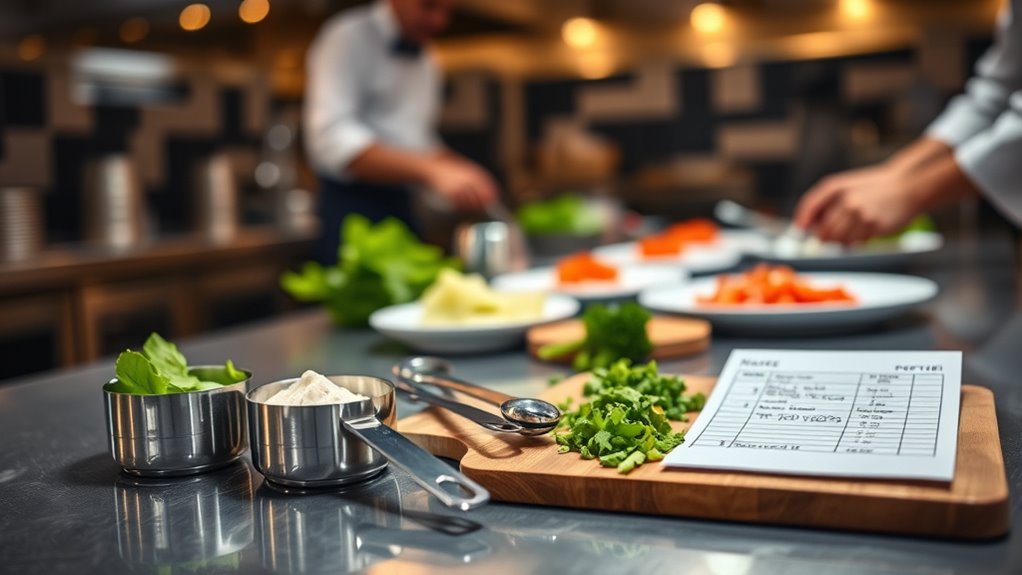

COGS in restaurants refers to the direct costs of ingredients and supplies used to prepare your food and drinks. It’s essential for managing your restaurant’s profitability because it shows how much you spend on raw materials for each menu item. Tracking and analyzing COGS helps you control costs, optimize pricing, and reduce waste. Understanding this area can boost your financial health — keep going to learn more about mastering COGS.

Get kitchen staples and gadgets delivered free with Prime
- Fast, free delivery on millions of items
- Prime Video, Amazon Music and more included
- Member-only deals all year
Key Takeaways
- COGS in restaurants refers to the direct costs of ingredients and beverages used to prepare sold menu items.
- It helps determine the profitability of each dish and overall restaurant financial health.
- Accurate COGS tracking involves recording purchase prices, portion sizes, and waste.
- Managing COGS enables better inventory control, pricing strategies, and cost reduction.
- Monitoring COGS supports financial analysis, menu optimization, and supplier negotiations.
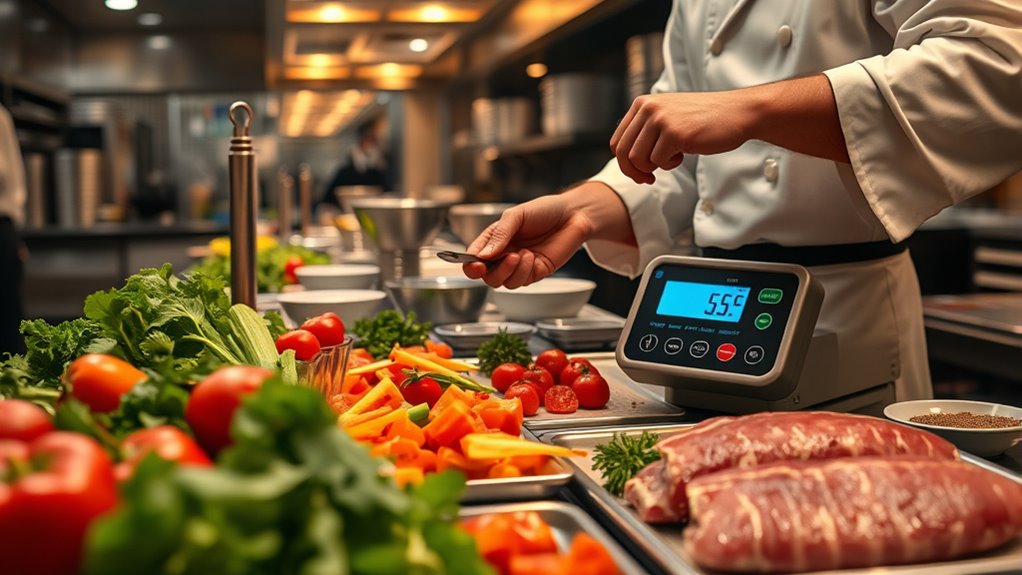
Understanding your Cost of Goods Sold (COGS) in restaurants is essential for managing profitability. COGS represents the direct costs associated with producing the food and beverages you sell. When you track COGS accurately, you gain insight into how much it costs to deliver each menu item, which helps you make smarter decisions about inventory management and menu pricing. Proper inventory management ensures you purchase ingredients efficiently, avoid waste, and keep costs in check. If you’re not monitoring your inventory closely, you risk overstocking perishable items or running out of essential ingredients, both of which can hurt your profit margins. Keeping a tight grip on inventory levels allows you to identify theft, spoilage, or inefficient purchasing practices that inflate costs unnecessarily. Additionally, using self watering plant pots can serve as an analogy for maintaining consistent resource levels, similar to managing inventory in a restaurant.
Accurate inventory management helps control costs, reduce waste, and protect your restaurant’s profitability.
Menu pricing directly impacts your COGS, as it influences how much you need to sell to break even and profit. When you understand the true cost of each dish, including ingredients, labor, and overhead, you can set prices that cover these costs while remaining attractive to your customers. If your menu prices are too low relative to COGS, your restaurant operates at a loss, no matter how busy you are. Conversely, pricing too high might scare away customers, reducing sales volume. Striking the right balance requires a clear understanding of your COGS and how it varies across different menu items. Adjusting menu prices based on ingredient costs ensures you stay profitable, especially when prices for key ingredients fluctuate.
Accurate COGS calculation involves tracking every ingredient used in your recipes and assigning a proportionate cost to each dish. This means maintaining detailed records of purchase prices, portion sizes, and waste. When you analyze your COGS regularly, you can identify which menu items are most profitable and which ones aren’t covering their costs. This insight helps you optimize your menu by removing low-margin dishes or adjusting prices to improve profitability. It also guides your purchasing decisions, prompting you to negotiate better deals with suppliers or seek alternative ingredients to lower costs without sacrificing quality.
Ultimately, understanding your COGS provides a foundation for making informed decisions about inventory management and menu pricing. By constantly monitoring and adjusting these areas, you ensure your restaurant remains financially healthy and competitive. Knowing your true costs means you’re better equipped to set strategic prices, reduce waste, and boost your margins. Managing COGS isn’t a one-time task but an ongoing process that helps you keep your restaurant profitable, sustainable, and poised for growth.
Frequently Asked Questions
How Can Restaurants Reduce Their COGS Effectively?
You can reduce your restaurant’s COGS effectively by improving inventory management to minimize waste and overordering. Regularly track your stock levels and adjust orders accordingly. Additionally, negotiate better prices with suppliers to lower ingredient costs. Building strong supplier relationships helps you access discounts and prioritize quality. Implementing these strategies keeps costs in check, boosts profitability, and guarantees your restaurant operates efficiently without sacrificing quality.
What Are Common Mistakes When Calculating COGS?
Imagine you’re sailing a ship, but forget to track your supplies or set clear pricing strategies. You might underestimate inventory management costs or misjudge ingredient prices, leading to miscalculations. Common mistakes include neglecting to update inventory regularly, mixing fixed and variable costs, or ignoring spoilage. These errors distort your COGS, making it harder to price dishes accurately and manage expenses effectively. Keep your inventory tight and your pricing strategic to stay afloat.
How Does COGS Impact Overall Restaurant Profitability?
You see, COGS directly impacts your restaurant’s profitability by influencing your menu pricing and inventory management. When COGS is high, you might need to raise prices or tighten inventory control to maintain profit margins. Effective management helps you identify waste and reduce costs, allowing you to set competitive prices without sacrificing quality. Ultimately, controlling COGS guarantees your restaurant stays profitable and sustainable in a competitive market.
Are There Industry Benchmarks for COGS Percentages?
A penny saved is a penny earned, and knowing industry standards helps you keep COGS in check. Typically, restaurant COGS percentages range from 28% to 35%, depending on cuisine and location. Monitoring these profit margins allows you to identify areas for cost control. While benchmarks vary, aiming for lower COGS without sacrificing quality boosts your profitability and keeps your restaurant competitive.
How Often Should a Restaurant Review Its COGS?
You should review your COGS monthly to stay on top of inventory management and identify any discrepancies early. Regular reviews help you spot waste, control costs, and optimize supplier negotiations. By tracking COGS consistently, you can adjust purchasing strategies, improve profit margins, and guarantee your restaurant stays financially healthy. Don’t wait too long—monthly checks give you the insights needed to make informed decisions and maintain efficient operations.
Conclusion
Understanding COGS in restaurants is like having a secret weapon to boost your profits. By tracking your costs accurately, you can prevent your expenses from spiraling out of control and turning your restaurant into a financial sinking ship. Keep a close eye on your COGS, and you’ll be the captain steering your business to success. Remember, mastering this small detail can make or break your restaurant’s future—don’t let costs swallow your dreams!
NFL season / tailgating Picks
team gear
As an affiliate, we earn on qualifying purchases.