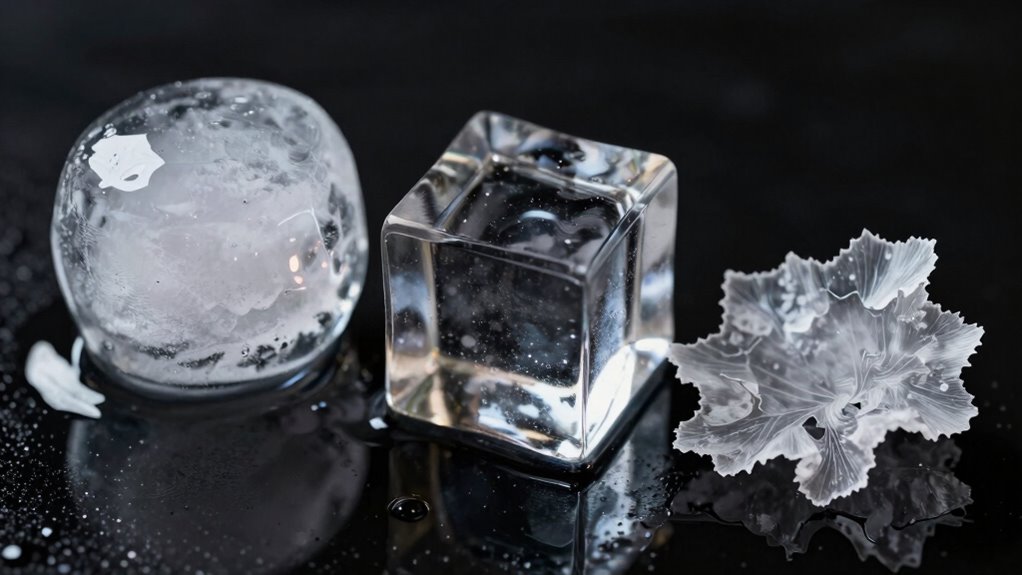

Choosing between nugget, cube, or flake ice can change how your drink feels and stays cool. Nuggets melt slowly, keeping your drink chilled longer while adding a soft, chewy texture that enhances mouthfeel. Cubes are dense and melt predictably, cooling quickly without over-diluting. Flakes melt fast, ideal for rapid cooling but may water down your beverage quickly. To discover which ice type best suits your style, explore the details further.
Key Takeaways
- Nugget ice melts slowly, maintaining drink temperature and flavor without quick dilution, unlike flakes which melt rapidly.
- Cubes provide a predictable cooling rate and a neat appearance, whereas nuggets add texture contrast and flakes offer visual variety.
- Nugget ice offers a soft, chewable texture that enhances sensory experience, while cubes are firm and satisfying, and flakes are softer.
- The porous structure of nuggets melts gradually, extending drink freshness; cubes cool quickly but may dilute faster over time.
- Flakes create an eye-catching presentation but tend to water down drinks faster due to their large surface area.
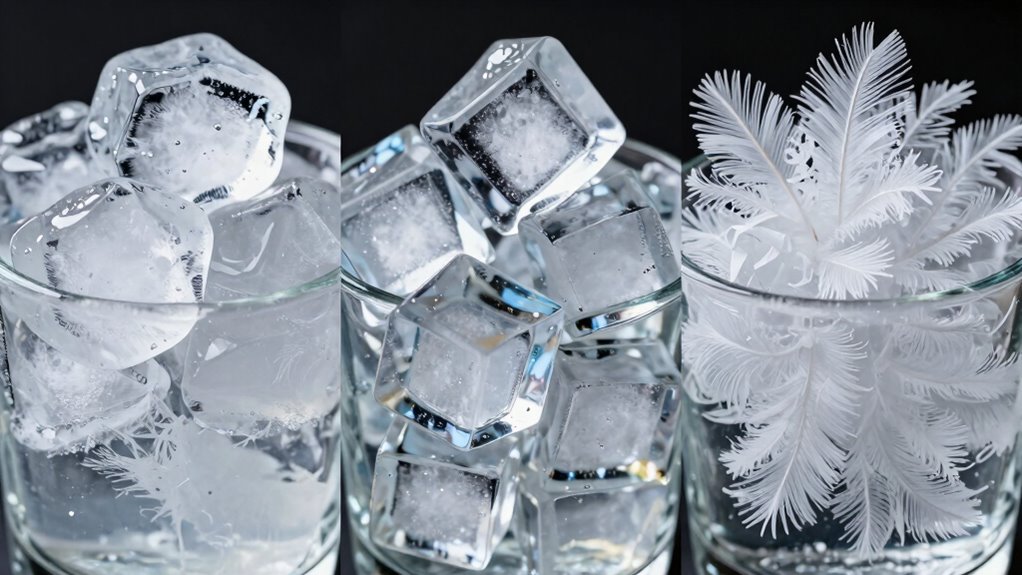
Ice comes in various forms, but three of the most common types are nuggets, cubes, and flakes. Each shape influences your drink in unique ways, especially when it comes to texture contrast and melting rate. When you pick the right ice, you enhance the overall drinking experience, making your beverage more enjoyable and balanced. Nugget ice, often called pellet or chewable ice, is soft and chewable, creating a delightful texture contrast with your drink. Its porous structure means it melts slower than traditional cubes, allowing your beverage to stay cold longer without becoming overly diluted. This slow melting rate preserves the flavor integrity of cocktails, sodas, or even water, giving you more control over how your drink evolves as you sip. Additionally, the shape of ice can influence the visual appeal of your drink, making it more attractive and inviting.
Nugget ice melts slowly, keeping drinks colder longer and enhancing texture without quick dilution.
In contrast, ice cubes are the classic choice, usually made by freezing water in molds. Their uniform shape offers a clean, predictable melting rate that cools drinks quickly but can dilute them faster if you’re not careful. The solid, dense structure of cubes provides a satisfying crunch and a firm texture that some prefer, especially in spirits or highball glasses. Because they melt faster than nuggets, cubes are ideal when you want rapid chilling, but they require timing to prevent watering down your drink too fast. Their consistent size and shape also contribute to a neat appearance and predictable melting, making them a popular choice for many bar settings.
Ice flakes, or crushed ice, are tiny, irregular pieces that create a different sensory experience. They offer minimal texture contrast because they’re already broken down into small fragments, but they excel at rapid cooling due to their large surface area. Flakes melt quickly, which means they’re excellent for drinks that need to be cooled immediately or for applications like slushies and iced desserts. However, their fast melting rate can lead to quick dilution, so they’re best used when you want your beverage chilled in a short amount of time. The irregular shape of flakes can also add a bit of visual appeal and a slightly different mouthfeel, especially in cocktails or specialty drinks.
Choosing between nuggets, cubes, and flakes depends on what you value most in your drink experience. If you prioritize slow melting and a soft texture, nuggets are your best bet. For a crisp, clean appearance with predictable melting, cubes are ideal. If rapid cooling and a unique presentation matter most, flakes deliver the quickest chill. Understanding these differences allows you to tailor each drink to your preferences, ensuring every sip is just right.
As an affiliate, we earn on qualifying purchases.
Frequently Asked Questions
Which Ice Type Melts the Slowest Over Time?
You’ll find that flakes melt the slowest because they have higher ice density and lower melting points compared to nuggets and cubes. Their thin, flat shape allows for less surface area exposure, reducing melting speed. In contrast, nuggets and cubes, with larger surface areas, melt faster. So, if you want your drink to stay cold longer, go for flakes—they’re designed to melt gradually, preserving your drink’s chill.
How Does Ice Shape Affect Drink Dilution?
Your ice shape substantially impacts drink dilution because it influences surface area and chilling efficiency. Larger, denser shapes like cubes have less surface area, melting slower, and chilling your drink evenly without quickly diluting it. Smaller shapes like flakes or nuggets melt faster due to increased surface area, leading to quicker dilution. Choosing the right shape guarantees ideal chilling while maintaining your drink’s flavor and consistency.
Are Certain Ice Types Better for Specific Beverages?
Did you know that 75% of bartenders prefer ice cubes for cocktails? Certain ice types are better for specific beverages because of their texture and impact on flavor. For example, large cubes melt slower, preserving carbonation in soda or spirits, while flakes chill drinks quickly without diluting intense flavors. Choosing the right ice enhances your drink experience, ensuring ideal flavor and temperature every time.
Can Ice Type Influence the Presentation of Cocktails?
Yes, ice type considerably influences your cocktail’s presentation. Clear, transparent ice enhances the aesthetic appeal, making your drink look more refined and inviting. For example, large cubes or perfectly shaped nuggets give a sleek, elegant look, while flakes add a textured, artisanal vibe. The visual clarity and shape of the ice elevate your cocktail’s overall look, making it more appealing and memorable for your guests.
Which Ice Form Is Most Energy-Efficient to Produce?
You’ll find that flakes are the most energy-efficient ice form to produce because their production requires less energy consumption and faster freezing times. Unlike nuggets and cubes, flakes are made with less water and simpler machinery, which improves production efficiency. If you’re aiming to reduce energy costs, opting for flakes can make a significant difference, helping you save resources while maintaining good ice quality for your drinks.
Conclusion
Just like the secret ingredient in a legendary recipe, your choice of ice can elevate your drink from ordinary to iconic. Whether you prefer nuggets, cubes, or flakes, each type plays a unique role in shaping your experience—think of it as your personal alchemy. So, next time you craft your perfect sip, remember, it’s the ice that can turn a simple moment into a legendary story worth sharing. Cheers to your legendary drink!