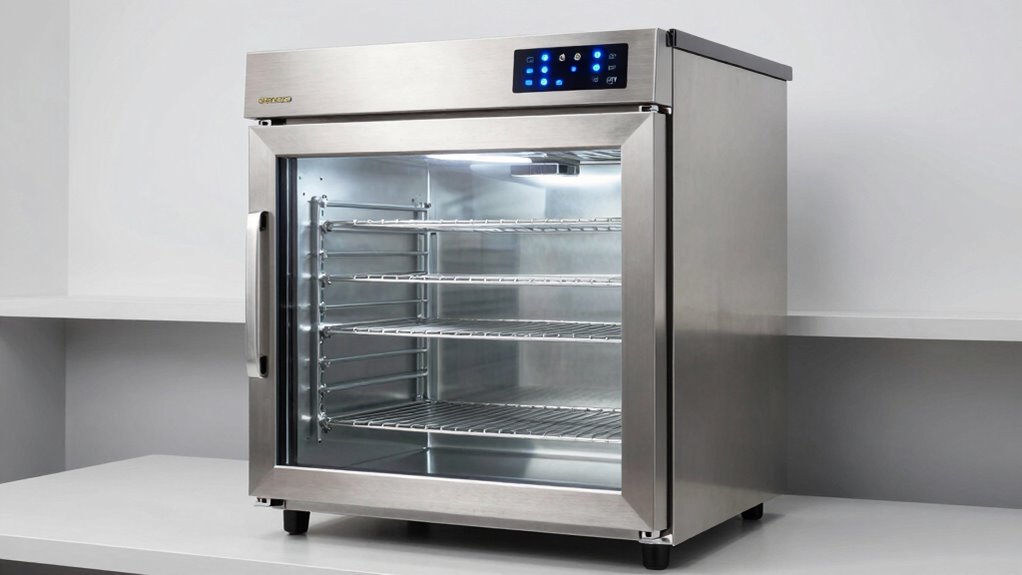
Blast chillers are the fastest way to cool hot foods safely by reducing temperatures quickly and evenly. They help prevent bacteria growth, keeping your dishes fresh and safe to store or reheat. Plus, they lower energy consumption compared to traditional cooling methods, making your kitchen more efficient and eco-friendly. With easy controls and programmable options, they seamlessly fit into busy food service routines. Keep going to discover more about how blast chillers protect your food and your business.

Get kitchen staples and gadgets delivered free with Prime
- Fast, free delivery on millions of items
- Prime Video, Amazon Music and more included
- Member-only deals all year
Key Takeaways
- Blast chillers rapidly lower food temperature, preventing bacteria growth and ensuring food safety.
- They cool hot foods faster than traditional methods, reducing the risk of unsafe bacterial proliferation.
- Proper use maintains food texture, flavor, and nutritional value, supporting quality and safety standards.
- Their programmable settings enable precise cooling based on food type and volume, enhancing safety.
- Energy-efficient operation minimizes environmental impact while protecting food safety and quality.
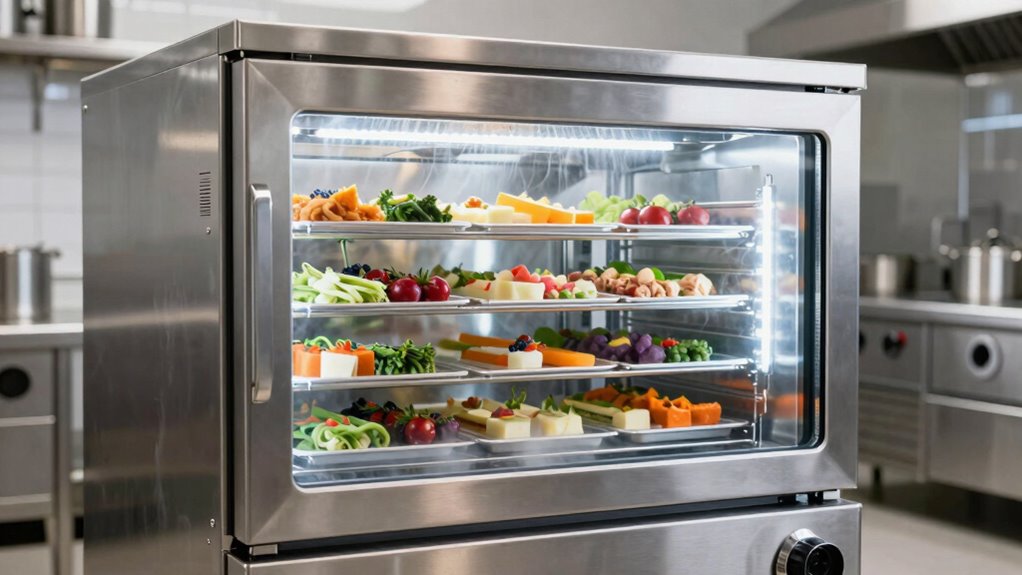
Have you ever wondered how professional kitchens quickly cool down large quantities of cooked food while maintaining safety and quality? The answer lies in the use of blast chillers, specialized equipment designed to rapidly reduce the temperature of hot foods. These machines are essential for food preservation, preventing bacteria growth, and ensuring that leftovers or prepared dishes stay safe to consume. By swiftly bringing down the temperature, blast chillers also help maintain the food’s texture, flavor, and nutritional value, making them a staple in commercial settings focused on high standards of food safety.
Using a blast chiller isn’t just about safety; it’s also a smart move for energy efficiency. Unlike traditional cooling methods that can take hours and consume significant energy, blast chillers cool food in a fraction of the time, reducing overall energy consumption. This quick process minimizes the time appliances like refrigerators need to work at full capacity, leading to lower energy bills and a smaller carbon footprint. Because they operate efficiently, blast chillers can be integrated into a kitchen’s workflow without causing delays or bottlenecks, keeping service smooth and cost-effective.
Blast chillers boost energy efficiency by rapidly cooling food, lowering costs, and reducing environmental impact.
Another benefit of blast chillers is their ability to support proper food preservation. When hot foods are cooled too slowly, bacteria can multiply rapidly, increasing the risk of foodborne illnesses. By rapidly reducing the temperature, blast chillers help lock in freshness and extend shelf life. This is particularly vital in busy kitchens where large batches are prepared ahead of service. The quick cooling process also prevents the formation of ice crystals that can damage food texture, ensuring that dishes retain their quality once reheated or served later.
Additionally, blast chillers are designed to be easy to operate and integrate seamlessly into professional kitchen routines. Many models feature programmable settings, allowing staff to choose ideal cooling cycles based on the type and volume of food. This flexibility means you can maximize both safety and efficiency without complicating your workflow. Investing in a blast chiller not only enhances food safety but also aligns with an energy-conscious approach, helping your operation meet sustainability goals while delivering high-quality dishes.
As an affiliate, we earn on qualifying purchases.
Frequently Asked Questions
What Is the Maximum Storage Time for Food in Blast Chillers?
You should store food in blast chillers for no more than 48 hours to guarantee food safety and adhere to refrigeration standards. Proper use of blast chillers rapidly cools hot foods, preventing bacteria growth. After this period, the food must be either consumed or properly stored to maintain safety and quality. Always follow your local food safety regulations and refrigeration standards to keep your food safe and fresh.
How Energy-Efficient Are Blast Chillers Compared to Traditional Cooling Methods?
You might find it surprising, but blast chillers are generally more energy-efficient than traditional cooling methods. Their advanced design reduces energy consumption by quickly lowering food temperatures, which minimizes heat loss and prevents overcooling. This efficiency leads to significant cost savings over time, especially in busy kitchens. Plus, their faster cooling process means less energy wasted, making them a smart choice for those looking to cut costs and boost sustainability.
Can Blast Chillers Be Used for Non-Food Items?
Yes, blast chillers can be used for non-food items, especially in industrial applications like pharmaceutical cooling. They rapidly lower temperatures to preserve the integrity of sensitive materials, making them ideal for cooling pharmaceuticals, chemicals, and even certain electronics. By quickly reducing heat, blast chillers help prevent spoilage or damage, ensuring safety and quality in various industries beyond food processing. They’re versatile tools for any rapid cooling needs.
What Maintenance Is Required to Keep Blast Chillers Operating Safely?
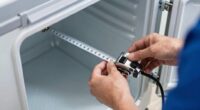
Your blast chiller’s safety depends on diligent maintenance. Regularly follow cleaning protocols to prevent bacteria buildup and guarantee hygiene. You must also perform temperature calibration frequently to keep cooling performance precise. Check door seals, clean filters, and inspect electrical components to avoid malfunctions. Treat your machine like a treasure chest—keeping it in top shape guarantees safe operation, preserves food quality, and avoids costly breakdowns that could be catastrophic.
Are There Size Options Available for Different Kitchen Needs?
Yes, there are size options available for different kitchen needs. You’ll find blast chillers with great size versatility, allowing you to choose models that fit your space and volume requirements. Whether you need a compact unit for a small café or a larger one for a busy restaurant, you can select a blast chiller that offers a custom fit. This guarantees efficient cooling and seamless integration into your kitchen setup.
Conclusion
Now that you know how blast chillers work, you can see why they’re crucial for food safety. Did you know that rapid cooling with a blast chiller can reduce bacteria growth by up to 90%? That’s a huge safety boost in just minutes! Using one isn’t just about convenience; it’s about protecting your customers and your reputation. So, consider investing in a blast chiller—because quick, safe cooling isn’t just smart, it’s essential.
NFL season / tailgating Picks
team gear
As an affiliate, we earn on qualifying purchases.