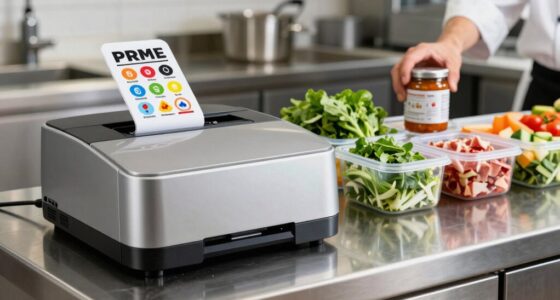
To prevent your sanitizer from being too strong or too weak, regularly calibrate your dispenser using calibration solutions with known concentrations. Compare the sensor’s output to reference standards and adjust according to the manufacturer’s instructions, ensuring the dispenser delivers the correct amount. Keep sensors clean, check calibration often, especially after maintenance, and fine-tune sensitivity as needed. Doing so helps maintain effective sanitation and safety—learn more ways to keep your system accurate and reliable.

Get kitchen staples and gadgets delivered free with Prime
- Fast, free delivery on millions of items
- Prime Video, Amazon Music and more included
- Member-only deals all year
Key Takeaways
- Use calibration solutions with known sanitizer concentrations to verify and adjust dispenser accuracy regularly.
- Follow manufacturer instructions precisely when calibrating to avoid overcorrecting and ensure proper sanitizer strength.
- Perform calibration checks after maintenance or sensor replacement to prevent dispensing errors.
- Adjust dispenser settings via built-in calibration modes or software to fine-tune sanitizer output levels.
- Keep sensors clean and conduct periodic calibration to prevent drift and maintain consistent sanitizer strength.

Calibrating your chemical dispenser is essential to guarantee accurate and consistent delivery of chemicals in your processes. When it comes to maintaining proper sanitizer levels, sensor accuracy plays a critical role. If your sensors aren’t properly calibrated, they may give false readings, causing your dispenser to deliver either too much or too little chemical. This inconsistency can lead to ineffective sanitation, increased chemical waste, or even safety issues. To prevent these problems, you need to regularly check and adjust your sensors to ensure their accuracy. Adjusting sensor calibration involves specific techniques that help keep readings precise. You’ll want to start by verifying the sensor’s output against a known standard or reference solution. This process often involves using calibration solutions with a known concentration, which can help you determine if your sensor is reading correctly. If discrepancies are found, adjustment techniques come into play. Many modern dispensers have built-in calibration modes that allow you to fine-tune the sensor’s response. This might involve using a manual calibration knob, digital input, or software interface, depending on your equipment. When making adjustments, always follow the manufacturer’s instructions to avoid overcompensation, which can cause further inaccuracies. A common technique is to calibrate the sensor at the concentration you typically use, ensuring it reads accurately in real-world conditions. It’s also advisable to perform multiple calibration checks over time, especially after equipment maintenance or sensor replacement. This ongoing process helps catch drift in sensor accuracy before it affects your sanitizer levels. Proper adjustment techniques are simple but require attention to detail. For example, if your sensor reads too high, you might need to lower its sensitivity or recalibrate it at a lower standard. Conversely, if it reads too low, increasing sensitivity or recalibrating at a higher standard can correct the issue. Additionally, keep your sensors clean and free of debris, as dirt and buildup can impair sensor accuracy and lead to faulty readings. Regular cleaning, combined with calibration checks, ensures your dispenser remains reliable. Maintaining proper sensor accuracy is crucial for effective sanitation and safety. Remember, the goal isn’t just to calibrate once but to establish a routine check to maintain consistent performance. By doing so, you’ll prevent the risks associated with over- or under-dispensing sanitizer, ensuring your processes stay effective and compliant. Proper calibration and adjustment techniques safeguard not only the quality of your sanitation but also the safety of your environment, ultimately saving you time and money in the long run.
chemical dispenser calibration solutions
As an affiliate, we earn on qualifying purchases.
As an affiliate, we earn on qualifying purchases.
Frequently Asked Questions
How Often Should I Recalibrate My Dispenser?
You should recalibrate your dispenser at least once every three to six months to guarantee proper dispenser maintenance and accurate sanitizer levels. Regular calibration frequency helps prevent issues like too strong or too weak sanitizer, maintaining safety and efficiency. Additionally, recalibrate whenever you notice a change in sanitizer flow or after any dispenser repairs. Consistent calibration keeps your system running smoothly and ensures ideal disinfection.
What Are Signs of a Miscalibrated Sanitizer Dispenser?
You’ll notice if your dispenser isn’t accurate when sanitizer application varies unexpectedly. Signs include inconsistent sanitizer strength, either too strong or too weak, and uneven coverage. If the sanitizer isn’t consistent, it indicates calibration issues. Regularly check for these signs to maintain proper dispenser accuracy and ensure effective sanitation. Addressing these problems promptly helps keep your sanitizer performance reliable and your environment safe.
Can Calibration Affect Sanitizer Shelf Life?
Calibration directly impacts sanitizer shelf life because incorrect dispenser accuracy can alter sanitizer potency over time. If your dispenser is miscalibrated, it might deliver too much or too little sanitizer, leading to inconsistent effectiveness and faster degradation of the product. Proper calibration guarantees the sanitizer maintains its intended strength, extending its shelf life and ensuring it remains effective when needed. Regular checks help keep your sanitizer potent and your dispenser accurate.
Are There Industry Standards for Sanitizer Strength?
Yes, there are industry standards for sanitizer strength. You should follow industry regulations that specify sanitizer potency to guarantee effectiveness and safety. These standards typically set minimum concentrations for disinfectants to kill germs effectively without being too harsh. By adhering to these guidelines, you can maintain proper sanitizer strength, which helps prevent issues like skin irritation or ineffective sanitation, ensuring your processes meet safety and health requirements.
What Tools Are Needed for Accurate Calibration?
To calibrate your sanitizer dispenser accurately, you’ll need essential calibration tools like a graduated cylinder or a digital scale for precise sanitizer measurement. A calibration test kit with test strips or a refractometer can also help verify sanitizer strength. These tools guarantee you dispense the correct sanitizer concentration, preventing it from being too strong or weak. Regular calibration with these tools keeps your sanitization process effective and compliant with industry standards.
Conclusion
To keep your sanitizer effective, regularly calibrate your chemical dispenser. Don’t let it be too strong or too weak—think of it as fine-tuning an old-fashioned radio to catch the perfect station. With consistent checks, you’ll avoid the chaos of over- or under-sanitizing, ensuring safety and compliance. Remember, a well-calibrated dispenser is your trusty sidekick in the battle against germs, much like a knight’s shield in a medieval castle—steadfast and reliable.
Halloween Picks
halloween
As an affiliate, we earn on qualifying purchases.