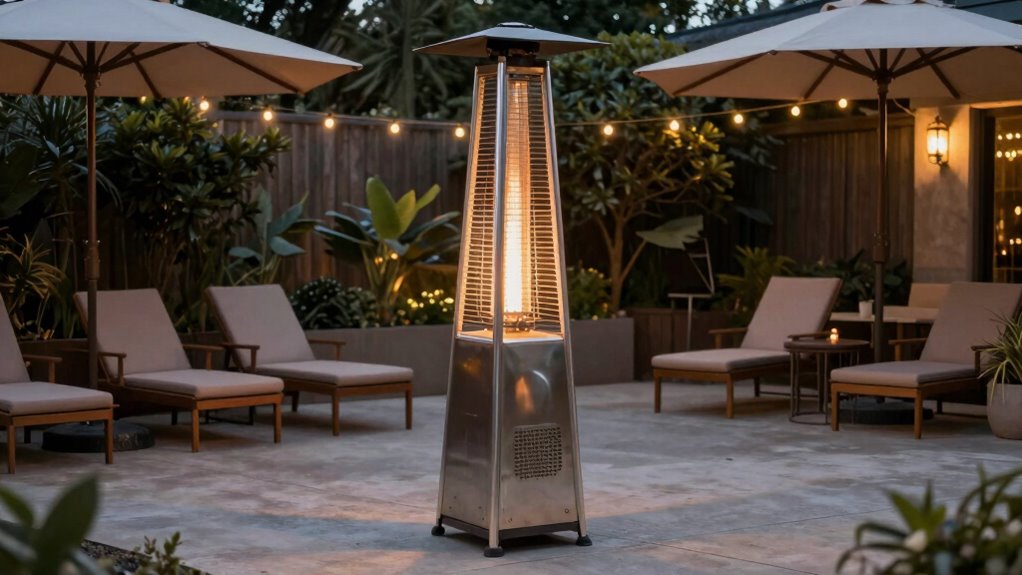

To prevent accidents, always make certain your patio heater is on a stable, level surface away from combustible materials like furniture, curtains, and overhangs. Keep it at least three feet from walkways and areas where people gather. Avoid windy spots that could tip or blow flames, and never use near enclosed spaces. Regularly check the ignition system and stability, and consider protective barriers if kids or pets are nearby. For detailed safety tips, keep exploring to keep your outdoor space safe.
Key Takeaways
- Place patio heaters on a flat, stable surface away from combustible materials and overhangs.
- Maintain at least three feet of clearance around the heater for safe operation and airflow.
- Keep children and pets at a safe distance during use and when the heater is hot.
- Ensure proper ventilation to prevent gas buildup and reduce the risk of flare-ups or explosions.
- Regularly inspect the heater and ignition system to ensure stability and safe functioning.
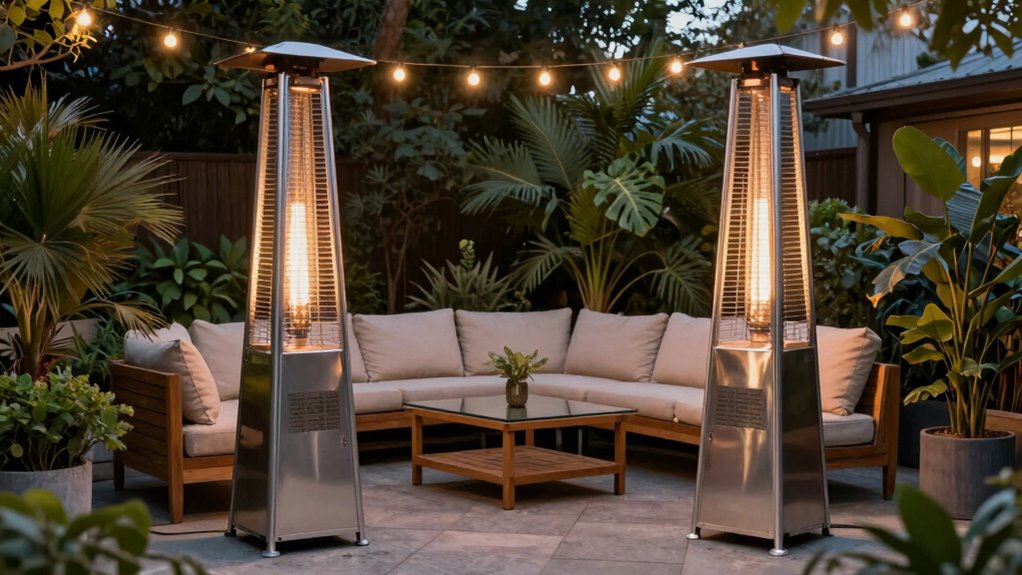
Patio heaters can extend your outdoor living season, but they also pose safety risks if not used properly. One of the most important aspects of safe usage is understanding ignition safety. Always confirm the heater is turned off and completely cool before attempting to ignite it. If you’re using a model with a matchless ignition system, follow the manufacturer’s instructions carefully. Never try to ignite a heater if you smell gas or suspect a leak. Regularly inspect the ignition components for damage or dirt, as a malfunctioning ignition can cause unexpected flare-ups or gas buildup. Keeping ignition safety in mind helps prevent accidental fires or explosions, safeguarding everyone around the heater.
Another critical factor is heater placement. Proper placement isn’t just about aesthetics—it’s essential for safety. You should position your patio heater on a flat, stable surface to prevent tipping over. Keep the heater at least three feet away from any combustible materials, such as umbrellas, furniture, or curtains. Never place a heater beneath overhangs, eaves, or inside enclosed spaces, as this can trap heat and increase the risk of fire or carbon monoxide buildup. Also, avoid placing the heater near walkways or areas where people frequently pass to prevent accidental contact or knocking it over. Ensure there’s ample clearance around the heater for proper airflow, which helps prevent overheating. Additionally, ventilation considerations are vital to avoid dangerous buildup of gases and ensure safe operation. When positioning your heater, consider wind conditions. Strong gusts can tip over or blow flames toward unsafe areas. If you live in a windy location, it’s best to secure the heater with a stable base or choose a sheltered spot. Keep children and pets in mind as well; they should never be near the heater when it’s in use or still hot. Use protective barriers if necessary, especially if you have little ones running around. Remember, heater placement also involves thinking about accessibility for maintenance and refueling. Regularly check that the heater is stable and that its ignition system functions smoothly. Proper placement combined with ignition safety practices minimizes risks and ensures you can enjoy your outdoor space without worry. By paying attention to these safety rules, you protect your loved ones and create a safe, cozy environment for outdoor gatherings.
Frequently Asked Questions
Can Patio Heaters Be Used Indoors Safely?
You should not use patio heaters indoors without careful attention to indoor safety and ventilation requirements. These heaters produce carbon monoxide, which can be deadly in enclosed spaces. Always guarantee proper ventilation, keep the heater away from flammable materials, and follow manufacturer instructions. If you’re unsure, it’s best to choose a heater specifically designed for indoor use or consult safety guidelines to prevent accidents and ensure safe indoor heating.
What Should I Do if My Patio Heater Tips Over?
If your patio heater tips over, don’t panic! Act quickly by applying stabilization tips—slide it back upright gently and make certain it’s on a flat, stable surface. Use tipping prevention techniques like securing it with straps or weights if needed. Check for any damage or leaks afterward, and always turn it off and unplug if it’s gas-powered. Safety first keeps your outdoor space fun and accident-free!
Are There Specific Weather Conditions That Affect Patio Heater Safety?
Weather hazards like strong wind and rain can seriously affect patio heater safety. Wind safety is essential, so avoid using your heater during high winds, as it can tip over or become unstable. Rain can cause electrical issues or rust. Always check the weather forecast before using your patio heater, and move it to a sheltered spot or turn it off during adverse conditions to prevent accidents.
How Often Should I Inspect My Patio Heater for Safety Issues?
You should inspect your patio heater regularly, ideally before each use, to guarantee safety. Incorporate heater maintenance into your safety check routines by looking for leaks, loose connections, or corrosion. Frequently checking for these issues helps prevent accidents and keeps your heater functioning properly. Make it a habit to perform these inspections consistently, especially during the colder months or if you notice any unusual odors or malfunctions.
Can Children or Pets Be Safely Around Patio Heaters?
Imagine a gentle guardian watching over a cozy outdoor space. Children and pets can be safely around patio heaters if you keep them at a safe distance, like a protective barrier shielding delicate treasures. Always supervise kids and pets closely, ensuring they don’t touch or get too close. Prioritize child safety and pet protection by installing heaters away from play areas, and never leave them unattended when in use.
Conclusion
By following these safety placement rules, you guarantee your patio heater remains a cozy addition, not a cause for concern. Keep it at a safe distance, avoid flammable materials, and never leave it unattended—think of it as your trusty steed in a knight’s quest for warmth. Remember, safety today keeps the fires of mishap at bay tomorrow. Stay vigilant and enjoy your outdoor space with the wisdom of ages guiding your choices.