When choosing restaurant equipment, understanding ETL, UL, and NSF certifications matters for safety and compliance. UL is well-known for electrical safety and durability, while ETL, developed by Intertek, offers similar assurance and is recognized worldwide. NSF focuses specifically on food safety, sanitation, and hygiene standards critical for restaurants. Knowing these marks helps guarantee your equipment is safe, reliable, and meets health standards. If you’d like to explore their differences further, there’s more to learn below.
Key Takeaways
- UL and ETL are safety certification marks for electrical appliances, with UL primarily recognized in North America and ETL also globally recognized.
- NSF certification focuses specifically on foodservice equipment safety, sanitation, and hygiene standards.
- ETL and UL certifications ensure electrical safety, fire risk reduction, and appliance durability, supporting reliable kitchen operations.
- NSF certification guarantees that equipment meets health and safety standards for food handling and sanitation.
- Choosing certified equipment from UL, ETL, or NSF helps restaurants ensure safety, compliance, and reduce risks of violations or recalls.
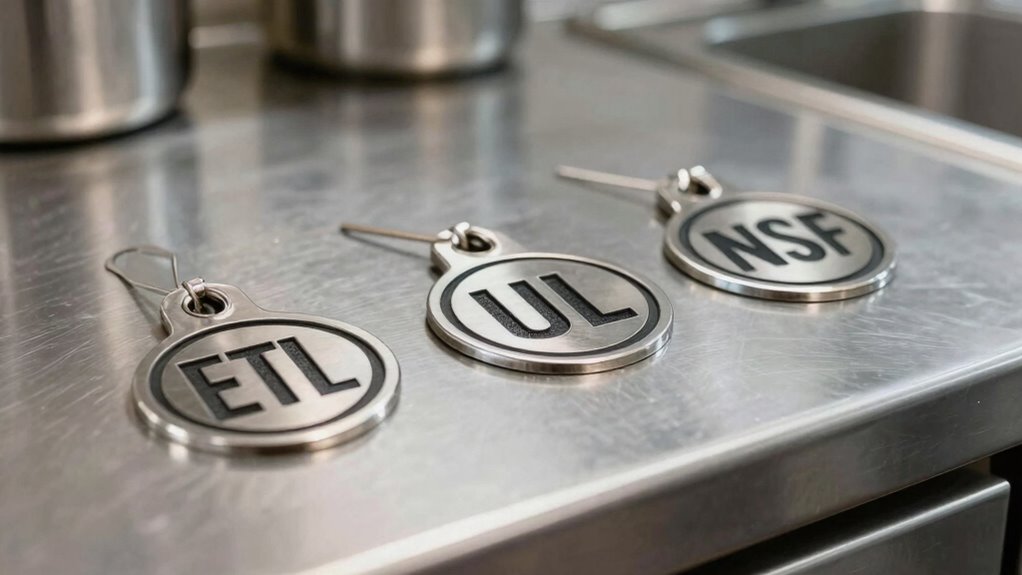
Are you familiar with the significance of ETL, UL, and NSF certifications for restaurants? These marks aren’t just symbols on equipment; they’re essential indicators that your establishment meets fundamental safety and quality standards. When it comes to kitchen safety and food handling standards, having certified equipment is indispensable. It ensures your appliances and tools operate safely, reducing the risk of accidents and contamination. Customers and health inspectors alike look for these certifications as proof that your restaurant adheres to strict guidelines.
Understanding what each certification signifies helps you make informed decisions about your kitchen equipment. UL, or Underwriters Laboratories, has a long-standing reputation for testing electrical products to ensure they meet rigorous safety standards. When you see a UL mark, you can trust that the product has been evaluated for electrical safety, fire risk, and overall durability. This directly impacts your kitchen safety by minimizing potential hazards caused by faulty wiring or malfunctioning appliances. It also aligns with food handling standards because safe, reliable equipment helps maintain a hygienic environment, preventing contamination or breakdowns that could compromise food quality.
UL certification ensures electrical safety and durability, helping maintain a hygienic, accident-free kitchen environment.
ETL, developed by Intertek, functions similarly to UL but is recognized globally. An ETL certification indicates that the product has been tested and complies with North American safety standards. For restaurant owners, this means your kitchen appliances have been rigorously checked for safety, ensuring that they operate correctly and pose no threat to your staff or customers. When your equipment bears the ETL mark, you’re demonstrating your commitment to kitchen safety and adherence to food handling standards. Reliable appliances reduce the risk of electrical fires, leaks, or malfunctions, all of which could jeopardize safety and food safety.
NSF International, on the other hand, specializes specifically in foodservice equipment. Their certifications focus on ensuring that products meet health and safety standards relevant to food handling, sanitation, and hygiene. When your equipment has an NSF mark, it means it’s been tested for cleanliness, durability, and compliance with strict food safety regulations. This directly supports your efforts to maintain high food handling standards, ensuring your kitchen stays compliant with local health codes and minimizes the risk of contamination. Additionally, certified equipment often undergoes ongoing testing and recertification to ensure continuous compliance, giving you added assurance of safety and quality.
Choosing equipment with ETL, UL, or NSF certification is a proactive approach to safeguarding your restaurant. It shows your commitment to kitchen safety, proper food handling standards, and operational excellence. These marks provide peace of mind, helping you avoid costly safety violations, recalls, or health issues. Ultimately, investing in certified equipment isn’t just about compliance—it’s about creating a safe, reliable environment where food is prepared and served with confidence.

HARDURA Stainless Steel Prep & Work Table 24 x 60 Inches Backsplash
- Material: Durable 18-gauge 430 stainless steel
- Corrosion Resistance: Resistant to rust and corrosion
- Dimensions: 24 x 60 inches for ample workspace
As an affiliate, we earn on qualifying purchases.
As an affiliate, we earn on qualifying purchases.
Frequently Asked Questions
How Do Certifications Influence Restaurant Insurance Premiums?
Certifications can lower your restaurant’s insurance premiums by demonstrating a commitment to safety and quality. Insurance companies often view certified equipment as lower risk, leading to potential insurance discounts. They conduct risk assessments considering these marks, which can positively influence your rates. By ensuring your appliances meet recognized standards, you not only enhance safety but also potentially reduce costs by securing better insurance terms.
Are There Regional Differences in Acceptance of These Certifications?
Like a map with different roads, regional acceptance of certifications varies. You’ll find that some areas prefer NSF marks for food safety, while others prioritize UL or ETL certifications for electrical safety. Certification variations exist depending on regional regulations and standards. You should check local codes to guarantee your certifications align with regional expectations, helping you avoid compliance issues and streamline inspections.
Can Non-Certified Equipment Be Legally Used in Restaurants?
You can use non-certified equipment in your restaurant, but it may not meet equipment compliance standards, risking legal issues. Certification enforcement varies by region, so some authorities might permit non-certified items if they’re safe and functional. However, relying on certified equipment ensures you comply with regulations, reduces liability, and demonstrates safety standards. It’s best to prioritize certified products to avoid potential legal complications and maintain a high standard of safety in your restaurant.
How Often Must Restaurant Equipment Be Recertified?
You need to stay alert because equipment recertification isn’t a one-time event. Typically, you should check the recertification frequency annually, guaranteeing your equipment remains compliant and safe. Failing to renew certifications on time can risk legal issues and safety hazards that threaten your restaurant’s reputation. Stay proactive by scheduling regular equipment renewal checks—it’s your best defense against unexpected problems and ensures continuous compliance with safety standards.
Do These Certifications Cover Environmental Sustainability Standards?
These certifications primarily focus on safety and performance, not environmental sustainability standards. They don’t explicitly address environmental impact or sustainability. If you’re concerned about eco-friendly practices, look for additional certifications like ENERGY STAR or Green Seal. While UL, ETL, and NSF mark safety and compliance, you should verify if the specific equipment meets sustainability standards separately to support your restaurant’s eco-conscious goals.
Conclusion
Choosing the right certification isn’t just about compliance—it’s about building trust with your customers. ETL, UL, and NSF marks are more than symbols; they’re your restaurant’s badge of safety and quality. Think of them as your silent ambassadors, quietly assuring patrons they’re in good hands. Don’t overlook these marks—they’re the keys to elevating your reputation and ensuring your establishment stands out in a crowded market. After all, safety isn’t just a mark; it’s your promise.