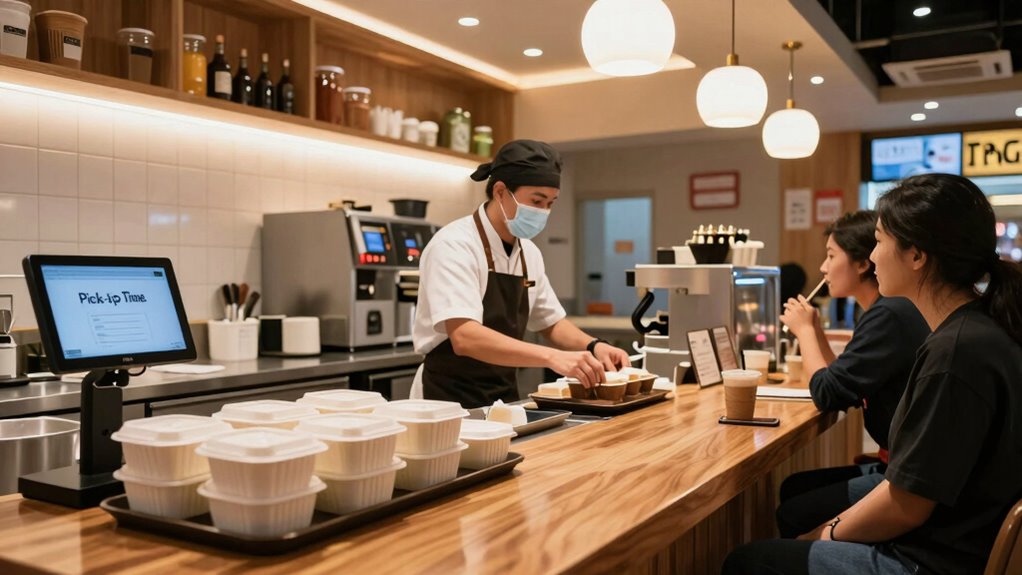
Pick-up time in restaurant operations is when your order is ready for you to collect, and it’s essential for keeping service smooth. It helps coordinate the kitchen and front-of-house staff, ensuring dishes are fresh and served promptly. Properly managing pick-up times boosts efficiency, reduces wait times, and improves guest experience. When everyone is aligned on timing, your restaurant runs more smoothly. Keep exploring, and you’ll discover how optimizing this timing benefits your entire operation.

Get kitchen staples and gadgets delivered free with Prime
- Fast, free delivery on millions of items
- Prime Video, Amazon Music and more included
- Member-only deals all year
Key Takeaways
- Pick-up time is when an order is ready for customer collection in a restaurant.
- It is communicated from the kitchen to the front-of-house staff for timely service.
- Proper pick-up timing ensures efficient table turnover and reduces wait times.
- Coordinating pick-up times helps prevent food from cooling or sitting too long.
- Optimized pick-up times improve overall service flow and guest satisfaction.

Have you ever wondered what exactly “pick-up time” means in restaurant operations? It’s a pivotal point that influences how smoothly your restaurant runs, impacting everything from customer satisfaction to overall efficiency. Essentially, pick-up time is the window when an order is ready for the customer to collect. It’s the moment when the kitchen notifies the front-of-house staff that the meal is prepared and can be handed off. This timing is essential because it directly affects table turnover—the rate at which tables are cleared and made ready for new guests. When pick-up times are well-coordinated, tables turn over faster, allowing you to serve more guests throughout the day and maximize revenue. Conversely, delays in pick-up can cause backups, increasing wait times and reducing overall efficiency.
For you as a restaurant operator, understanding and managing pick-up time helps streamline kitchen efficiency. When the kitchen communicates accurately and promptly, it prevents food from sitting too long, which can lead to degraded quality and unhappy customers. Organized communication between the kitchen and front-of-house staff ensures that orders are ready exactly when they’re needed, minimizing idle time. This synchronization means the kitchen prepares dishes at a steady pace, avoiding bottlenecks that slow down service. As a result, the entire operation becomes more fluid, with less chaos during busy hours. Efficient pick-up processes also help you keep the flow of orders consistent, reducing the risk of overburdening staff or causing confusion during peak times. Additionally, understanding kitchen-to-table communication is crucial for optimizing this process. Good management of timing coordination can significantly improve your overall service quality. Developing clear protocols for order status updates can further enhance the efficiency of the pick-up process. Moreover, implementing a reliable communication system can greatly reduce misunderstandings and ensure that everyone is on the same page during busy periods. It’s also important to regularly review and adjust your procedures based on customer feedback to ensure continuous improvement.
Your goal should be to optimize pick-up times so that they align with your restaurant’s capacity and service style. If your kitchen is efficient, you can better predict when meals will be ready, allowing servers to plan their interactions with guests more effectively. This reduces the likelihood of food getting cold or waiting too long, which can harm the customer experience. By monitoring and adjusting the timing of food preparation and pick-up notifications, you can improve your table turnover rate, ensuring your restaurant remains profitable and busy. Good management of pick-up time also encourages a smoother workflow, less stress for your staff, and happier guests who enjoy timely, fresh meals. Ultimately, understanding and controlling pick-up time is a key part of running a successful restaurant, helping you deliver quality service while maximizing your operational efficiency.
As an affiliate, we earn on qualifying purchases.
Frequently Asked Questions
How Is Pick-Up Time Different From Reservation Time?
Pick-up time is when you’re expected to collect your order, while reservation time is when you’re booked to dine in. The restaurant aims for order accuracy by preparing your food for the pick-up time, matching your expectations for prompt service. If you arrive early or late, it can influence customer expectations and order accuracy. Knowing both times helps guarantee smooth service and a better dining or takeout experience.
What Factors Influence Setting an Accurate Pick-Up Time?
Setting an accurate pick-up time is like aiming a dart at a moving target. You need to take into account order accuracy and staff training to do it well. Factors such as the complexity of dishes, kitchen efficiency, and staff readiness influence how precisely you can estimate when orders are ready. Proper staff training helps your team coordinate smoothly, ensuring customers get their food on time, avoiding unnecessary wait times or delays.
How Do Delays Impact Customer Satisfaction and Restaurant Operations?
Delays can hurt customer satisfaction by making orders feel less reliable and increasing wait times. When delays happen, it’s essential that your staff maintains order accuracy and communicates clearly with customers. Proper staff training helps your team handle delays efficiently, reduce errors, and reassure customers. By managing delays well, you enhance their experience, foster loyalty, and keep your restaurant running smoothly even during busy or unexpected moments.
What Technology Tools Assist in Managing Pick-Up Times?
Order tracking and automated notifications are key tools that help you manage pick-up times effectively. By using order tracking software, you can monitor orders in real-time, ensuring accuracy. Automated notifications alert customers when their food is ready, reducing wait times and improving satisfaction. These technologies streamline operations, minimize delays, and enhance communication, making it easier for you to deliver a seamless, timely pick-up experience that keeps customers happy and coming back.
How Should Staff Communicate Pick-Up Times to Customers?
You should clearly communicate pick-up times to customers by using friendly, concise language through various channels like phone calls, texts, or digital displays. Staff training is essential, so your team understands the importance of consistent messaging and can confidently relay pick-up details. Prioritize customer communication by confirming their order details and estimated pick-up time, ensuring a smooth and satisfying experience that builds trust and encourages repeat business.
Conclusion
Understanding pick-up time isn’t just about timing; it’s about trust and connection. When you communicate clearly, customers feel valued, and your operations run smoothly. Sometimes, a small delay or a perfect handshake at pick-up reveals that behind every order is a story—and in those moments, you realize that serving food is really about serving relationships. After all, the right pick-up time isn’t just a number; it’s where your restaurant and customers truly meet.
Halloween Picks
halloween
As an affiliate, we earn on qualifying purchases.