
To train staff to taste espresso more consistently, start with sensory calibration by conducting regular tasting sessions that focus on aroma, flavor, and body. Use standardized tasting sheets and structured protocols to guide evaluations and minimize personal biases. Encourage descriptive language and challenge staff with complex tastings to sharpen their perception. Regular practice, feedback, and collaborative learning help develop shared vocabulary and improve accuracy. Continue exploring these methods to elevate your team’s tasting skills further.
Key Takeaways
- Implement structured tasting protocols with standardized sheets to ensure objective and consistent evaluations.
- Conduct regular calibration sessions using blind tastings to align staff perceptions of flavor profiles.
- Encourage descriptive language and shared vocabulary to improve communication and understanding of tasting notes.
- Schedule consistent practice sessions with immediate feedback to reinforce sensory skills and reduce bias.
- Incorporate ongoing sensory awareness training to develop nuanced flavor recognition and maintain high evaluation standards.
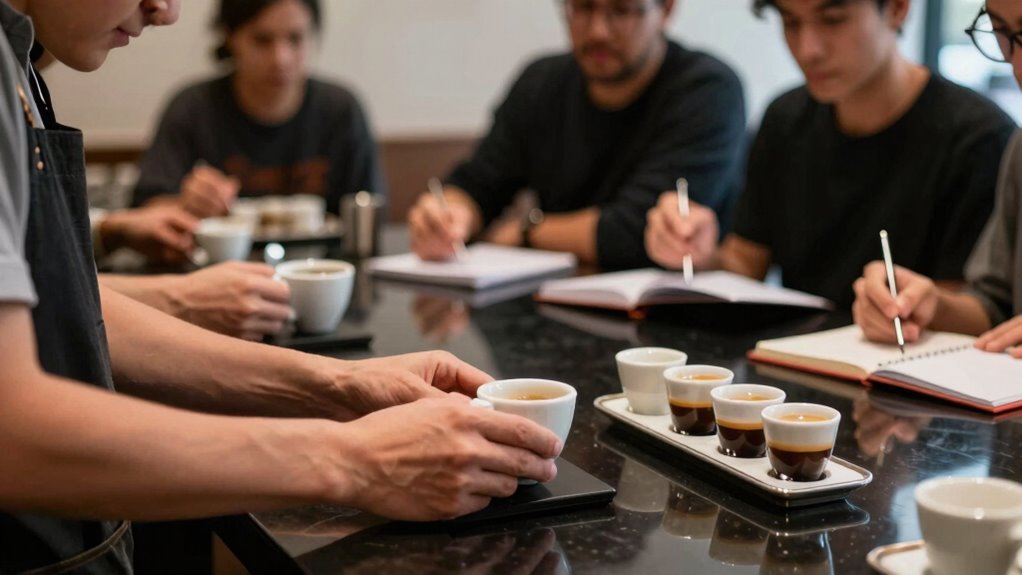
Training your staff to taste espresso consistently is essential for maintaining quality and delivering a great customer experience. When your team can accurately assess the flavor profile, aroma, and body of each shot, it ensures that every cup meets your standards. To achieve this, you need to focus on sensory calibration, which helps your staff develop a shared understanding of what good espresso should taste and smell like. Sensory calibration involves regular, structured tastings where your team compares different espresso samples, gradually aligning their perceptions. This process sharpens their ability to identify specific flavors and qualities, reducing subjective differences and promoting consistency.
Implementing clear tasting protocols is vital for effective training. These protocols serve as step-by-step guides that your staff can follow during each tasting session. For example, instruct them to evaluate the aroma first, then assess the flavor, body, and aftertaste systematically. Using standardized tasting sheets can help record observations objectively, making it easier to compare results over time. When everyone adheres to the same protocols, it minimizes variability caused by personal biases or inconsistent methods, ensuring that each tasting is reliable. Regular calibration exercises also help reinforce these standards and keep everyone aligned.
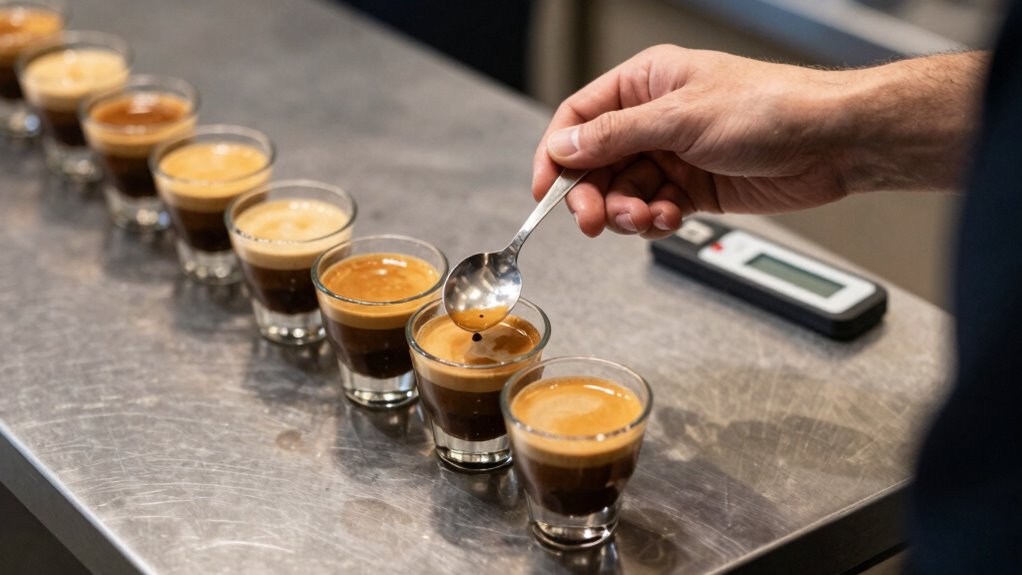
Start by introducing your team to the basics of sensory calibration. Conduct blind tastings with a variety of espresso shots—some excellent, some flawed—to teach them how to distinguish different qualities. Encourage them to describe what they smell and taste using specific language, such as citrus, chocolate, or woody notes. Over time, this practice helps build a common vocabulary that everyone understands, making it easier to communicate about the quality of each shot. As your team becomes more confident, you can challenge them with more complex tastings, further refining their palates and perception. Developing sensory acuity is a continuous journey that enhances overall tasting precision.
Consistency is also reinforced through regular practice. Schedule weekly tasting sessions where your staff applies the tasting protocols and sensory calibration exercises. During these sessions, provide feedback and discuss differences in perceptions openly. This collaborative approach helps everyone learn from each other and collectively improve their tasting skills. Remember, calibration isn’t a one-time event; it’s an ongoing process that keeps your team aligned and sharpens their ability to evaluate espresso accurately. Incorporating sensory calibration into your training ensures ongoing improvement and consistency in flavor assessment. Additionally, emphasizing the importance of sensory awareness helps your staff develop a more nuanced understanding of flavors, further enhancing their calibration skills.
In essence, developing your staff’s tasting skills requires intentional training centered around sensory calibration and standardized tasting protocols. By fostering a shared language and consistent methods, you enable your team to taste with confidence and precision. This not only guarantees that every cup served is of high quality but also elevates the overall customer experience, establishing your establishment as a true expert in espresso.
espresso tasting calibration kit
As an affiliate, we earn on qualifying purchases.
As an affiliate, we earn on qualifying purchases.
Frequently Asked Questions
How Often Should Staff Undergo Tasting Training?
You should have staff undergo tasting training every 1 to 3 months to strengthen their sensory memory and improve flavor perception. Regular sessions help them recognize subtle differences in espresso, guaranteeing consistency. Frequent practice sharpens their palate, making flavor distinctions clearer. Consistent training keeps their skills sharp, preventing drift in taste recognition, and helps maintain high-quality standards. Adapting the frequency based on experience levels ensures ideal results.
What Equipment Is Best for Tasting Espresso Samples?
Think of your tasting setup as a finely tuned orchestra. You need a consistent instrument—use a calibrated espresso grinder and a high-quality cupping spoon—to guarantee accurate flavor profiling. A clean, neutral cup or glass helps prevent contamination of taste. Keep your equipment regularly calibrated to maintain precision. This approach creates harmony in your tasting process, allowing your staff to identify subtle notes and achieve consistency, much like a symphony.
How Do Personal Preferences Affect Tasting Consistency?
Your personal preferences can influence your sensory perception, making it challenging to maintain flavor consistency. When tasting espresso, your taste buds and aroma perceptions may vary daily based on mood, fatigue, or environment. To improve consistency, focus on training your palate by tasting the same espresso multiple times and noting specific flavors. This helps you recognize subtle differences and reduces the impact of personal preferences, ensuring a more objective and reliable assessment of flavor.
Can Genetic Taste Differences Influence Espresso Evaluation?
Genetic predispositions, like taste buds sensitivity, can influence how you perceive espresso, but they don’t hinder your ability to evaluate it consistently. Even if your genetic makeup makes certain flavors more intense, regular tasting and calibration help you develop a reliable palate. Remember, training your senses allows you to focus on flavor nuances objectively, regardless of genetic differences, so you can confidently assess espresso quality with experience and practice.
What Are Common Tasting Mistakes to Avoid?
To improve your tasting skills, avoid common mistakes like neglecting sensory calibration before tasting, which skews flavor perception. Don’t rush through evaluations or be influenced by prior impressions. Stay focused on the aroma, balance, and aftertaste, and guarantee your palate is clean between tastings. Keep notes detailed and objective, and regularly recalibrate your palate to maintain consistency. This helps you develop a sharper, more accurate sensory perception.
Conclusion
By honing your staff’s tasting skills, you’re planting seeds for a more harmonious espresso experience. Consistent tasting isn’t just about precision; it’s about cultivating a shared palate that grows stronger with each session. Think of it as tuning an instrument—every note must be just right to create beautiful music. Keep practicing, stay patient, and soon your team will be singing in perfect harmony, delivering espresso that sings to every customer’s taste buds.