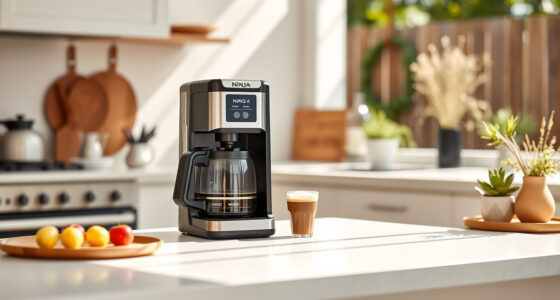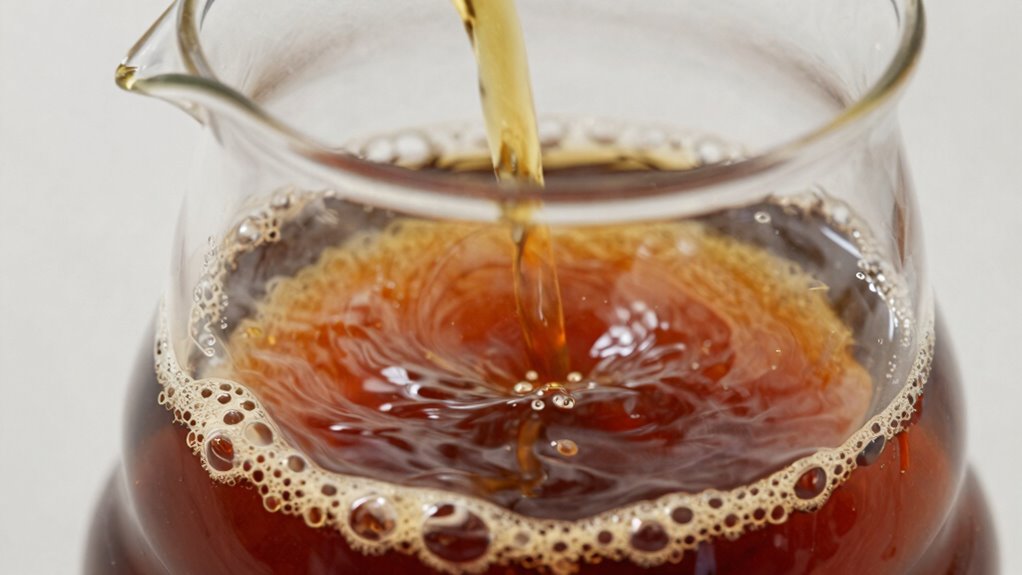

Water temperature affects how your coffee’s flavors develop, controlling the extraction of oils, acids, and soluble compounds. If the water’s too hot, it can cause over-extraction, leading to bitterness and overshadowing bright notes. Too cold, and you’ll under-extract, resulting in a weak and flat flavor. Maintaining a stable, ideal temperature guarantees your brew retains balanced, vibrant flavors. Keep exploring how precise temperature control can elevate your coffee experience and avoid common pitfalls.

Get kitchen staples and gadgets delivered free with Prime
- Fast, free delivery on millions of items
- Prime Video, Amazon Music and more included
- Member-only deals all year
Key Takeaways
- Fluctuating water temperature causes uneven extraction, leading to inconsistent flavor profiles in filter coffee.
- Variations can result in over-extraction or under-extraction, affecting bitterness and brightness.
- Proper temperature ensures balanced release of oils, acids, and soluble compounds for optimal flavor.
- Temperature instability can produce flat, muddy, or overly bitter tastes in the brewed coffee.
- Maintaining a stable, ideal temperature range promotes consistent and full flavor extraction.
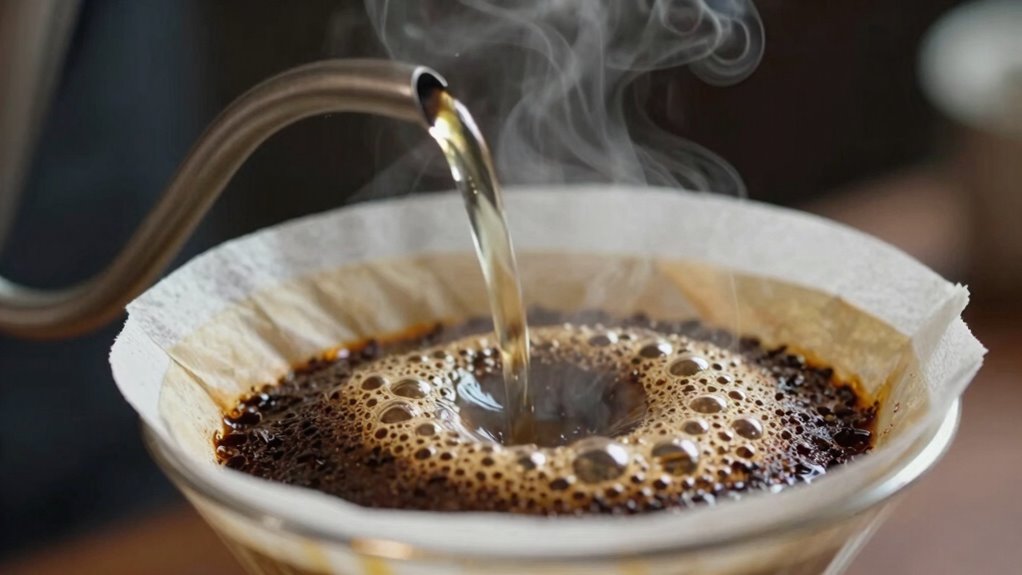
Water temperature plays a vital role in extracting the full flavor of your coffee. When you brew, the temperature of the water impacts how well the coffee grounds release their oils, acids, and soluble compounds. Proper coffee extraction depends heavily on keeping the water within an essential temperature range—usually between 195°F and 205°F. If the water’s too cold, it won’t extract enough of the coffee’s nuanced flavors, resulting in a weak and underwhelming brew. Conversely, water that’s too hot can over-extract, pulling out bitter compounds and overshadowing the coffee’s brighter notes.
Temperature stability is key because fluctuations can alter the extraction process. If your water’s temperature varies during brewing, some parts of the process might extract too much or too little, creating an uneven flavor profile. For example, if the water starts hot but cools down too quickly, you might find the initial flavors are overly intense, while the later sips lack complexity. On the other hand, inconsistent temperatures can lead to a muddy or flat taste, as certain desirable compounds become overpowered by undesirable ones. Maintaining a stable temperature guarantees the water interacts evenly with the coffee grounds, producing a balanced and rich flavor. Temperature control is essential for consistent extraction. Additionally, temperature regulation helps to prevent over- or under-extraction caused by temperature fluctuations.
When your water temperature is just right and remains steady, it allows for consistent coffee extraction. This consistency helps you reveal the full spectrum of flavors—fruity, nutty, chocolatey, or floral—that define your coffee’s character. It also minimizes the risk of over- or under-extraction, giving you a more predictable and enjoyable cup each time. Many brewing methods, like pour-over or French press, are particularly sensitive to temperature stability, so paying attention to your water’s heat can make a big difference. Using a temperature-controlled kettle or a scale with temperature settings can help you maintain that ideal range. Temperature stability is essential for achieving the best possible flavor in your coffee.
A precise temperature also ensures your brewing method extracts the desired compounds without introducing unwanted bitterness.
temperature controlled coffee kettle
As an affiliate, we earn on qualifying purchases.
As an affiliate, we earn on qualifying purchases.
Frequently Asked Questions
Does Water Temperature Affect Coffee Brewing Time?
Yes, water temperature affects coffee brewing time. Higher temperatures speed up flavor extraction, so your coffee brews faster, while lower temps slow down the process. Maintaining a consistent temperature guarantees brew stability, giving you a balanced flavor profile. If the water’s too hot or too cold, it can lead to under- or over-extraction, impacting taste. Adjusting water temperature helps you control brewing time and achieve the desired flavor extraction.
How Quickly Does Water Temperature Change During Brewing?
Water temperature can change rapidly during brewing, often within a few seconds to a minute, especially if your equipment lacks water temperature stability. This quick fluctuation affects brewing temperature precision, making it harder to maintain consistent extraction. To keep temperatures steady, you should use a high-quality coffee maker with good temperature control. This way, your coffee brews at the ideal temperature, ensuring consistent flavor and aroma every time.
Can Water Temperature Influence Coffee’s Acidity Levels?
Yes, water temperature influences coffee’s acidity levels by affecting its pH during brewing. Higher temperatures enhance temperature extraction, pulling more acidic compounds from the coffee grounds, which lowers the pH and increases acidity. Conversely, cooler water extracts fewer acids, resulting in a milder, less acidic brew. So, adjusting your brewing temperature can help you control the coffee’s acidity, balancing flavor and brightness to suit your taste preferences.
Is Colder Water Better for Certain Coffee Types?
Colder water can be better for certain coffee types, especially lighter roasts with delicate flavors. Did you know that brewing with water around 190°F (88°C) preserves more nuanced notes? Your choice of coffee bean selection and brewing vessel material plays a role too. Glass or ceramic vessels retain temperature better, ensuring the cooler water extracts the subtle flavors without overpowering acidity, resulting in a more balanced, refined cup.
How Do I Maintain Consistent Water Temperature?
You can maintain consistent water temperature by using a reliable kettle with water heating capabilities that allow precise temperature control. Preheat your brewing equipment to stabilize temperature, and avoid sudden temperature fluctuations during brewing. Use a thermometer to monitor water temperature, ensuring it stays within your desired range. Regularly check your equipment for proper functioning, and consider insulated kettles or thermal carafes for better temperature stabilization throughout your brewing process.
Conclusion
Understanding how water temperature affects your coffee’s flavor can elevate your brewing game. When you use the right temperature, you release more nuanced flavors and aromas, making each cup more enjoyable. Notably, studies show that water just below boiling (around 195-205°F) yields ideal extraction for most coffee beans. So, next time you brew, pay attention to your water’s temperature—it could be the secret to your perfect cup. Cheers to better coffee!
NFL season / tailgating Picks
team gear
As an affiliate, we earn on qualifying purchases.