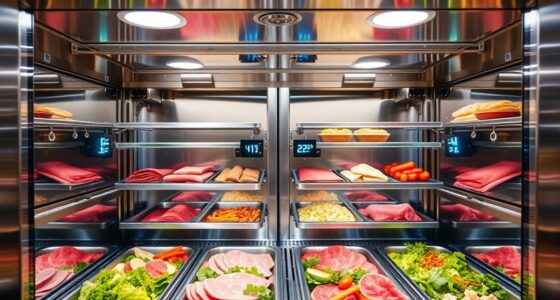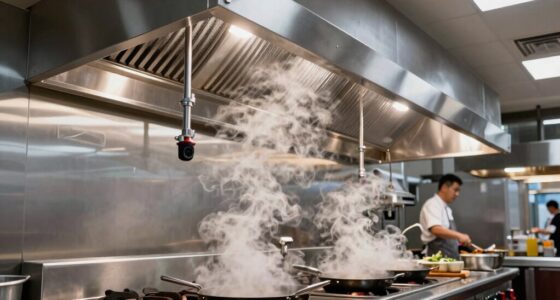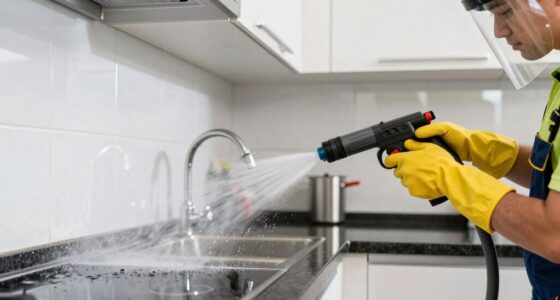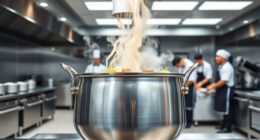
To run an effective restaurant line check for safety, start by reviewing safety protocols with your team and observing their handling of equipment. Inspect tools, appliances, and safety gear to guarantee everything’s in proper condition. Check that ventilation and air quality systems work well, and verify that emergency exits and safety signs are accessible. Monitor staff behaviors for risky practices and address them immediately. Keeping detailed documentation helps track improvements. Continue exploring best practices to create a safer, more efficient kitchen environment.

Get kitchen staples and gadgets delivered free — and shop member deals
- Fast, free delivery on millions of items
- Access to Prime Big Deal Days deals on October 6–7
- Prime Video, Amazon Music and more included
Key Takeaways
- Conduct pre-shift inspections of equipment, knives, and safety gear to ensure proper functioning and storage.
- Observe staff during operations to identify risky behaviors and reinforce safe handling practices.
- Verify visibility of safety protocols, emergency exits, and evacuation routes for all team members.
- Check ventilation systems and indoor air quality to maintain a safe, healthy environment.
- Document findings, address issues promptly, and schedule regular safety training and maintenance checks.

Running a restaurant line check for safety is essential to guarantee everything runs smoothly and hazards are minimized. When you conduct these checks thoroughly, you ensure that your staff understands safety protocols and that all equipment functions correctly. This process not only prevents accidents but also maintains high standards of food safety and operational efficiency.
Start by reviewing staff training. Make sure all team members are familiar with safety procedures, including proper handling of knives, hot equipment, and cleaning routines. Conduct quick refresher sessions if needed, emphasizing the importance of alertness and communication. When your staff knows exactly what to look out for, they can spot potential hazards early. Encourage questions and clarify any uncertainties to keep everyone confident and prepared. Well-trained staff are the first line of defense against accidents, so investing time in their education pays off in safety and productivity. Regular safety training sessions can reinforce best practices and keep safety top of mind. Additionally, incorporating training refreshers ensures that safety knowledge remains current and effective.
Next, focus on equipment maintenance. Regularly inspect all kitchen tools, appliances, and safety gear. Check that knives are sharp and stored properly, that cooking ranges and ovens are functioning correctly, and that fire extinguishers and first aid kits are accessible and up to date. Faulty equipment can cause injuries or compromise food safety, so addressing issues promptly is vital. During your line check, test each piece of equipment to ensure it operates smoothly. Look for signs of wear or damage, such as frayed cords or leaking seals, and schedule repairs immediately. Proper maintenance reduces downtime and prevents accidents caused by malfunctioning gear. Incorporating preventive maintenance practices can help sustain equipment safety and performance over time.
As you proceed, verify that your safety protocols are visibly posted and easily accessible. This includes emergency exits, evacuation routes, and safety procedures. Walk through the entire kitchen area, observing how staff handles equipment and ingredients. Watch for risky behaviors, like rushing or improper lifting techniques, and provide immediate corrective feedback. Reinforce a culture of safety by acknowledging good practices and addressing hazards as they arise. Additionally, incorporating indoor air quality considerations can improve overall safety and comfort for staff, especially in kitchens with ventilation issues. Ensuring proper ventilation systems are in place can significantly reduce the risk of poor air circulation and related hazards. Maintaining a clean and well-ventilated environment also contributes to reducing hazards related to poor air circulation. Regularly checking and maintaining these systems can prevent potential health issues linked to inadequate ventilation. Moreover, routinely monitoring air quality levels can help identify issues before they impact staff health.
Finally, document your findings from the line check. Keep a checklist that covers staff training updates, equipment condition, and safety compliance. Use this documentation to track improvements over time and identify recurring issues. Regularly scheduling these safety checks helps instill a proactive mindset, ensuring safety remains a top priority. When safety becomes ingrained in your daily routine, you create a safer environment for your staff and guests alike, keeping your restaurant efficient and hazard-free.
restaurant kitchen safety inspection checklist
As an affiliate, we earn on qualifying purchases.
As an affiliate, we earn on qualifying purchases.
Frequently Asked Questions
How Often Should Line Checks Be Scheduled?
You should schedule line checks daily before each shift to guarantee food handling and equipment maintenance meet safety standards. Regular checks help catch potential hazards early, like improper food storage or equipment malfunctions. Incorporate these checks into your daily routine, and document any issues. Frequent line checks promote safe food handling practices, prevent contamination, and maintain a clean, efficient workspace, ultimately protecting your customers and staff.
Who Should Be Responsible for Conducting Line Checks?
You should assign trained staff members to conduct line checks, as doing so guarantees consistency and safety. Studies show that workplaces with ongoing staff training see 30% fewer safety incidents. Your team must focus on equipment maintenance and proper procedures during checks. By empowering employees with clear responsibilities, you create a safer environment, reduce risks, and maintain high standards. Regularly scheduled line checks help catch issues early and keep your restaurant running smoothly.
What Specific Safety Items Should Be Inspected First?
You should first inspect for kitchen hazards like sharp objects, spills, and fire risks, ensuring they’re properly managed. Next, focus on equipment maintenance, checking that appliances and tools are functioning correctly and safely. By prioritizing these safety items, you reduce the risk of accidents. Regularly scanning for hazards and maintaining equipment keeps your team safe and your restaurant compliant with safety standards.
How Do You Document Line Check Results Effectively?
Imagine a neatly filled inspection checklist pinned beside your station; it’s your visual reminder. You document line check results by noting each safety item checked, including staff training status and any issues found. Use clear, concise notes and timestamp each entry to track progress over time. This organized approach guarantees you capture all essential details, making it easier to identify safety gaps and maintain a safe, compliant environment.
What Are Common Mistakes to Avoid During Line Checks?
You should avoid rushing through line checks, as it can lead to overlooked issues in food handling and equipment maintenance. Don’t ignore small signs of equipment wear or improper food storage practices; these can compromise safety. Also, don’t forget to verify that staff follow safety protocols consistently. Regularly updating your procedures and providing ongoing training helps prevent common mistakes, ensuring a safer, more efficient restaurant operation.
Conclusion
By following these steps, you’ll guarantee your restaurant line is safe and compliant, preventing potential hazards before they become bigger issues. Regular checks demonstrate your commitment to staff and customer safety, building trust and confidence in your establishment. Remember, an ounce of prevention is worth a pound of cure—staying vigilant keeps your restaurant running smoothly and your reputation intact. Keep safety top of mind, and you’ll be well on your way to success.
NFL season / tailgating Picks
team gear
As an affiliate, we earn on qualifying purchases.