Cross-contact occurs when an allergen touches a food without intentionally adding it, potentially causing allergic reactions. Cross-contamination involves spreading harmful bacteria or pathogens, risking foodborne illnesses. While both involve unintended transfer, cross-contact relates to allergens, and cross-contamination concerns pathogens. Proper handling, cleaning, and storage are essential to prevent both. If you’re curious how to distinguish and manage these risks effectively, you’ll find helpful tips ahead to keep your food safe.
Key Takeaways
- Cross-contact transfers allergens to foods, potentially causing allergic reactions, while cross-contamination spreads harmful pathogens like bacteria and viruses.
- Cross-contact involves allergen transfer without visible contamination, whereas cross-contamination involves the physical transfer of bacteria or pathogens.
- Preventing cross-contact requires dedicated utensils and surfaces for allergen-free foods; preventing cross-contamination involves proper cleaning and sanitation.
- Cross-contact poses risks mainly for allergic individuals; cross-contamination risks everyone by causing foodborne illnesses.
- Both require strict food safety protocols, but focus on different hazards— allergen transfer versus pathogen spread.
Understanding the difference between cross-contact and cross-contamination is essential for maintaining food safety in your kitchen. While they both involve the transfer of unwanted substances, they address different concerns, especially when it comes to allergens. Cross-contact happens when an allergen comes into contact with a food that doesn’t contain that allergen, potentially causing a serious allergic reaction. Cross-contamination, on the other hand, involves the spread of harmful bacteria, viruses, or other pathogens, which can lead to foodborne illnesses. Recognizing this distinction helps you implement effective allergen management and adhere to food safety protocols to protect yourself and others.
Understanding cross-contact vs. cross-contamination is key to food safety and allergen management.
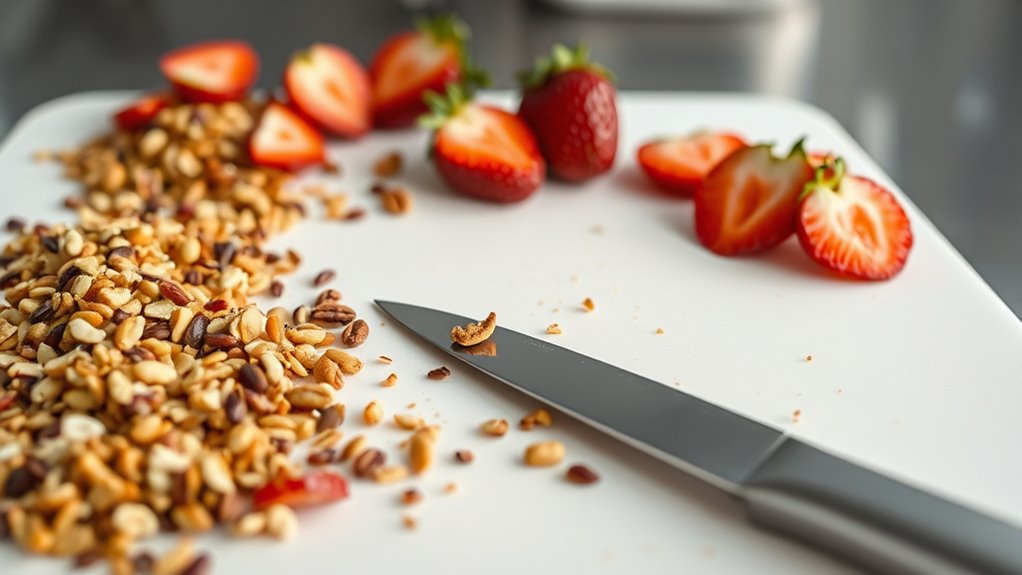
When it comes to allergen management, understanding how cross-contact occurs is crucial. For example, using the same cutting board or knife for both allergen-containing and allergen-free foods without proper cleaning can transfer allergens. Even tiny amounts of an allergen can trigger reactions in sensitive individuals. To prevent this, you need to establish clear procedures, like dedicating specific utensils, cutting boards, and surfaces for allergen-free foods. Proper storage is also vital; keep allergen-containing ingredients separate from others and clearly labeled. This proactive approach minimizes the risk of accidental contact and helps maintain a safe environment for everyone, especially those with food allergies.
Food safety protocols are your best defense against cross-contact and cross-contamination. These protocols include regular handwashing, cleaning and sanitizing work surfaces thoroughly, and avoiding the use of the same equipment for different ingredients without proper cleaning. When preparing food, always be mindful of handling allergenic ingredients first or last, and consider using color-coded tools to distinguish between different types of foods. Training everyone involved in food preparation on these protocols ensures consistency and reduces the chance of mistakes. Implementing strict procedures isn’t just about compliance; it’s about creating a culture of safety where every step is designed to prevent allergen transfer and pathogen spread.
You should also be aware of how improper storage can contribute to cross-contact and cross-contamination. Storing raw meats above ready-to-eat foods or placing allergen-containing ingredients near other items can lead to accidental transfer. Use separate containers, and keep foods covered to prevent splashes or spills. Always check labels and expiration dates before use to avoid using spoiled or contaminated ingredients. When in doubt, discard questionable items rather than risk contaminating other foods. Additionally, understanding resources and tools available for food safety can help implement effective measures and stay compliant with standards. Consistently following these food safety protocols will help you prevent cross-contact and cross-contamination, safeguarding your kitchen, your health, and the health of those you serve.
Frequently Asked Questions
How Can Cross-Contact Be Prevented in Shared Kitchen Spaces?
You can prevent cross-contact in shared kitchens by practicing proper storage—keep allergen-free foods separate and clearly labeled. Always wash your hands thoroughly before handling different ingredients, especially when switching between allergen-containing and allergen-free items. Use dedicated utensils and cleaning tools to avoid contamination. Maintaining personal hygiene is essential; avoid touching your face or hair while preparing food, and clean surfaces regularly to minimize the risk.
Are There Differences in Allergen Risks Between Cross-Contact and Cross-Contamination?
Imagine a tiny, hidden threat lurking in your kitchen—this is the difference in allergen risks you face. Cross-contact often results in direct allergenic exposure, making the risk higher if not managed carefully. Cross-contamination, while still risky, typically involves trace amounts. Your risk assessment must focus on these subtle distinctions to prevent allergic reactions. Knowing this helps you prioritize safety and minimize the danger lurking in everyday food preparation.
What Are the Legal Implications of Allergen Cross-Contact in Food Service?
You’re legally liable if allergen cross-contact causes harm, which can lead to lawsuits, fines, or closure. Ignoring proper allergen controls violates consumer rights, who expect safe, allergen-free meals. You must follow strict protocols and accurately inform customers to avoid legal penalties. Ensuring allergen management not only protects your customers but also shields your business from potential legal consequences and reputational damage.
How Do Cleaning Practices Differ for Preventing Cross-Contact Versus Cross-Contamination?
Did you know that 32% of food allergy reactions are caused by cross-contact? To prevent this, you should adapt cleaning protocols based on allergen awareness, using separate tools and dedicated areas for allergen-containing foods. For cross-contamination, thorough cleaning to remove residues is essential. You must prioritize cleaning practices that target specific risks, ensuring both allergen safety and overall food hygiene, reducing the chances of unintended allergen exposure.
Can Cross-Contact Occur Without Visible Signs or Odors?
Yes, cross-contact can occur without visible signs or odors. Invisible allergens and odorless contamination often happen during food prep or handling, making them difficult to detect. Even if your workspace looks and smells clean, tiny traces of allergens can still be present on surfaces or equipment. That’s why thorough cleaning and proper allergen management are essential to prevent accidental exposure, especially when contamination isn’t immediately noticeable.
Conclusion
So, next time you blame that rogue peanut butter for your allergy flare-up, remember: it’s not just about cross-contamination at the grocery store. Cross-contact sneaks into your kitchen like a sneaky ninja, turning your allergen-free meal into a surprise party for your immune system. Stay vigilant, avoid the villainous mix-ups, and don’t let sneaky cross-contact crash your dinner plans—because your allergies aren’t going to fight themselves!