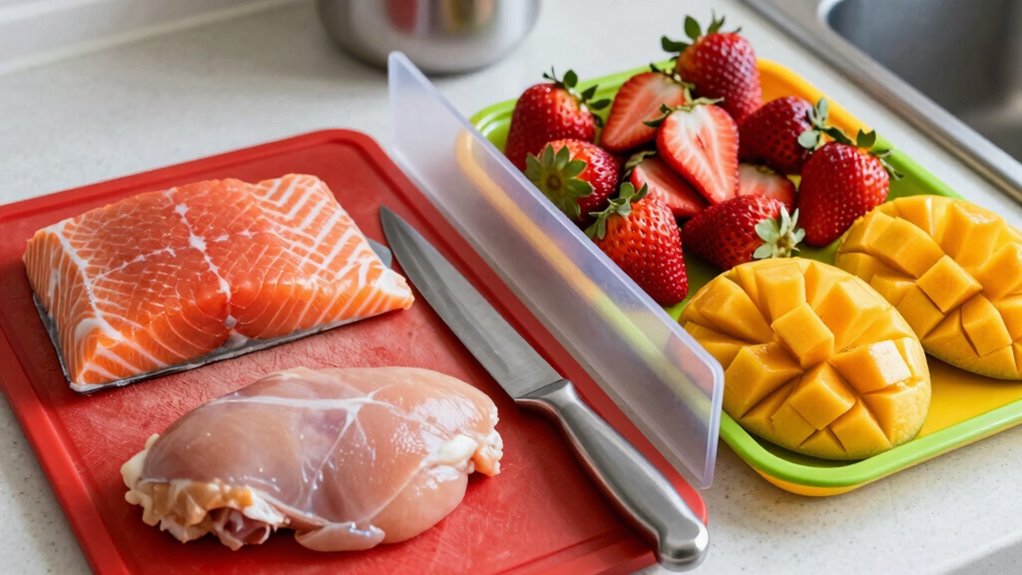
To separate raw and ready-to-eat foods properly, always store raw meats on the bottom shelves of your fridge to prevent drips from contaminating cooked items. Use leak-proof containers and clearly label them. Keep ready-to-eat foods on higher shelves, away from raw meats. When handling, use separate utensils and cutting boards for raw and cooked foods, and wash all surfaces thoroughly afterward. Keep your kitchen safe by following these practices—you’ll discover more essential tips as you explore further.

Get kitchen staples and gadgets delivered free with Prime
- Fast, free delivery on millions of items
- Prime Video, Amazon Music and more included
- Member-only deals all year
Key Takeaways
- Store raw meats on the bottom shelf of the fridge to prevent drips onto other foods.
- Use separate cutting boards and utensils for raw and ready-to-eat foods.
- Keep cooked or ready-to-eat foods on higher shelves away from raw items.
- Seal raw meats in leak-proof containers immediately after purchase.
- Wash hands, surfaces, and utensils thoroughly after handling raw foods to prevent cross-contamination.
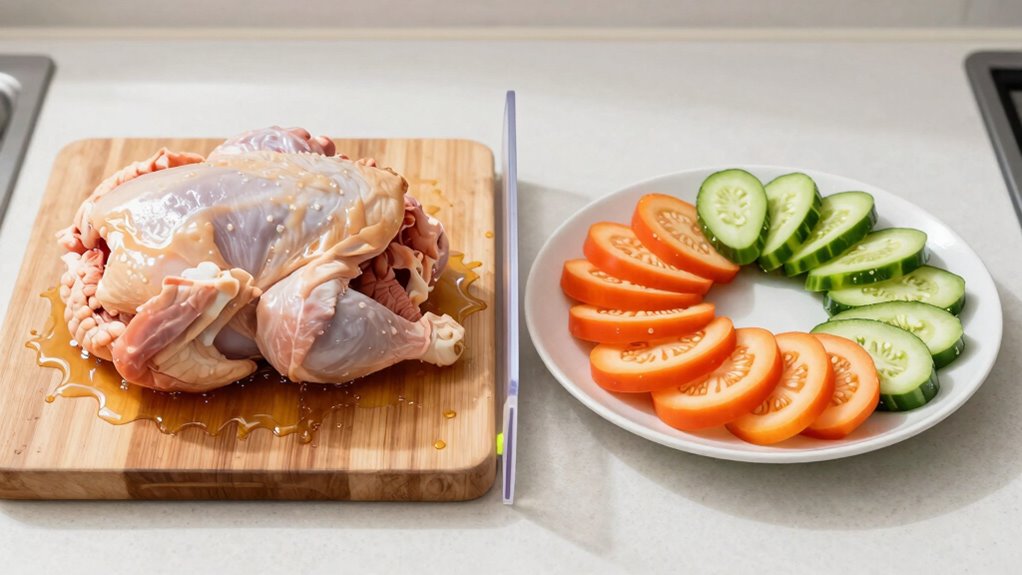
Separating raw and ready-to-eat foods is essential to prevent cross-contamination and keep your kitchen safe. Cross contamination risks aren’t just theoretical—they can lead to foodborne illnesses that make you sick. To avoid this, you need to understand and implement proper storage techniques. This means more than just keeping raw meat away from cooked items; it involves using the right containers, organizing your fridge, and paying attention to handling practices. When raw foods like meat, poultry, or seafood touch or are stored near ready-to-eat foods, bacteria can transfer easily, increasing the chance of illness. Proper storage techniques help you keep these foods separate, reducing this risk considerably.
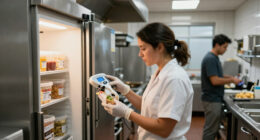
Start by designating specific areas in your fridge and pantry for raw and cooked foods. Always store raw meats on the bottom shelf of your fridge to prevent juices from dripping onto other items. Use leak-proof containers or tightly sealed plastic bags to contain raw products, especially if they’re marinated or stored with liquids. This not only prevents cross contamination risks but also keeps your fridge cleaner. When placing cooked or ready-to-eat foods in the fridge, keep them higher up and away from raw items. Label containers clearly to avoid mix-ups, and don’t forget to wash your hands thoroughly after handling raw meat before touching anything else. These simple steps are crucial in maintaining proper storage techniques. Additionally, understanding the proper storage methods for different food types is vital in preventing bacterial growth and ensuring food safety. Regularly checking and rotating stock helps prevent spoilage and reduces the chances of bacteria developing in your foods. Practicing food safety measures consistently further minimizes health risks and promotes overall kitchen hygiene. Incorporating storage guidelines recommended by food safety authorities can further enhance your kitchen’s cleanliness and safety. Being aware of bacteria transfer and how it occurs can help you better prevent cross-contamination in your daily routines.
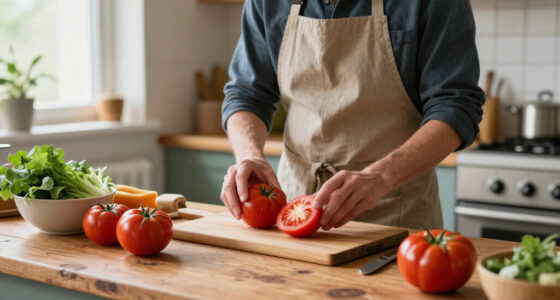
In your meal prep routines, always use separate cutting boards and utensils for raw and cooked foods. Cross contamination risks increase when you use the same knife or board for raw chicken and your salad without washing thoroughly in between. Clean all surfaces and utensils with hot, soapy water after contact with raw foods to eliminate bacteria. When shopping, pay attention to packaging and storage instructions, and make sure raw foods stay cold and separate from ready-to-eat items in your cart and bag. Once home, transfer raw meats into sealed containers or plastic bags, and place them on the bottom shelf of your fridge immediately. These practices help you avoid accidental contact and keep your kitchen environment secure. Proper storage practices are essential for maintaining a safe and hygienic kitchen environment.
leak-proof food storage containers
As an affiliate, we earn on qualifying purchases.
As an affiliate, we earn on qualifying purchases.
Frequently Asked Questions
How Often Should I Clean My Cutting Boards?
You should clean your cutting boards after each use, especially when switching between raw meats and ready-to-eat foods, to maintain proper food storage and kitchen hygiene. Regular cleaning prevents cross-contamination and bacteria buildup. For maximum safety, wash with hot, soapy water or run them through the dishwasher if possible. This routine helps keep your kitchen clean, reduces foodborne illness risk, and guarantees your food storage practices stay safe and effective.
Can I Reuse Plastic Bags for Raw Foods?
You can reuse plastic bags for raw food storage if you wash them thoroughly with hot, soapy water and let them dry completely. However, be cautious with plastic bag reuse, as bacteria from raw foods can linger. It’s best to designate specific bags for raw meats and wash them diligently each time. When in doubt, consider using reusable, food-safe containers to guarantee safety and prevent cross-contamination.
What Are Common Cross-Contamination Mistakes?
You often cross contamination prevention by using separate cutting boards and utensils for raw and ready-to-eat foods. Avoid placing cooked foods on surfaces that held raw meats, and don’t reuse plastic bags from raw meats without washing them thoroughly. Common food safety practices include washing hands frequently and storing raw foods below cooked items in the fridge. These simple steps help prevent cross contamination and keep your food safe.
How Long Can Raw Foods Be Stored Safely?
You should store raw foods for no more than 1 to 2 days in the refrigerator to prevent spoilage. Proper food storage is essential for spoilage prevention, so keep raw meats, seafood, and poultry in airtight containers on the bottom shelf. Always check for signs of spoilage before use, and if you’re unsure, it’s safer to discard. Freezing raw foods extends their safe storage time considerably.
Are There Specific Utensils for Raw vs. Cooked Foods?
Did you know cross contamination causes up to 48 million foodborne illnesses annually? You should use separate utensils for raw and cooked foods to prevent this. Always make certain utensil hygiene by thoroughly washing tools after handling raw meat or seafood. Using dedicated utensils helps prevent cross contamination and keeps your food safe. Keep raw and cooked food utensils separate to reduce the risk of bacteria transfer and protect your health.
Conclusion
Think of your kitchen as a busy highway—raw and ready-to-eat foods are like cars traveling in different lanes. Keep them separated to avoid collisions that can cause foodborne illnesses. Always use separate cutting boards and utensils, and wash your hands thoroughly. By doing so, you’re the traffic cop keeping every vehicle moving smoothly and safely. Stay vigilant, and your kitchen will be a safe highway where delicious meals can travel from prep to plate without a hitch.
Halloween Picks
halloween
As an affiliate, we earn on qualifying purchases.