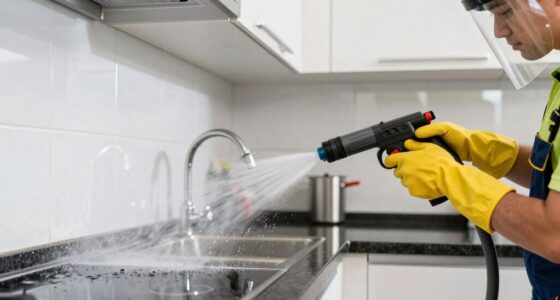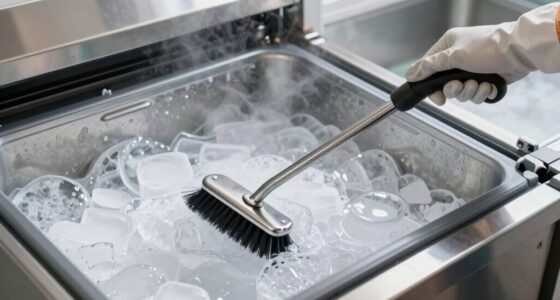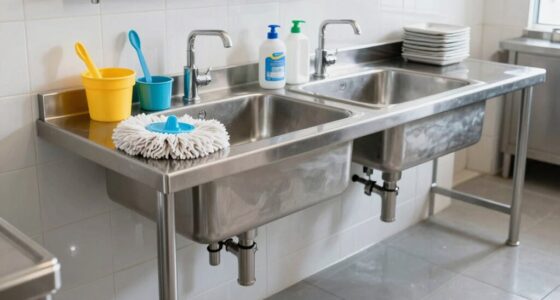
To set up cleaner receiving procedures for safer food, start by verifying that deliveries match your order, checking for damages, contamination, and expired items. Implement a clear inspection process and label all storage containers to prevent cross-contamination. Store chemicals separately in secure, labeled containers, and keep detailed records of inspections and stock levels. Train staff regularly on proper handling, hygiene, and safety practices. If you keep these steps in mind, you’ll guarantee a safer food environment and can discover more effective tips.

Get kitchen staples and gadgets delivered free with Prime
- Fast, free delivery on millions of items
- Prime Video, Amazon Music and more included
- Member-only deals all year
Key Takeaways
- Establish a detailed delivery inspection process to verify order accuracy, damages, contamination, and expiration before acceptance.
- Train staff on proper receiving protocols and hygiene standards to prevent contamination during the receiving process.
- Designate separate, clearly labeled areas for cleaning supplies and food items to avoid cross-contamination.
- Implement routine quality control checks and record inspections to identify issues early and ensure compliance.
- Regularly review and update receiving procedures, emphasizing safety, sanitation, and proper storage practices.
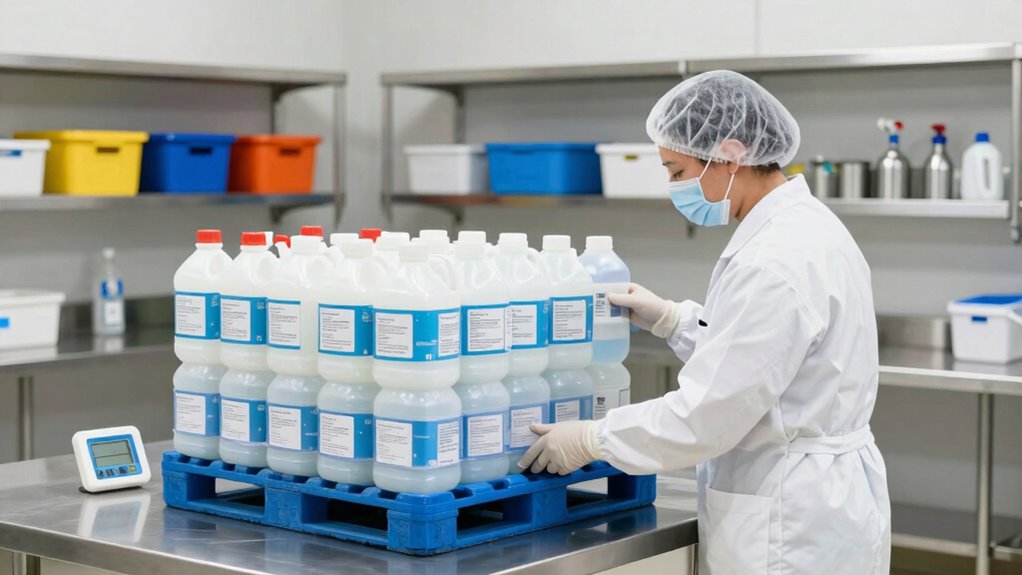
Have you ever wondered how to guarantee your cleaning supplies arrive and are handled efficiently? Setting up a proper cleaner receiving procedure is essential for maintaining food safety and ensuring your staff can work effectively. When deliveries arrive, your first priority is to verify that the supplies match your order and are free from damage. This initial check helps prevent contamination and ensures you’re not accepting expired or contaminated products, which could compromise food safety. Establishing a clear process for inspecting deliveries minimizes errors and keeps the workflow running smoothly.
Once you confirm the supplies are correct and undamaged, the next step is to implement a strict inventory management system. Proper storage is fundamental to prevent cross-contamination, especially when handling cleaning chemicals and food ingredients. Designate separate storage areas for cleaning supplies and food items, and ensure your staff follows these protocols diligently. Label all containers clearly and keep chemicals away from food products to avoid accidental contamination. Regularly reviewing stock levels and expiration dates keeps your operations compliant with safety standards and prevents the use of expired or unsafe cleaning products. Proper storage practices are crucial for maintaining a safe and hygienic environment in food handling areas. Additionally, implementing inventory tracking can help identify potential issues early and improve overall management efficiency. Incorporating quality control checks into your routine can further enhance safety by catching discrepancies before they impact food safety. Regular staff training on safe handling procedures is also vital to reinforce good practices and ensure everyone understands their role in maintaining hygiene standards.
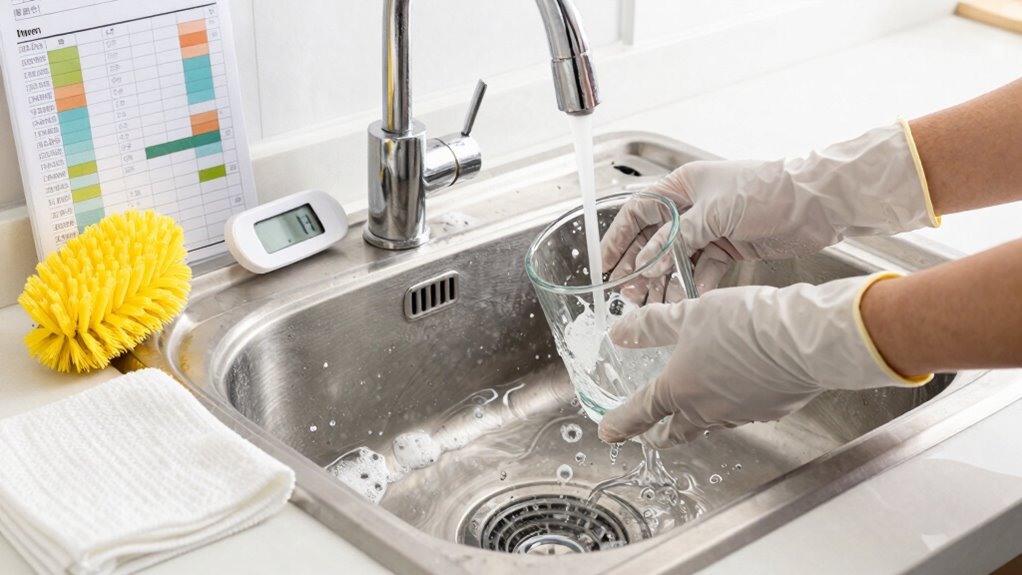
food delivery inspection checklist
As an affiliate, we earn on qualifying purchases.
As an affiliate, we earn on qualifying purchases.
Frequently Asked Questions
How Often Should Cleaning Supplies Be Restocked?
You should restock cleaning supplies regularly based on your cleaning supply inventory and usage rates. Generally, it’s best to review your inventory weekly and set restocking schedules accordingly. Keep an eye on high-demand items, so you don’t run out unexpectedly. By maintaining a consistent restocking schedule, you guarantee your cleaning supplies are always available, promoting safe food handling and maintaining a clean, hygienic environment.
What Training Is Necessary for Staff on Receiving Procedures?
You need to train your staff on receiving protocols, emphasizing staff accountability, proper inspection, and documentation. Make certain they understand how to identify damaged or contaminated products, follow correct storage procedures, and report issues promptly. Reinforce the importance of adhering to safety standards and procedures consistently. Regular training sessions, clear guidelines, and ongoing supervision help staff stay accountable and guarantee everyone follows proper receiving protocols for safer food handling.
How to Handle Contaminated or Damaged Cleaning Equipment?
When handling contaminated or damaged cleaning equipment, you should first conduct an equipment inspection to identify issues. Remove any equipment showing signs of damage or contamination promptly. Clean and disinfect equipment before reuse or, if it’s beyond repair, dispose of it properly to prevent contamination. This process helps guarantee contamination prevention and maintains a safe, hygienic environment for food handling. Always document these actions for accountability.
What Are the Best Storage Practices for Cleaning Chemicals?
You should prioritize chemical safety by storing cleaning chemicals in a dedicated, well-ventilated area away from food and food-contact surfaces. Use clearly labeled, secure containers and keep them on sturdy shelves organized by type. Implement proper storage organization by separating acids, alkalis, and other chemicals. Regularly inspect for leaks or damage, and keep safety data sheets accessible. This approach minimizes risks and guarantees safe handling, protecting both staff and food safety.
How to Document and Track Cleaning Supply Deliveries?
You should implement a system to document and track cleaning supply deliveries by using inventory management tools like logs or digital records. Verify each supplier upon delivery to guarantee accuracy and quality, noting any discrepancies. Keep detailed records of delivery dates, quantities, and supplier info. Regularly review these documents to maintain accurate inventory and verify supplier performance, ensuring you’re always prepared for audits and stock replenishment.
Conclusion
By establishing clear cleaner receiving procedures, you’re not just ticking boxes—you’re safeguarding your food and your reputation. Make sure everyone’s on the same page, follow protocols diligently, and stay vigilant. Remember, a chain is only as strong as its weakest link, so don’t leave anything to chance. When everyone works together, you’ll keep your food safe and your customers happy. Stay proactive, and you’ll avoid trouble before it starts.
NFL season / tailgating Picks
team gear
As an affiliate, we earn on qualifying purchases.