
TL;DR

Get kitchen staples and gadgets delivered free with Prime
- Fast, free delivery on millions of items
- Prime Video, Amazon Music and more included
- Member-only deals all year
In 2015, researchers documented the rich history of Uzbekistan’s traditional flatbreads, highlighting their cultural importance. This discovery sheds light on ancient culinary practices and regional identity.
In 2015, scholars and culinary historians highlighted the longstanding cultural significance of Uzbekistan’s traditional flatbreads, often referred to as ‘fabled flatbreads,’ which have been a staple of the region’s cuisine for centuries. This documentation underscores their role in Uzbek cultural identity and culinary history.
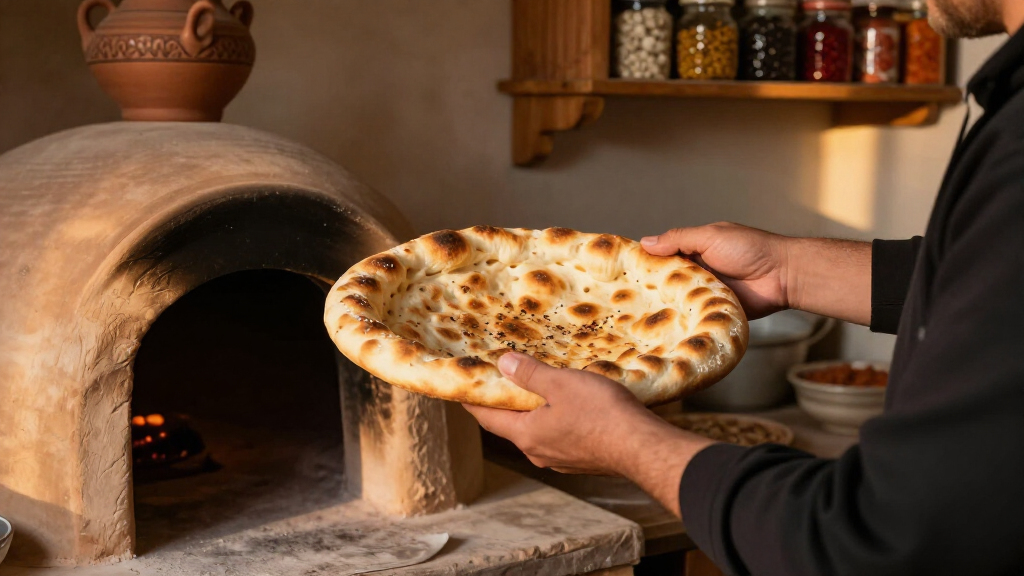
The 2015 study, published by a team of culinary historians, details the origins, preparation methods, and cultural importance of these flatbreads, which are often baked in tandoors and served with various dishes. The flatbreads, called ‘non’ locally, are considered a symbol of Uzbek hospitality and tradition, with recipes and baking techniques passed down through generations.
According to the study, these flatbreads date back to ancient times, with archaeological evidence suggesting their presence in Central Asian diets for over a millennium. The research emphasizes their regional variations, with differences in size, shape, and ingredients across Uzbekistan’s diverse communities. The flatbreads are typically made from wheat flour, water, and salt, and baked at high temperatures to produce a crispy exterior and soft interior.
The documentation also notes that, although the basic recipe remains consistent, modern influences have introduced variations, including the use of additional ingredients such as sesame seeds or herbs. Despite these changes, the flatbreads continue to hold cultural and ceremonial significance, often featured in festivals, weddings, and religious events.
Cultural and Culinary Significance of Uzbek Flatbreads
The documentation of Uzbekistan’s traditional flatbreads in 2015 highlights their importance as a cultural emblem and culinary tradition that has persisted for centuries. These flatbreads are more than just food; they symbolize hospitality, community, and regional identity. Their continued preparation and consumption reinforce cultural heritage amid modern influences.
Understanding their history provides insight into the region’s ancient trade routes, social customs, and agricultural practices, making them a vital part of Uzbekistan’s intangible cultural heritage. Recognizing and preserving these traditional recipes can help maintain cultural diversity and foster regional pride.
Products Worth Considering

Ninja Artisan 5-in-1 Portable Electric Pizza Oven, Blue & Gold

Le Creuset Signature 6.5-Quart Deep Round Dutch Oven with Light Gold Crucible Knob, Enameled Cast Iron, Bleu Riviera

Instant Pot Vortex Plus 10-Quart 7-in-1 Air Fryer Oven
As an affiliate, we earn on qualifying purchases.
Historical Roots and Regional Variations of Uzbek Flatbreads
The 2015 study situates the flatbreads within a broader historical context, tracing their origins to ancient Central Asian civilizations that relied on wheat cultivation and tandoor baking techniques. Archaeological findings suggest that similar flatbreads were present in neighboring regions, indicating a shared culinary heritage across Central Asia.
Over centuries, local variations developed, influenced by climate, available ingredients, and cultural exchanges along trade routes like the Silk Road. These variations include differences in size, shape, and toppings, reflecting the diverse communities across Uzbekistan. Despite regional differences, the flatbread remains a unifying symbol of Uzbek hospitality and tradition.
“Our research confirms that these flatbreads have been a staple for over a thousand years, with regional variations reflecting local traditions.”
— Research team authoring the 2015 study
Unresolved Aspects of Flatbread Preservation and Modern Use
While the historical origins and cultural importance are well-documented, it remains unclear how much the traditional recipes and baking techniques have been preserved in contemporary Uzbekistan. The impact of globalization and modernization on these culinary traditions is still being studied, and there is limited data on current practices across different regions.
Additionally, the extent to which these flatbreads are being integrated into official cultural heritage programs or preserved through government initiatives is not yet confirmed.
Future Efforts to Preserve and Promote Uzbek Flatbreads
Researchers and cultural organizations are expected to continue documenting current practices and promoting awareness of Uzbekistan’s culinary heritage. Efforts may include workshops, cultural festivals, and inclusion in UNESCO’s intangible cultural heritage list. Further studies are likely to explore how traditional baking methods can be preserved amid modern influences.
Officials and community leaders may also work to integrate these flatbreads into tourism and educational programs to ensure their continued significance and transmission to future generations.
Key Questions
What are the main ingredients of Uzbek flatbreads?
The traditional ingredients include wheat flour, water, and salt. Some variations may include sesame seeds or herbs.
How are these flatbreads traditionally baked?
They are typically baked in a tandoor, a high-temperature clay oven, which gives them their characteristic crispy exterior and soft interior.
Are Uzbek flatbreads still widely made today?
While they remain a cultural staple, the extent of their modern production varies across regions, with some areas maintaining traditional methods more than others.
Why are these flatbreads culturally significant?
They symbolize hospitality, community, and regional identity, serving as a culinary link to Uzbekistan’s history and traditions.
Source: hn