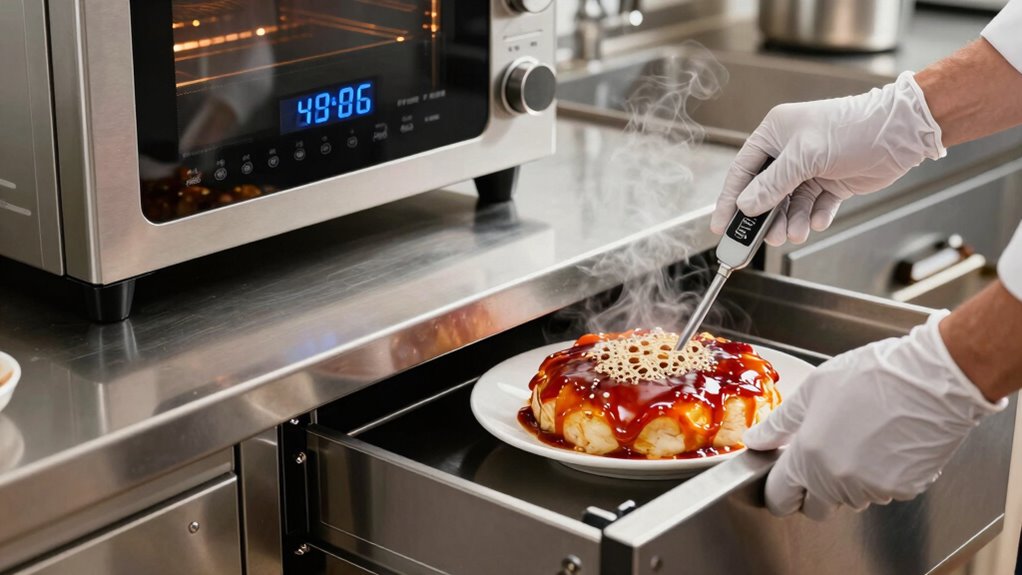

To guarantee food safety, you must reheat leftovers to at least 165°F quickly and verify with a reliable thermometer. Keep hot foods at 135°F or higher during service. Regularly calibrate and maintain your heating equipment to guarantee it operates correctly. Train staff on proper reheating techniques and the importance of not reheating food multiple times. Staying current on these practices helps you avoid health violations and protect your reputation. Keep going to learn essential tips for safe hot holding.

Get kitchen staples and gadgets delivered free with Prime
- Fast, free delivery on millions of items
- Prime Video, Amazon Music and more included
- Member-only deals all year
Key Takeaways
- Reheat food quickly and evenly to at least 165°F (74°C) to ensure safety and prevent bacterial growth.
- Use a reliable thermometer to verify internal temperatures during reheating and hot holding.
- Regularly calibrate and maintain heating equipment to ensure consistent and safe reheating performance.
- Avoid reheating food multiple times to reduce the risk of bacterial contamination.
- Train staff on proper reheating techniques and temperature monitoring for optimal food safety.
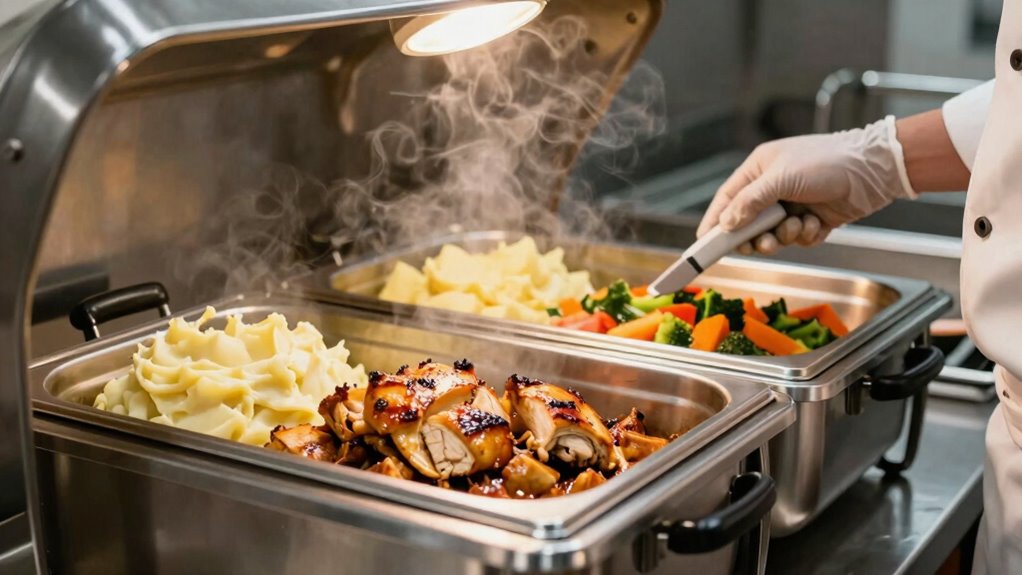
Reheating food correctly is crucial for maintaining safe hot holding temperatures in restaurants. When you handle leftovers or pre-cooked dishes, guaranteeing they are reheated properly helps prevent foodborne illnesses and keeps your customers safe. Proper reheating is a key component of food safety, and it requires diligent attention to how you manage your equipment and monitor temperatures. If you overlook these details, you risk serving food that’s unsafe, which can lead to health violations and damage your reputation.
Proper reheating ensures food safety, prevents illnesses, and protects your restaurant’s reputation.
To maintain food safety during reheating, you must guarantee the food reaches an internal temperature of at least 165°F (74°C) quickly and evenly. Use a reliable food thermometer to verify this temperature and avoid guesswork. The goal is to kill any bacteria that may have grown during storage and prevent pathogen growth during hot holding. Once the food hits the correct temperature, it should be maintained at 135°F (57°C) or higher for serving. Consistent temperature control is key to preventing bacterial growth and ensuring your food remains safe for your guests. Proper equipment calibration ensures accurate temperature readings, which is essential for food safety. Regular calibration helps identify equipment issues early, ensuring consistent performance.
Equipment maintenance plays a crucial role in reheating processes. Regularly inspecting your heating equipment, such as steam tables, ovens, and warming drawers, guarantees they operate efficiently and accurately. Malfunctioning equipment can cause uneven reheating or temperature fluctuations, which compromise food safety. You should routinely calibrate thermometers and verify that heating devices are functioning within their specified ranges. Neglecting equipment maintenance not only jeopardizes food safety but also risks costly repairs and downtime. Keep records of maintenance and calibration schedules to ensure all equipment remains in excellent condition and complies with health standards. Implementing a preventive maintenance program can help sustain the reliability of your equipment over time, reducing the risk of equipment failure. Additionally, understanding the proper use of reheating equipment can enhance safety and efficiency.
Training your staff on proper reheating techniques is equally important. Make sure they understand the importance of rapid reheating, using correct temperatures, and monitoring procedures. Reinforce the importance of not reheating food multiple times, as this increases the risk of bacterial growth. Encourage a culture of food safety where staff promptly reheats leftovers and hot-held foods to the right temperatures, minimizing the risk of contamination. Providing ongoing education on food safety best practices ensures your team remains vigilant and knowledgeable about maintaining high standards.
digital food thermometer for restaurants
As an affiliate, we earn on qualifying purchases.
As an affiliate, we earn on qualifying purchases.
Frequently Asked Questions
Can Reheating Affect the Texture of Different Types of Food?
Reheating can definitely affect the texture of different foods, especially if food moisture isn’t maintained properly. For example, reheated bread might become chewy or dry, while meats can turn tough. To preserve texture, you should focus on gentle reheating methods that maintain food moisture, like steaming or low-temperature oven reheating. Proper reheating helps with texture preservation, ensuring your dishes stay appealing and satisfying for your customers.
What Equipment Is Best for Reheating Safely?
You should use equipment like steam tables, microwave ovens, or convection ovens for reheating, as they guarantee food safety by reaching proper temperatures quickly. Always maintain your equipment regularly to prevent malfunction or contamination. Proper equipment use and routine maintenance are vital for safe reheating, protecting your customers from foodborne illnesses and preserving food quality. Invest in reliable, well-maintained equipment to assure consistent, safe hot holding practices.
How Often Should Food Be Reheated During Service?
During service, you should reheat food only once, ensuring it reaches the proper temperature quickly. Don’t get lazy with reheating guidelines—temperature monitoring is your best friend here. If food cools down, reheat it thoroughly before serving again, but avoid repeated reheats that risk bacterial growth. Keep a sharp eye on your thermometer and follow safe reheating practices, because nobody wants a foodborne outbreak on their conscience.
Are There Specific Reheating Methods for Vegetarian Dishes?
Yes, there are specific reheating methods for vegetarian dishes, focusing on plant-based reheating techniques. You should reheat vegetarian items evenly to preserve their texture and flavor, often using gentle methods like steaming or microwave with cover to retain moisture. Avoid high heat that can cause burning or drying out. Properly reheated vegetarian dishes maintain their nutritional value and appeal, ensuring a quality experience for your customers.
What Are Common Reheating Mistakes to Avoid?
To guarantee reheating safety, avoid common mistakes like not checking temperature control or reheating unevenly. Always use a food thermometer to confirm foods reach at least 165°F to kill bacteria. Don’t reheat multiple times, as it risks contamination. Also, avoid leaving food out at room temperature too long. Proper temperature control and thorough reheating help maintain food safety, quality, and prevent foodborne illnesses.
Conclusion
By mastering proper reheating techniques, you guarantee your hot foods stay safe and delicious for your customers. Remember, it’s better to be safe than sorry, so always verify temperatures and follow guidelines closely. When you handle reheating with care, you’re not just serving food—you’re building trust and reputation. Keep these practices in mind, and you’ll keep your kitchen running smoothly, proving that a little extra effort goes a long way in the restaurant game.
NFL season / tailgating Picks
team gear
As an affiliate, we earn on qualifying purchases.