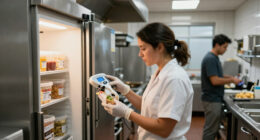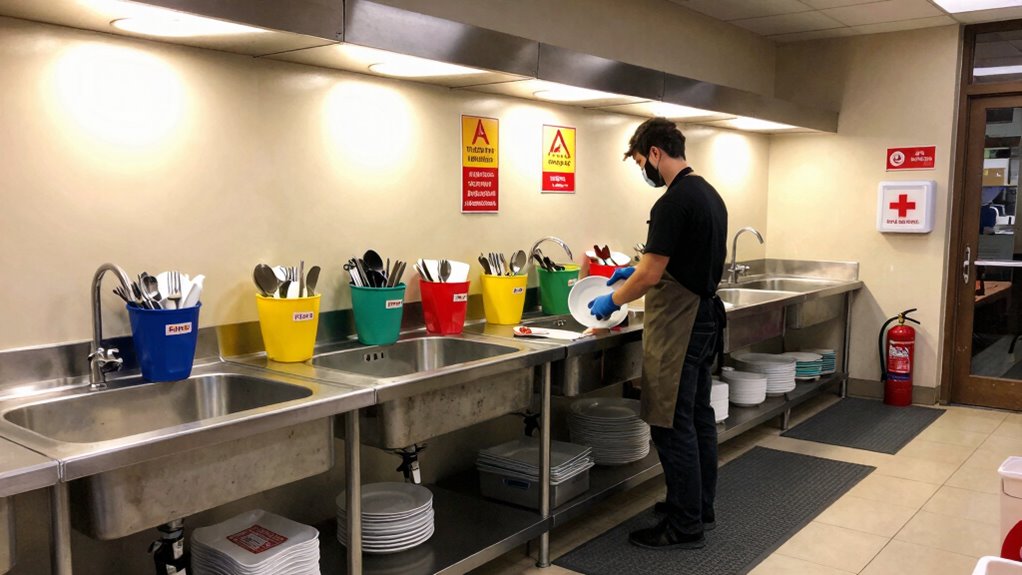
To build a safer dish area in a busy restaurant, you should regularly train staff on safe handling, proper lifting, and hazard recognition. Keep pathways clear, use non-slip mats, and make sure good lighting to prevent accidents. Establish clear emergency protocols and conduct regular drills. Maintain equipment and organize shelves to minimize clutter. Promote open communication about hazards and reward safety-conscious behavior. Implementing these strategies will help you create a safer, more efficient workspace—more helpful tips await if you keep exploring.

Get kitchen staples and gadgets delivered free with Prime
- Fast, free delivery on millions of items
- Prime Video, Amazon Music and more included
- Member-only deals all year
Key Takeaways
- Design the dish area with organized shelving, clear pathways, and non-slip mats to prevent clutter and accidents.
- Implement regular safety inspections and hazard recognition training for proactive risk management.
- Establish and communicate clear emergency protocols, conducting regular drills to enhance staff preparedness.
- Use durable, shatterproof dishware and maintain equipment to minimize injury risks from broken items.
- Foster a safety-first culture by encouraging open hazard reporting and recognizing safe practices among staff.
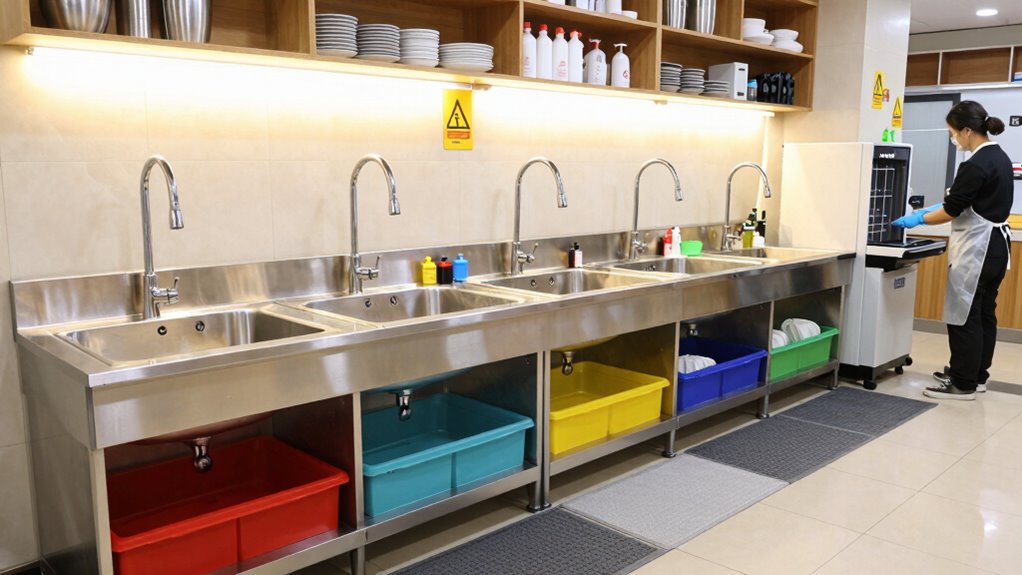
In a busy restaurant, guaranteeing a safe dish area is crucial to prevent accidents and maintain smooth operations. When your team understands the importance of safety, they’re more likely to follow best practices and stay vigilant. One of the most effective ways to achieve this is through extensive staff training. Regularly educate your staff on safe handling techniques, proper lifting methods, and the correct way to stack and store dishware. Make sure everyone knows how to recognize hazards like wet floors or broken ceramics, and emphasize the importance of addressing these issues immediately. Clear communication about safety goals helps create a culture where safety isn’t an afterthought but a top priority.
Implementing well-defined emergency protocols is equally essential in building a safer dish area. Train your team on how to respond quickly and effectively in case of accidents, such as slips, cuts, or broken dishware. Establish clear steps for evacuations, first aid procedures, and reporting incidents. Conduct regular drills so your staff feels confident about their roles during emergencies. When everyone knows what to do, you minimize chaos and reduce the risk of further injury or damage. Make sure your emergency protocols are visible and easily accessible, perhaps posted in common areas or included in new employee orientation.
Train staff on emergency responses, conduct regular drills, and display protocols visibly to ensure quick, effective action during incidents.
Designing the dish area with safety in mind is another key factor. Arrange shelves and racks to prevent overcrowding and facilitate easy access. Keep pathways clear of clutter, and use non-slip mats in high-traffic zones to reduce slips. Install proper lighting so staff can see hazards clearly, and ensure that all equipment is well-maintained and safe to use. Using durable, shatterproof dishware can also be a smart choice to prevent injuries from broken items. Regular inspections of the area help catch potential hazards before they cause an accident. Incorporating hazard recognition training into your safety program can further empower staff to identify and address risks proactively. Additionally, integrating safety audits as part of routine checks can help maintain high safety standards over time. A comprehensive safety plan that includes risk assessments can also guide your team in prioritizing hazards and implementing effective solutions. Furthermore, maintaining a safe environment encourages staff to take ownership of safety practices and report issues promptly. Implementing proper storage techniques can also significantly reduce clutter and potential hazards in the dish area.
Finally, foster a safety-conscious environment where staff feel comfortable reporting hazards or unsafe practices without fear of blame. Encourage open dialogue about safety concerns and reward conscientious behavior. When your team understands their role in maintaining a safe dish area through ongoing training and clear emergency protocols, you create a workplace where safety is integrated into daily routines. This proactive approach not only protects your staff but also enhances overall efficiency, ensuring your restaurant runs smoothly even during the busiest hours.
As an affiliate, we earn on qualifying purchases.
Frequently Asked Questions
What Tools Are Essential for Setting up a Safe Dish Area?
You need essential tools like label makers, storage bins, and cleaning supplies to keep your dish station organized and efficient. A sturdy scrub brush, thermometer, and proper PPE guarantee equipment maintenance and safety. Use barriers or signage to improve dish station organization, preventing accidents. Regularly check tools and equipment to maintain safety standards. These tools help you create a clean, safe, and well-organized dish area in your busy restaurant.
How Often Should Safety Inspections Be Conducted in the Dish Area?
You should conduct safety inspections in the dish area at least weekly to guarantee equipment maintenance is up to date and spill prevention measures are effective. Regular checks help you identify potential hazards before they cause accidents. By actively monitoring for faulty equipment or spills, you create a safer environment for your staff, reduce the risk of injuries, and maintain a smooth, efficient workflow in your busy restaurant.
What Training Is Recommended for Staff Working in the Dish Area?
You should train your staff on proper employee ergonomics and the use of personal protective equipment (PPE) to keep safety in check. Make certain they understand safe lifting techniques, proper handling of sharp tools, and PPE requirements like gloves and goggles. Regular refreshers help, and hands-on demonstrations ensure everyone’s on the same page. When you arm your team with knowledge, you’re less likely to have accidents lurking around the corner.
How Can I Improve Communication Among Staff in the Dish Area?
You can improve communication among staff by establishing clear communication protocols, like using hand signals or radios during peak hours. Encourage staff coordination by holding quick, regular check-ins to share updates and address issues promptly. Implementing a standardized system guarantees everyone stays informed and works efficiently. Additionally, fostering a teamwork mindset helps staff feel comfortable communicating openly, reducing errors and enhancing overall safety in the dish area.
What Are Common Hazards to Watch for in Dish Area Safety?
Think of your dish area as a perilous minefield. You must watch for slip hazards caused by wet floors or spills and prevent chemical spills from cleaning agents or detergents. Always keep floors dry and clean, and store chemicals securely. Use proper signage to warn staff about wet areas. Staying vigilant helps avoid accidents, ensuring everyone moves safely through this busy, potentially hazardous zone.
Conclusion
Creating a safer dish area isn’t just about policies; it’s about building a culture where safety is second nature. Think of it like a well-choreographed dance—each step coordinated, every movement deliberate. When you invest in proper training and clear procedures, you prevent accidents before they happen. Remember, a small slip-up can turn into a big issue—like a domino toppling over. Prioritize safety today, and your team will stay in step, thriving amidst the busy rhythm of your restaurant.
Halloween Picks
halloween
As an affiliate, we earn on qualifying purchases.