If you’re choosing between blast freezers and quick chill cabinets, understand that blast freezers focus on ultra-fast freezing at -40°C or colder, preserving food’s flavor and texture for long-term storage. Quick chill cabinets rapidly cool cooked food from high temperatures to safe levels, reducing bacterial growth. While blast freezers prioritize speed for preservation, chill cabinets emphasize safety for immediate cooling needs. To learn more about how each tool can improve your operations, keep exploring these options.

Get kitchen staples and gadgets delivered free with Prime
- Fast, free delivery on millions of items
- Prime Video, Amazon Music and more included
- Member-only deals all year
Key Takeaways
- Blast freezers rapidly freeze food at ultra-low temperatures to preserve quality and prevent ice crystal damage.
- Quick chill cabinets quickly cool cooked food from high temperatures to safe storage levels, reducing bacterial growth.
- Blast freezers prioritize speed for long-term preservation, while quick chill cabinets focus on immediate safety during short-term cooling.
- Blast freezers consume more energy and require regular maintenance due to complex components.
- Quick chill cabinets are more energy-efficient and have simpler maintenance, suitable for quick safety cooling tasks.
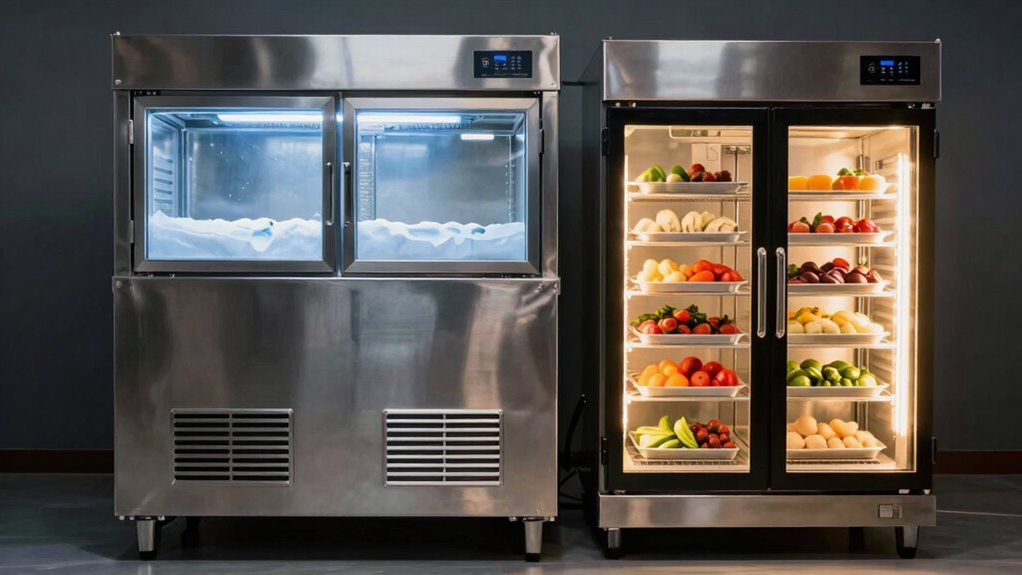
Have you ever wondered how large quantities of food are rapidly chilled and preserved without compromising quality? The answer lies in advanced refrigeration equipment like blast freezers and quick chill cabinets. These tools are essential in the food industry to guarantee freshness, safety, and efficiency. While they share the goal of cooling food quickly, they serve different purposes and operate differently. Understanding their differences helps you choose the right equipment for your needs.
Blast freezers are designed to freeze food at ultra-low temperatures, often reaching -40°C or colder, within a short period. This rapid freezing process is crucial for locking in flavor, texture, and nutritional value. It also minimizes the formation of large ice crystals, which can damage cell structure and diminish quality. Rapid freezing techniques are central to their effectiveness in preserving food integrity. Additionally, blast freezers often incorporate advanced insulation to maintain consistent ultra-low temperatures efficiently. Better insulation helps reduce energy loss and enhances overall performance. In contrast, temperature control in blast freezers must be precise to prevent partial freezing or thawing during the process. Quick chill cabinets, on the other hand, focus on rapidly cooling food from cooking temperatures down to safe storage levels—typically around 4°C or lower. They’re ideal for cooling prepared dishes swiftly, reducing the risk of bacterial growth and ensuring food safety.
Blast freezers rapidly freeze food at ultra-low temperatures, preserving quality and preventing ice crystal damage.
Energy efficiency is a critical factor when selecting between these two options. Blast freezers tend to consume more energy due to their low-temperature requirements and powerful refrigeration systems. However, their rapid freezing can reduce overall energy consumption by decreasing the time needed for freezing large batches. Quick chill cabinets usually operate at slightly higher temperatures, making them more energy-efficient for short-term cooling tasks. They can also be integrated into existing kitchen workflows, helping you save on operational costs over time.
Maintenance requirements differ between blast freezers and quick chill cabinets as well. Blast freezers often involve more complex components—like high-capacity compressors and specialized insulation—requiring regular inspections and servicing to maintain peak performance. Proper maintenance guarantees energy efficiency and prolongs lifespan, preventing costly breakdowns. Routine cleaning and periodic checks of seals and refrigeration units keep these cabinets running smoothly and efficiently. Proper maintenance ensures both equipment longevity and consistent food safety standards.
In essence, the choice between a blast freezer and a quick chill cabinet hinges on your specific needs—whether you prioritize ultra-fast freezing for long-term preservation or rapid cooling to ensure immediate food safety. Both pieces of equipment are designed with speed and safety in mind but differ in energy demands and maintenance needs. By understanding these differences, you can maximize your operations, reduce costs, and guarantee the highest quality in your food storage processes.
As an affiliate, we earn on qualifying purchases.
Frequently Asked Questions
What Is the Typical Lifespan of Blast Freezers and Chill Cabinets?
Typically, blast freezers and chill cabinets last around 10 to 15 years, depending on their storage capacity and how well you maintain them. Regular servicing guarantees temperature stability, preventing breakdowns and extending their lifespan. Proper cleaning and monitoring help maintain peak performance. Investing in high-quality units with robust construction also boosts durability. With good care, you can maximize their lifespan, ensuring safe, efficient storage for years to come.
How Energy-Efficient Are These Freezing and Chilling Systems?
You’re likely wondering about energy efficiency. These systems are designed to optimize energy consumption, reducing operational costs and minimizing environmental impact. Modern blast freezers and chill cabinets feature advanced insulation and energy-saving technologies, making them more efficient than ever. However, efficiency varies by model and usage. While they’re a good step towards sustainability, it’s essential to choose equipment with high energy standards to truly get the most out of your investment.
Are There Specific Maintenance Requirements for Blast Freezers?
You should follow specific maintenance schedules for blast freezers to keep your refrigeration systems running efficiently. Regularly inspect door seals, defrost coils, and fans, and clean filters to prevent buildup that can impair performance. Schedule routine checks with a technician to monitor refrigerant levels and system pressures. Proper maintenance guarantees safety, extends equipment life, and maintains ideal freezing speed, ultimately protecting your products and reducing energy costs.
Can These Units Be Customized for Different Food Types?
Yes, these units can be customized for different food types, enhancing food customization and unit versatility. You can adjust temperature settings, airflow, and shelving configurations to suit specific foods like seafood, pastries, or meats. This flexibility guarantees ideal preservation, quality, and safety. By tailoring the unit’s features, you maximize efficiency and meet diverse processing needs, making your equipment adaptable to a wide range of culinary and commercial requirements.
What Are the Initial Costs Versus Long-Term Savings?
You’ll find the initial costs of blast freezers and quick chill cabinets can be high, but the investment benefits often outweigh them. A cost comparison shows savings through reduced energy bills, minimized food waste, and faster turnaround times. Over time, these units help you increase efficiency, preserve quality, and boost profits. While upfront expenses are notable, the long-term savings make them worthwhile for your operation.
Conclusion
Think of blast freezers and quick chill cabinets as the heartbeat of your food safety routine. They’re like a swift river, rushing to lock in freshness and prevent bacteria from settling in. By choosing the right tool for the job, you’re ensuring your food stays as vibrant and safe as the day it was made. In this race against time, speed and safety flow hand in hand, keeping your culinary creations at their best.
Fall Picks
fall essentials
As an affiliate, we earn on qualifying purchases.