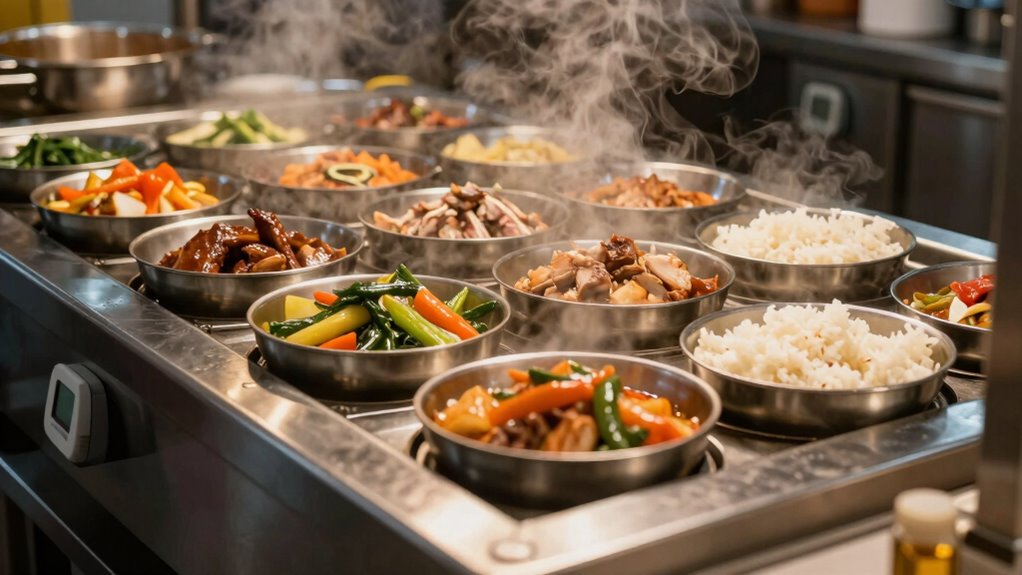
You can’t just turn on the steam table and forget about it if you want safe food. Active temperature control is essential because bacteria can grow quickly if food falls into the danger zone. Regularly check temperatures with a thermometer, adjust the heat as needed, and keep everything clean to prevent contamination. Consistent monitoring and maintenance are key to keeping food safe and tasty. Stick with us to learn how to master proper steam table practices.
Key Takeaways
- Regularly monitor and record steam table temperatures with a reliable thermometer, don’t rely solely on built-in thermostats.
- Adjust heat promptly when adding new food or noticing temperature drops to maintain safe holding temperatures.
- Maintain strict hygiene practices, including cleaning water pans, drains, and utensils, to prevent contamination.
- Perform routine equipment maintenance and ensure proper operation to avoid temperature fluctuations.
- Continuously supervise and verify that food stays above 140°F to prevent bacteria growth and ensure food safety.
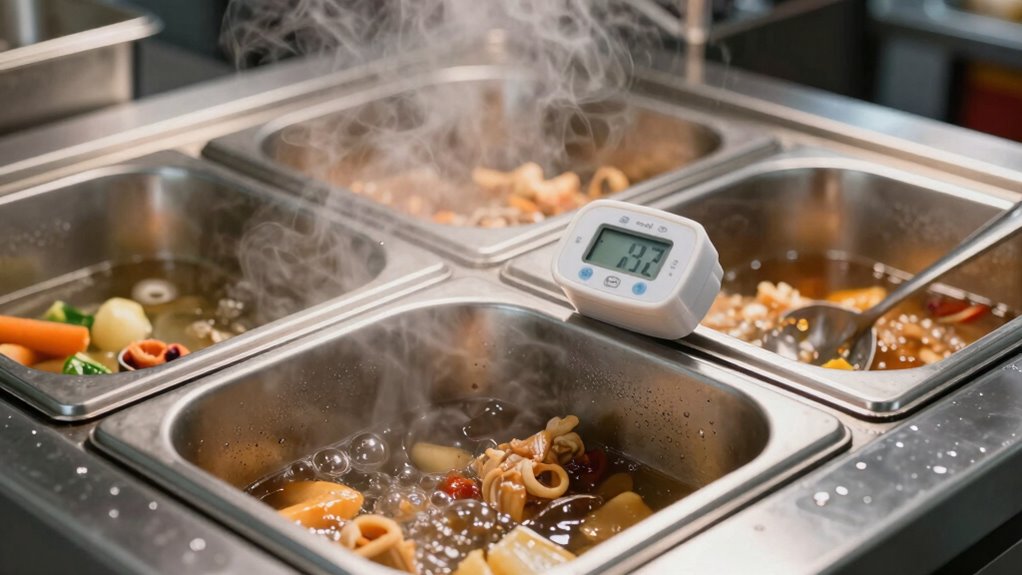
Have you ever wondered how steam tables help keep your food safe? It all comes down to proper temperature regulation. When you’re serving hot foods, maintaining the right temperature is essential to preventing bacteria growth. Steam tables are designed to keep food at safe, consistent temperatures, but they aren’t “set and forget” devices. Instead, you need to actively monitor and adjust them to guarantee that food remains in the safe zone—usually above 140°F (60°C)—and doesn’t fall into the danger zone, where bacteria can multiply rapidly. If food drops below this temperature, it becomes a breeding ground for pathogens, risking foodborne illnesses. That’s why understanding and managing the temperature within these tables is fundamental for food safety.
Beyond just setting the right temperature, hygiene practices play a critical role in safeguarding your food. Regularly cleaning and sanitizing the steam table components prevent cross-contamination and bacteria buildup. When you neglect hygiene practices, even the best temperature regulation can be compromised. For example, if you don’t clean the water pans, drains, or utensils used to handle hot foods, you risk introducing harmful microbes. Consistent hygiene practices, such as washing hands, using gloves, and sanitizing surfaces, reinforce the safety measures provided by proper temperature control. It’s a continuous process—monitoring temperatures, cleaning equipment, and practicing good hygiene—to keep food safe from preparation to serving.
Regular cleaning and sanitation are vital for preventing bacteria buildup and ensuring food safety.
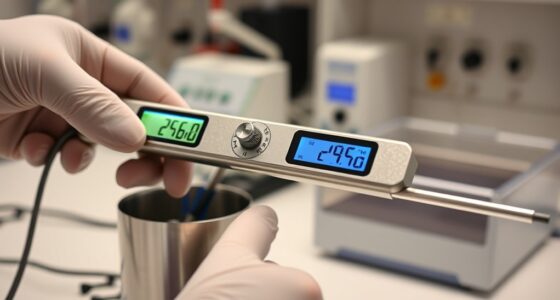
Additionally, it’s important to recognize that steam tables require routine checks. You shouldn’t rely solely on the built-in thermostats; use a reliable food thermometer to verify that the temperature stays within the safe range. Adjust the heat as needed, especially when adding new batches of food or if you notice temperature drops. If you’re running a busy operation, assign someone to regularly check and record temperatures, ensuring compliance with food safety standards. This proactive approach helps catch issues early and prevents unsafe food from reaching customers. Proper power tool usage and maintenance can also help ensure that equipment functions accurately and reliably, reducing the risk of temperature fluctuations caused by equipment malfunction.
In essence, effective use of steam tables involves more than just turning them on. It demands active engagement in temperature regulation and strict hygiene practices. By doing so, you protect your customers from foodborne risks while maintaining quality and freshness. It’s about creating a safe environment where hot foods stay hot, hygienic standards are upheld, and food safety remains a top priority. Remember, the safety of your food depends on your vigilance—failing to keep a close eye on temperature and cleanliness can have serious consequences. So, stay attentive, check regularly, and uphold best practices to keep your food safe and your reputation intact.
Frequently Asked Questions
How Often Should Steam Table Temperatures Be Checked?
You should check steam table temperatures every 2 hours to guarantee food safety. Regular temperature monitoring helps prevent bacterial growth and keeps food at safe, proper temperatures. If you’re holding hot foods, frequent checks are essential, especially during busy times. Don’t rely on assumptions—consistent monitoring assures compliance with safety standards, protecting your customers and your reputation. Remember, maintaining proper temperatures is key to safe food service.
What Common Mistakes Lead to Unsafe Food Temperatures?
Think of food safety as a delicate dance that relies on precise temperature calibration. Common mistakes include neglecting regular calibration checks, assuming the equipment is always accurate, and ignoring food safety regulations. When you overlook these details, you risk letting the temperature drift, creating a unsafe environment for your food. Stay vigilant, regularly verify your steam table’s accuracy, and follow food safety regulations to keep your food safe and the dance in perfect harmony.
Are There Specific Foods That Require Different Temperature Settings?
Yes, you need to adjust temperature settings based on food specific guidelines. For example, meats like poultry require higher temperatures, while seafood may need slightly lower ones. Regular temperature calibration guarantees accuracy, preventing unsafe zones. Always follow manufacturer instructions and food safety standards, and don’t assume one setting fits all. By customizing and maintaining your steam table, you keep food safe and compliant with health regulations.
Can Improper Maintenance Affect Food Safety in Steam Tables?
Imagine a restaurant neglecting cleaning protocols and failing to calibrate their steam tables regularly. Improper maintenance can cause temperature fluctuations, risking bacteria growth. When equipment isn’t properly cleaned or calibrated, food safety is compromised, leading to potential health hazards. You must follow strict cleaning protocols and guarantee accurate calibration to keep the steam tables functioning correctly. This proactive approach safeguards food quality and protects your customers’ health.
What Are the Signs of Malfunctioning Temperature Controls?
When temperature controls malfunction, you’ll notice inconsistent readings or failure to reach safe temperatures. Signs include erratic temperature calibration, where the display fluctuates unexpectedly, and the control malfunction might cause the system to shut off unexpectedly or stay on too long. These issues can compromise food safety, so you should regularly check the controls, verify proper calibration, and address any control malfunctions promptly to keep your food safe.
Conclusion
Remember, steam tables are like vigilant guards, not just set-and-forget gadgets. They keep the temperature steady like a steady drumbeat, ensuring your food stays safe and fresh. But just like a watchful eye, you need to check in regularly—adjust, monitor, and respond. Think of it as tending a garden; with care and attention, your food remains vibrant and safe, flourishing under your watchful eye, rather than wilting in neglect.