Choosing the wrong size booster heater for your dishwasher can cause it to constantly struggle with reaching the proper temperature for cleaning and sterilization. An undersized heater can’t raise water to high enough temps, while an oversized one wastes energy and raises costs. Proper sizing depends on your dishwasher’s capacity and water needs. Maintaining the system also helps. If you keep experiencing issues, there’s more you can do to optimize performance.
Key Takeaways
- An undersized booster heater can’t raise water to necessary sanitizing temperatures, causing dishes to remain not hot enough.
- Over-sizing a booster heater wastes energy, leading to higher operational costs without improving cleaning performance.
- Properly sizing based on dishwasher capacity and usage ensures consistent, effective heating without constant temperature issues.
- Regular maintenance, such as flushing and checking thermostats, helps maintain optimal temperature performance and prevent ‘not hot enough’ problems.
- Accurate sizing combined with routine system upkeep guarantees efficient energy use and reliable dish sanitization results.
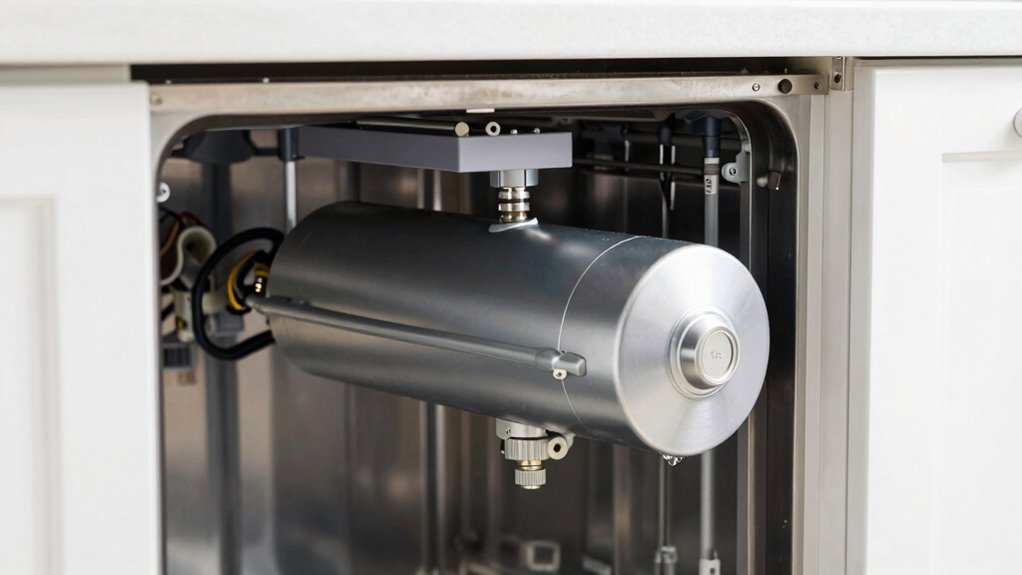
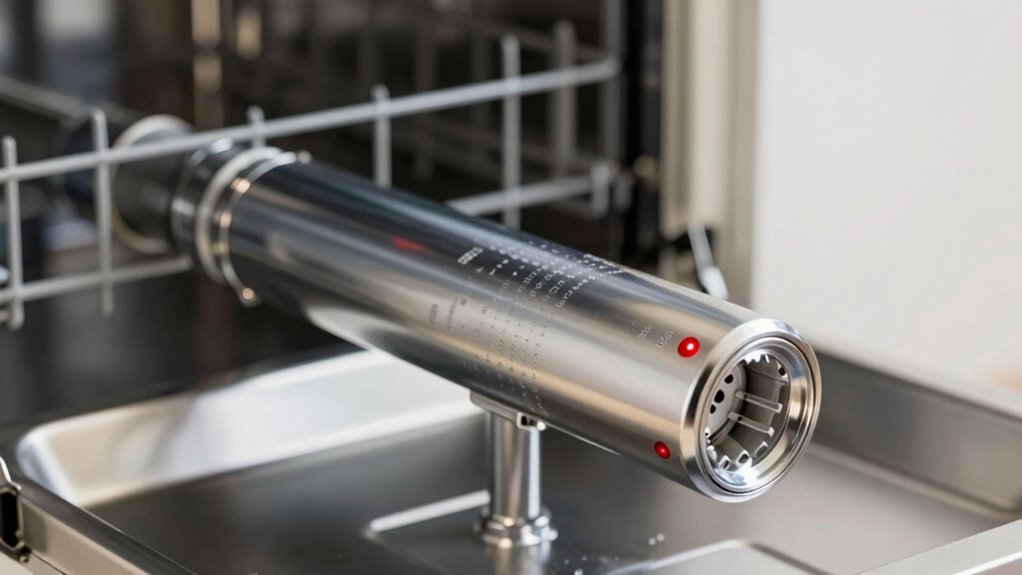
A dishwasher booster heater is an essential component that helps guarantee your dishes come out spotless and sanitized. It heats the water to the high temperatures needed for effective cleaning and sterilization, especially in commercial or heavy-duty residential dishwashers. However, many users overlook the importance of properly sizing this heater, leading to a common problem: dishes that aren’t hot enough even after a full cycle. One of the main causes of this issue is choosing a booster heater that’s too small for your dishwasher’s requirements. When the heater isn’t powerful enough, it simply can’t raise the water to the necessary temperature, regardless of how long you run the cycle. Conversely, over-sizing can lead to unnecessary energy consumption and higher operational costs, so finding the right fit is critical.
Getting the sizing right is vital for maintaining energy efficiency. When a booster heater is too large, it consumes more power than needed, which not only increases your energy bills but also puts unnecessary strain on the appliance. On the other hand, an undersized heater will struggle to keep up, causing your dishes to come out lukewarm or even cold, which can compromise sanitation and cleaning quality. To avoid this, you should assess your dishwasher’s water heating needs based on its capacity, typical usage, and water temperature requirements. Consulting manufacturer guidelines or a professional technician can help you determine the appropriate size, ensuring you get the best performance without wasting energy. Additionally, understanding the performance ratings of different heaters can help in making an informed choice tailored to your needs.
Regular maintenance tips are also key to preventing the “not hot enough” problem. Sediment buildup inside the booster heater can insulate the heating element, reducing its efficiency and causing inconsistent temperatures. To keep things running efficiently, you should periodically flush the system to remove mineral deposits, especially if you have hard water. Checking the thermostat and heating element for wear and tear is equally important—faulty components can impair heating performance regardless of size. Ensuring proper insulation around the heater can also help conserve energy by minimizing heat loss during operation. Furthermore, keeping the dishwasher’s water inlet and outlet clean prevents blockages that could hinder water circulation and temperature regulation.
In essence, correctly sizing your dishwasher booster heater and adhering to routine maintenance tips will help you achieve reliable, energy-efficient performance. It’s not just about having a powerful heater; it’s about matching that power to your specific needs and keeping it well-maintained. Doing so ensures your dishes come out clean and hot every time, saving you money and extending the lifespan of your appliance. Proper attention to these details can make a significant difference, turning a common frustration into a problem of the past.
Frequently Asked Questions
How Do Booster Heaters Affect Energy Consumption?
Booster heaters can increase your dishwasher’s energy consumption if they’re oversized or run constantly, affecting your energy efficiency. Properly sized boosters help maintain ideal water temperatures without wasting power, reducing your operational costs. When booster heaters work efficiently, you save energy and money, making sure your dishwasher heats water just enough for thorough cleaning without excess energy use. Correct sizing and regular maintenance are key to minimizing unnecessary energy consumption.
What Are Signs of an Improperly Sized Booster Heater?
If you notice your dishwasher’s water isn’t hot enough or cycles take longer, your booster heater might be improperly sized. About 60% of service calls relate to improper heater sizing, leading to inefficient cleaning. Signs include inconsistent heating, frequent shutdowns, or energy spikes. Proper booster heater sizing guarantees peak performance, saving you money and preventing damage. Keep an eye on these signs to avoid costly repairs and maintain effective dishwashing.
Can a Booster Heater Be Repaired or Only Replaced?
You can often repair your booster heater rather than replace it, especially if the issue is a faulty thermostat, element, or wiring. Repair options typically include replacing these components, which can restore your booster heater’s performance. However, if the heater is severely corroded or has internal damage, replacement might be the better choice. Always consult a professional to assess whether repair options are sufficient or if a new booster heater is necessary.
How Often Should Booster Heaters Be Maintained?
You should maintain your booster heater at least once a year, even if it seems to be working fine. Regular maintenance, including booster heater calibration, ensures it heats efficiently and prevents issues like constant ‘not hot enough’ problems. Following a proper maintenance schedule helps catch wear and tear early. Don’t overlook this; neglecting maintenance can lead to costly repairs and reduced performance over time.
Are There Safety Concerns With Booster Heaters?
Yes, there are safety concerns with booster heaters if you don’t follow safety regulations. Improper installation or maintenance can lead to electrical hazards, burns, or overheating. To prevent hazards, verify proper wiring, regular inspections, and adherence to manufacturer guidelines. Always use qualified professionals for installation and repairs, and keep safety protocols in place. This approach helps you minimize risks and promotes hazard prevention when operating booster heaters.
Conclusion
Don’t make the mistake of sizing your dishwasher booster heater improperly. Proper planning prevents poor performance, so specify sufficient size to stay satisfied with spotless, steaming dishes. Remember, a properly powered booster prevents persistent problems, providing perfect, pristine results every time. By balancing the basics and avoiding the blame game, you’ll be better equipped to build a boiler that’s beautifully balanced, boosting your dishwasher’s efficiency and eliminating the endless ‘not hot enough’ nuisance.