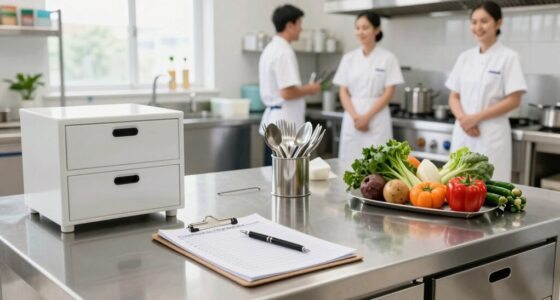
To guarantee sanitizing works properly, you should set up your three-comp sink with a clear order: first, wash dishes in hot, soapy water to remove grease and debris; second, rinse thoroughly in clean, hot water to eliminate soap residue; third, immerse dishes in a sanitizing solution or hot water at the correct temperature for the recommended time. Following this sequence prevents cross-contamination, and maintaining proper temperatures and tools helps keep everything hygienic—keep going to learn more about optimizing your workflow.

Get kitchen staples and gadgets delivered free — and shop member deals
- Fast, free delivery on millions of items
- Access to Prime Big Deal Days deals on October 6–7
- Prime Video, Amazon Music and more included
Key Takeaways
- Always follow the sequence: wash, rinse, then sanitize for effective cleaning.
- Use separate tools for each station to prevent cross-contamination.
- Confirm proper water temperatures and sanitizer concentration at each step.
- Maintain a seamless flow to avoid dipping clean dishes into dirty or sanitized water.
- Regularly inspect and replace sink components and tools to ensure consistent sanitizing effectiveness.
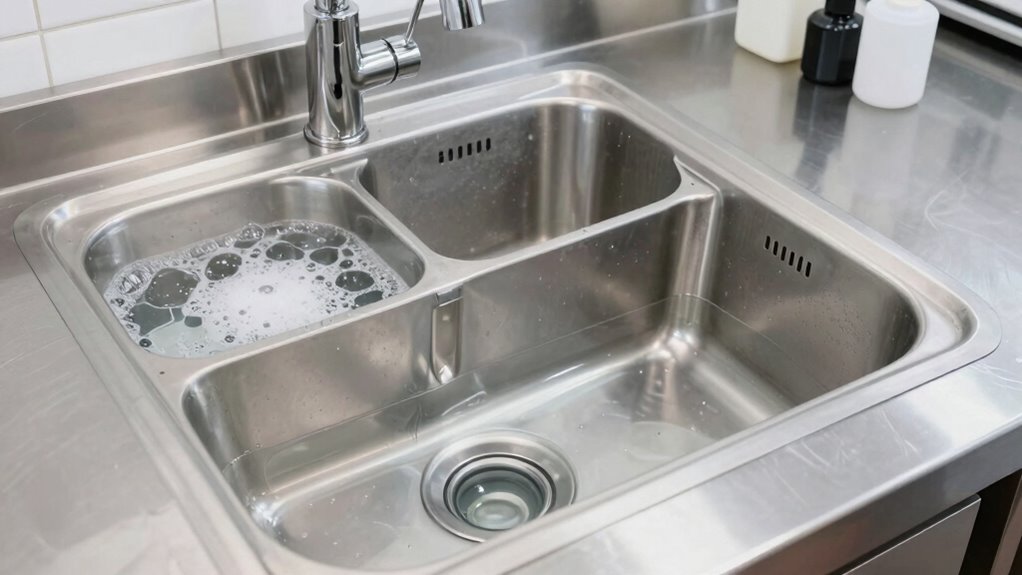
Have you ever wondered how to streamline your dishwashing process efficiently? The secret lies in mastering the three-compartment sink workflow, which ensures your dishes are cleaned thoroughly and sanitized properly. To do this, you need to understand the best dishwashing techniques and sink setup tips that make the process smooth and effective. Properly setting up your sink is the foundation; it involves organizing three separate stations: wash, rinse, and sanitize. Position the compartments in a way that allows a natural flow from dirty to clean, preventing cross-contamination. Fill the first sink with hot, soapy water to break down grease and food residues. Use dishwashing techniques that emphasize scrubbing and rinsing to remove debris thoroughly before moving on. The second sink should contain clean, hot water for rinsing off soap and loosened dirt. The third sink holds sanitizing solution—whether it’s a chemical sanitizer or hot water at the right temperature—to kill any remaining germs. Ensuring proper temperature control is essential for effective sanitization.
Setting up your sink correctly is critical. Make sure each compartment is clearly labeled or designated for its specific step. Keep your cleaning tools organized—use brushes, scrub pads, and gloves appropriately—and replace water frequently to avoid spreading bacteria. The flow from one station to the next should be seamless; never dip dirty dishes back into clean water or sanitizer. When you’re working through the process, remember that dishwashing techniques matter. Scrubbing thoroughly ensures all food particles are removed, which reduces the load on the sanitizer. Rinsing well prevents soap residues that might interfere with sanitizing solutions. When it’s time to sanitize, ensure dishes are submerged for the correct amount of time and that the sanitizer concentration is accurate. Using a thermometer can help verify the proper temperature, especially if hot water sanitizing is part of your process.
Consistency is key. Always follow the same workflow sequence, and train staff to stick to these steps. This minimizes mistakes and guarantees each dish gets the proper attention at every stage. Regularly check and maintain your sink setup tips—inspect for leaks, ensure water temperatures stay consistent, and replace broken or worn-out tools. In doing so, you’ll create a reliable system that maximizes efficiency and guarantees sanitization. By implementing effective dishwashing techniques within a well-organized sink setup, you’re not just cleaning dishes—you’re ensuring safety and hygiene for your entire operation. With practice and attention to detail, your three-compartment sink workflow will become second nature, making your dishwashing routine faster, safer, and more effective.
As an affiliate, we earn on qualifying purchases.
Frequently Asked Questions
What Types of Dishes Are Best Suited for Three-Comp Sink Cleaning?
You should use a three-comp sink for dishware types like glasses, plates, and bowls, as well as utensils that require thorough cleaning and sanitizing. This workflow guarantees you effectively remove debris, wash with soap, and then sanitize to eliminate bacteria. Utensil cleaning benefits from this process, especially for items used in food prep. Properly sorting and cleaning these dishware types helps maintain hygiene and food safety standards.
How Often Should the Sink Be Sanitized During Operation?
You should sanitize the sink after every few loads or when switching between different types of dishes. Use hot water and dish soap to thoroughly clean the sink, ensuring all food residues are removed. After cleaning, rinse with hot water to eliminate soap residue. Regular sanitizing with a proper sanitizer is essential, especially during busy hours, to prevent cross-contamination and maintain a hygienic workspace.
Can a Three-Comp Sink Be Used for Non-Food Items?
You can use a three-comp sink for non-food items, but you need to be cautious. Mixing food and non-food cleaning protocols can lead to cross-contamination. Always dedicate a sink or ensure thorough sanitation if switching between food items and non-food items. Follow strict cleaning protocols to prevent any risk. Remember, maintaining proper procedures keeps everyone safe and your workspace compliant, no matter what you’re cleaning.
What Are Common Mistakes to Avoid in This Workflow?
You should avoid cross contamination by never dipping dirty items into clean water, and always use separate areas for each step. Improper rinsing can leave residues, so make sure you thoroughly rinse items after washing. Also, don’t skip sanitizing or rush through steps, as it compromises safety. Paying attention to these mistakes guarantees effective sanitation, protects food safety, and keeps your workspace compliant.
How Do I Ensure Compliance With Local Sanitation Regulations?
To guarantee compliance with local sanitation regulations, you should keep up with regulatory documentation and updates. Regularly train your staff on proper cleaning procedures and the importance of following them precisely. Conduct routine inspections to verify adherence, and document all sanitation activities. Staying informed about regulations and emphasizing staff training helps you maintain high standards, avoid violations, and ensure a safe, compliant environment for everyone.
Conclusion
Mastering the three-comp sink workflow is like orchestrating a symphony of cleanliness. When you follow the right order, you turn chaos into harmony, each step a crucial note in the melody of sanitation. Think of it as a dance where precision leads to perfection, ensuring every dish emerges sparkling and safe. Embrace this rhythm, and you’ll transform your cleaning process into a powerful, unstoppable force—where sanitation isn’t just a goal, but your unwavering performance.
Halloween Picks
halloween
As an affiliate, we earn on qualifying purchases.