
Make-up air is often overlooked but is vital for your hood’s performance. It replaces the air exhausted by your ventilation system, preventing negative pressure that can hinder airflow and cause backdrafts. Without proper make-up air, your system becomes inefficient, leading to poor removal of heat, smoke, and odors. Ensuring balanced airflow keeps your work environment safe and comfortable. Keep going to discover how to avoid common pitfalls and optimize your ventilation setup.
Key Takeaways
- Insufficient make-up air causes negative pressure, impairing hood performance and allowing fumes or smoke to re-enter the workspace.
- Poorly balanced make-up air systems reduce airflow efficiency, leading to heat, smoke, and odor build-up.
- Inadequate outdoor air supply can cause drafts, humidity issues, and compromised ventilation safety.
- Relying on passive infiltration often results in unpredictable and insufficient make-up air, degrading hood effectiveness.
- Properly designed make-up air solutions maintain airflow balance, ensuring optimal hood operation and environmental safety.
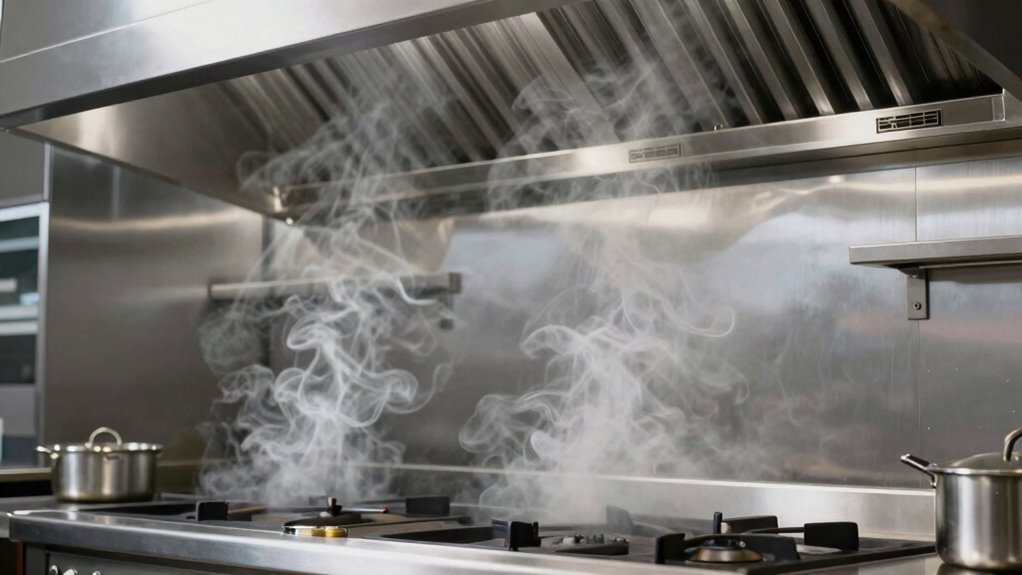
Make-up air is the fresh air that replaces air exhausted from a building’s ventilation or exhaust systems. Without it, your commercial kitchen or industrial space can face serious issues. One of the biggest problems is ventilation challenges. When air is pulled out of a space without adequate make-up air, negative pressure can develop. This imbalance not only hampens airflow but also causes problems like backdrafts, where harmful fumes or smoke might seep back into the workspace instead of being vented outside. If you ignore these issues, your hood performance drops considerably, making your ventilation system less effective at removing heat, smoke, and odors.
Without adequate make-up air, negative pressure can cause backdrafts and reduce ventilation efficiency.
Understanding air exchange efficiency is essential here. Proper air exchange ensures that fresh make-up air replaces the exhausted air quickly and efficiently. When the exchange process isn’t optimized, your system struggles to maintain a balanced environment. Poor air exchange efficiency can cause temperature fluctuations, humidity issues, and a buildup of contaminants. For example, if your exhaust system is powerful but your make-up air isn’t sufficient or properly conditioned, you might notice lingering odors or smoke. This can compromise safety, reduce comfort, and even violate health codes.
One common challenge is that many buildings don’t have dedicated make-up air systems. Instead, they rely on passive air infiltration, which is inconsistent and unpredictable. When outdoor air enters through gaps or cracks, it can be insufficient or uneven, especially in extreme weather conditions. This imbalance can lead to uncomfortable drafts or inadequate ventilation. Additionally, if outdoor air is too cold, too hot, or polluted, it can reduce the overall air exchange efficiency, making your ventilation system work harder and less effectively.
To combat these challenges, you need to consider the design of your make-up air system carefully. It should be balanced with your exhaust system, providing a steady flow of clean air without creating negative pressure. Installing dedicated make-up air units or controlled ventilation solutions helps maintain consistent airflow, improves air exchange efficiency, and minimizes disruptions to your hood’s performance. Properly designed systems also help regulate temperature and humidity, creating a safer and more comfortable environment. Incorporating proper ventilation planning into your system design is key to ensuring optimal operation and safety.
Frequently Asked Questions
How Does Make-Up Air Affect Overall Building Energy Efficiency?
Make-up air directly impacts your building’s energy efficiency by controlling indoor air quality and ventilation efficiency. When properly managed, it replaces stale indoor air without overworking your exhaust system, reducing energy waste. If you ignore make-up air needs, your system may work harder, increasing energy costs and compromising indoor air quality. Ensuring a balanced make-up air system helps maintain ideal ventilation and keeps your building energy-efficient.
What Are the Best Practices for Installing Make-Up Air Systems?
When installing make-up air systems, you should prioritize proper airflow balance and duct sizing. Guarantee ducts are correctly sized to prevent pressure issues and maintain efficient airflow. Position the system near exhaust points to counterbalance air removal, and use dampers for fine-tuning. Always follow manufacturer guidelines and local codes, and consider professional consultation to optimize performance and energy efficiency. Proper installation minimizes risks and maximizes system longevity.
Can Make-Up Air Systems Be Integrated With Existing Exhaust Systems?
Think of your exhaust system like a puzzle, and integrating make-up air is adding the missing piece. You can definitely retrofit a make-up air system with your existing exhaust setup, but it requires careful planning for exhaust system integration. Ensuring compatibility prevents imbalance, like a car’s engine running smoothly. With proper assessment, you’ll avoid airflow issues and maintain ideal kitchen performance, even with retrofitted systems.
How Do Local Codes Influence Make-Up Air System Requirements?
Local codes heavily influence your make-up air system requirements by enforcing local code compliance and zoning restrictions. You must confirm your system adheres to these regulations to avoid fines, delays, or system modifications. Zoning restrictions can limit system size and placement, so check with local authorities before installation. Failing to comply might compromise your hood’s performance, so always verify requirements to ensure your make-up air system meets all local standards.
What Maintenance Is Needed to Ensure Optimal Make-Up Air Performance?
You should regularly check and replace air filters to keep airflow ideal and prevent dirt buildup that can hinder performance. Additionally, conduct duct inspections to identify any blockages, leaks, or damage that could reduce efficiency. Keeping filters clean and ducts in good condition ensures your make-up air system operates smoothly, maintains proper ventilation, and meets local code requirements. Aim for routine maintenance to avoid costly repairs and performance issues.
Conclusion
If you ignore make-up air, your kitchen hood’s performance drops markedly, risking poor ventilation and safety issues. Did you know that kitchens without proper make-up air can see exhaust efficiency decline by up to 30%? That’s a huge difference in keeping your space safe and odor-free. So, don’t overlook this invisible system—ensuring proper make-up air not only boosts your hood’s performance but also keeps your environment healthier and more comfortable.