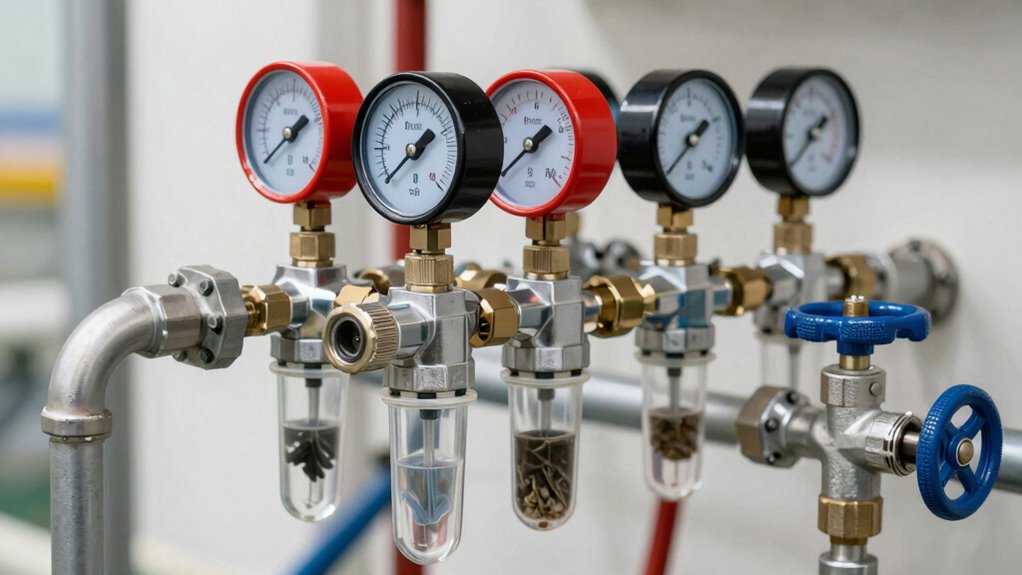
To keep your equipment running smoothly, guarantee your water lines have proper pressure, which prevents damage and maintains performance. Install filters suited to your water quality, and change them regularly to avoid clogs and debris buildup. Shutoff valves let you quickly isolate or repair parts of your system, reducing downtime. Properly managing these components extends your equipment’s lifespan. Keep exploring to discover how all these elements work together for ideal system efficiency.
Key Takeaways
- Proper water pressure regulation prevents equipment damage and ensures consistent flow for optimal performance.
- Correctly sized piping maintains adequate pressure and reduces flow issues or unnecessary costs.
- Shutoff valves allow quick isolation for maintenance, repairs, and preventing water damage.
- Installing accessible filters protects equipment from debris and requires routine cleaning or replacement.
- Regular inspection and documentation help maintain system efficiency and prolong equipment lifespan.
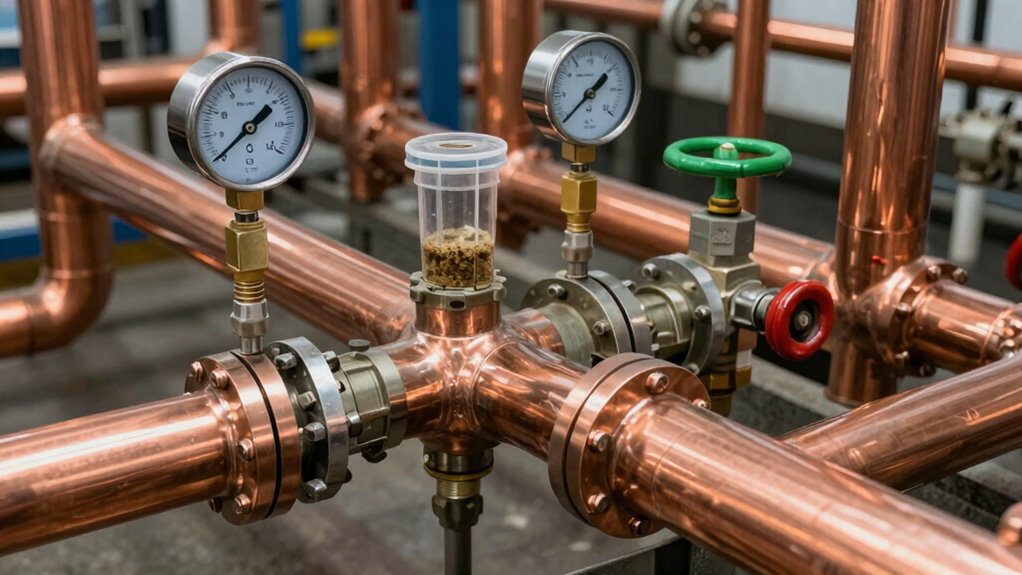
Installing proper water lines for equipment is essential to guarantee reliable operation and prevent costly downtime. When setting up water lines, you need to pay close attention to installation requirements to ensure everything functions smoothly and safely. First, make sure your water source supplies adequate pressure; too high or too low pressure can damage equipment or impair performance. Installing a pressure regulator can help maintain a consistent pressure level, protecting your system from fluctuations that could cause leaks or failure. Additionally, use the appropriate piping materials—such as copper or food-grade plastic—that resist corrosion and contamination, ensuring longevity and water quality.
Proper water line installation ensures reliable operation and prevents costly downtime.
Before beginning installation, review the manufacturer’s specifications for water flow rates and pressure limits. This will guide you in selecting the right fittings, pipes, and valves. Properly sizing your water lines is critical; undersized lines cause pressure drops, reducing efficiency, while oversized lines might be unnecessarily expensive and cumbersome to install. Also, incorporate shutoff valves at strategic points—preferably near the equipment and main water supply—so you can quickly isolate the system for maintenance or repairs without shutting down the entire operation. Regularly inspecting these valves is an important maintenance tip, as stuck or leaking shutoffs can lead to water wastage or equipment damage.
Filters play a fundamental role in protecting your equipment from debris, sediment, and other contaminants. Installing the right type of filter, based on your water quality and equipment needs, is necessary. Make sure the filters are easily accessible for routine maintenance—cleaning or replacing them at recommended intervals prevents clogging and ensures optimal water flow. Remember, neglecting filter maintenance can lead to reduced efficiency and potential damage to sensitive components. Proper filter maintenance is crucial to keep water quality optimal and prevent system failures.
In terms of ongoing maintenance tips, you should routinely check for leaks, corrosion, and blockages in your water lines. Keep a schedule for flushing filters and inspecting shutoff valves to prevent buildup and ensure they operate smoothly when needed. Also, document your installation details, such as pipe sizes, pressure settings, and filter types, so you can quickly troubleshoot issues or plan upgrades. Properly installed water lines with the right pressure regulation, filtering, and shutoff controls not only extend the lifespan of your equipment but also improve overall system reliability. Staying vigilant with maintenance ensures your water system remains efficient and trouble-free for years to come.
Frequently Asked Questions
How Often Should Water Line Filters Be Replaced?
You should replace water line filters regularly based on the filter maintenance and replacement schedule recommended by the manufacturer, typically every 3 to 6 months. However, factors like water quality and usage can influence this timing. Keep an eye on any decrease in water flow or pressure, as these may signal it’s time for a filter replacement. Regular maintenance guarantees peak performance and prevents potential damage to your equipment.
Can I Install Shutoff Valves Myself or Need a Professional?
Think of shutting off valves like opening Pandora’s box—you can do it yourself, but it’s wise to contemplate professional assistance. DIY installation of shutoff valves is possible if you have plumbing experience, but if you’re unsure or if it involves complex connections, calling a professional ensures safety and proper function. Don’t risk leaks or damage; sometimes, expert help is your best bet.
What Are the Signs of Low Water Pressure in Equipment?
You might notice low water pressure in your equipment when you experience pressure fluctuation or inconsistent flow. If the water flow seems weak or drops suddenly, it’s a sign of flow restriction or a pressure issue. You may also hear strange noises or see inconsistent operation. These signs suggest you should check your water lines, filters, or shutoff valves to diagnose the problem and verify your equipment runs smoothly.
Are There Different Types of Water Pressure Regulators?
Yes, there are different types of water pressure regulators designed for various needs. You’ll find pressure regulation devices like relief regulators, which automatically release excess pressure, and adjustable regulators, allowing you to set the desired pressure level. Some regulators are designed specifically for high or low-pressure systems. Choosing the right regulator type depends on your equipment’s requirements and ensuring peak performance and safety in your water line setup.
How Do I Prevent Freezing in Outdoor Water Lines?
Did you know that burst pipes due to freezing can cause thousands of dollars in damage? To prevent this, insulate your outdoor water lines with pipe insulation, which creates a barrier against the cold. Additionally, install drain valves to empty the lines when not in use during winter. These simple steps help keep your pipes from freezing, saving you money and avoiding costly repairs.
Conclusion
Now that you understand the essentials of pressure, filters, and shutoffs, you’re ready to take control of your water lines. But remember, the true test lies in what you might encounter next—unexpected pressure fluctuations or hidden clogs. Will your system hold steady under pressure, or will surprises challenge your expertise? Stay vigilant, because mastering these elements isn’t just about setup—it’s about ensuring your equipment runs smoothly when it counts most.