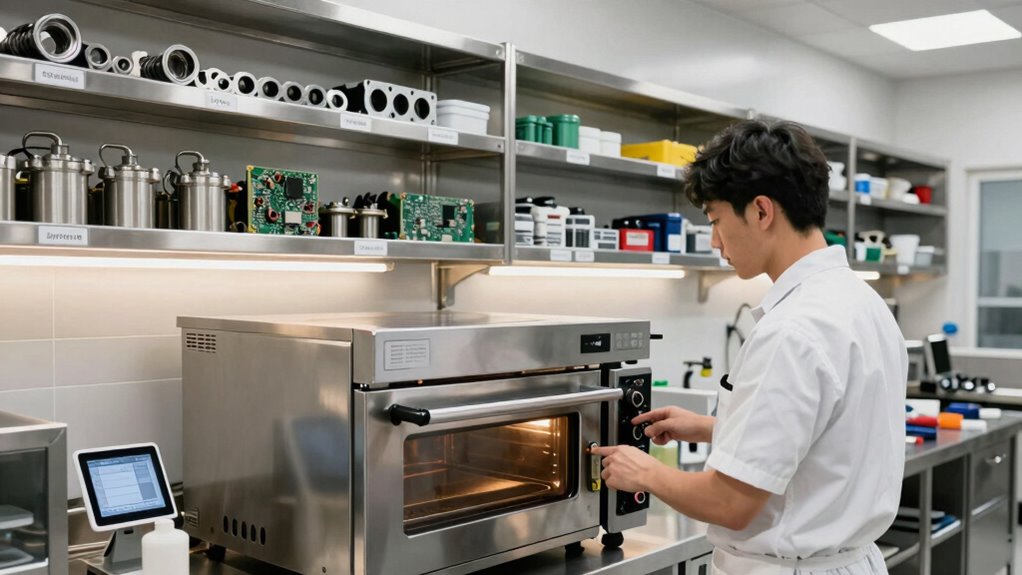

Spare parts planning is essential to keep your restaurant equipment running smoothly and avoid costly disruptions. By maintaining accurate inventories and building strong supplier relationships, you can quickly repair or replace critical appliances like ovens or refrigerators, minimizing downtime. Preventive maintenance helps identify wear parts before failures occur. A strategic approach ensures your operations stay seamless, so you can focus on delivering great service. Keep going to discover how to optimize your spare parts management for success.

Get kitchen staples and gadgets delivered free with Prime
- Fast, free delivery on millions of items
- Prime Video, Amazon Music and more included
- Member-only deals all year
Key Takeaways
- Ensures rapid repair and minimizes downtime for essential kitchen equipment, maintaining smooth restaurant operations.
- Prevents food waste and revenue loss caused by equipment failures through proactive maintenance.
- Maintains inventory accuracy to avoid delays and reduce emergency repairs.
- Strengthens supplier relationships for quick access to quality parts during urgent situations.
- Supports preventive maintenance, extending equipment lifespan and ensuring consistent service quality.
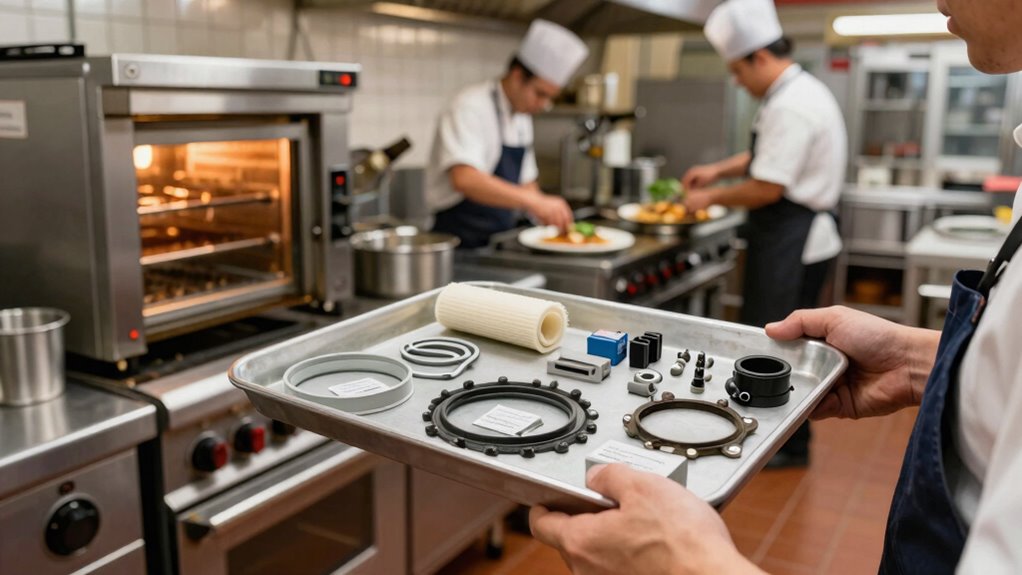
Are you prepared to keep your restaurant running smoothly even when equipment breaks down? If not, you risk losing revenue, wasting food, and disappointing customers. That’s where spare parts planning becomes essential. When you maintain an effective spare parts strategy, you ensure that critical equipment—like ovens, refrigerators, and dishwashers—are quickly repaired or replaced, minimizing downtime. To do this successfully, you need to focus on inventory accuracy. Knowing exactly what parts you have on hand and what you need prevents delays caused by missing components. Accurate inventory management allows you to avoid overstocking, which ties up capital and storage space, or understocking, which causes delays when parts are needed most. With precise inventory data, you can prioritize ordering parts that are most likely to fail or are vital for daily operations. Regularly reviewing product comparisons can help identify the best spare parts suited for your equipment, ensuring reliability and cost-effectiveness. Implementing a preventive maintenance schedule further reduces the risk of unexpected breakdowns by addressing issues before they escalate. Additionally, maintaining detailed records of past repairs and part replacements can enhance your spare parts planning and streamline future maintenance efforts. Taking a proactive approach to inventory management can also help identify trends and optimize stock levels over time. Incorporating technological solutions like inventory software can significantly improve the accuracy and efficiency of your spare parts management process.
Effective spare parts management minimizes downtime and keeps your restaurant running smoothly.
Building strong supplier relationships is equally vital. When you establish clear communication channels with your suppliers, you gain faster access to quality spare parts. Reliable suppliers can provide you with the correct parts promptly, often with options for emergency deliveries if needed. These relationships also help you negotiate better prices and terms, making it easier to stock essential components without breaking the bank. Having trusted suppliers reduces the risk of receiving counterfeit or subpar parts, which could lead to further equipment issues or safety hazards. By cultivating these partnerships, you stay ahead of potential breakdowns, knowing that support and parts are readily available when urgent repairs are needed.
Furthermore, effective spare parts planning ensures you’re prepared for routine maintenance and unexpected failures. When you proactively identify which parts are prone to wear and tear, you can stock those items in advance, preventing last-minute panic purchases. This foresight not only improves your equipment’s lifespan but also keeps your staff focused on delivering quality service rather than troubleshooting breakdowns. Integrating your inventory management system with your maintenance schedules helps you track part usage and forecast future needs more accurately. This way, you can make informed decisions, avoiding costly rush orders or unplanned downtime.
In the end, spare parts planning isn’t just about stocking supplies; it’s a strategic approach that safeguards your restaurant’s operations. When you pay close attention to inventory accuracy and nurture relationships with dependable suppliers, you create a resilient system that supports your ongoing success. This proactive stance ensures your equipment remains in top shape, your team stays efficient, and your customers keep coming back for your excellent service.
As an affiliate, we earn on qualifying purchases.
Frequently Asked Questions
How Do I Determine the Right Quantity of Spare Parts to Stock?
You determine the right quantity of spare parts by analyzing your equipment’s failure history, adjusting based on inventory optimization strategies, and considering lead times. Strengthen supplier relationships to guarantee quick restocking when needed. Regularly review usage patterns and maintenance data to avoid overstocking or shortages. This proactive approach helps you keep essential parts available, minimizing downtime and maintaining smooth restaurant operations.
What Are the Costs Associated With Emergency Equipment Repairs?
Emergency repairs can be costly, with expenses rising from urgent service fees, replacement parts, and extended downtime. A thorough cost analysis highlights how unplanned downtime impacts revenue and customer satisfaction. By reducing downtime through strategic spare parts planning, you can avoid these high costs. Investing in proactive maintenance and stockpiling essential parts minimizes emergency repairs, ultimately saving money and keeping your restaurant running smoothly even during equipment failures.
How Can Technology Improve Spare Parts Inventory Management?
Technology improves your spare parts inventory management by leveraging predictive analytics to forecast demand accurately, reducing stock shortages or overstocking. Integrating suppliers into your system streamlines ordering processes, ensuring timely replenishments. These advancements help you optimize inventory levels, cut costs, and minimize equipment downtime. With real-time data and better supplier communication, you stay prepared for critical repairs, maintaining smooth restaurant operations and avoiding costly emergency fixes.
What Training Is Needed for Staff to Handle Spare Parts Effectively?
You need to guarantee your staff receives proper training in parts handling and inventory management. Focus on hands-on instruction for identifying, storing, and installing spare parts correctly, emphasizing safety and efficiency. Conduct regular refresher courses to keep everyone sharp and up-to-date. Remember, a well-trained team can turn a potential breakdown into a quick fix, preventing costly downtime. Proper training truly keeps the wheels turning smoothly.
How Often Should Spare Parts Inventory Be Reviewed and Updated?
You should review and update your spare parts inventory at least quarterly, considering inventory turnover rates and supplier lead times. Regular assessments help you identify slow-moving items and anticipate delays, ensuring critical equipment stays operational. By staying proactive, you prevent stockouts and reduce downtime, keeping your restaurant running smoothly. Adjust your inventory based on usage trends and supplier changes to maintain ideal stock levels and support quick repairs.
Conclusion
In the end, spare parts planning isn’t just a task—it’s the heartbeat of your restaurant’s uptime. Without it, you risk chaos and costly delays, like a clock without a gear. By staying prepared and proactive, you guarantee your equipment keeps running smoothly, delighting customers and boosting your reputation. Remember, in the world of restaurant service, a well-stocked spare parts inventory isn’t just a safety net—it’s the secret ingredient to success.
NFL season / tailgating Picks
team gear
As an affiliate, we earn on qualifying purchases.