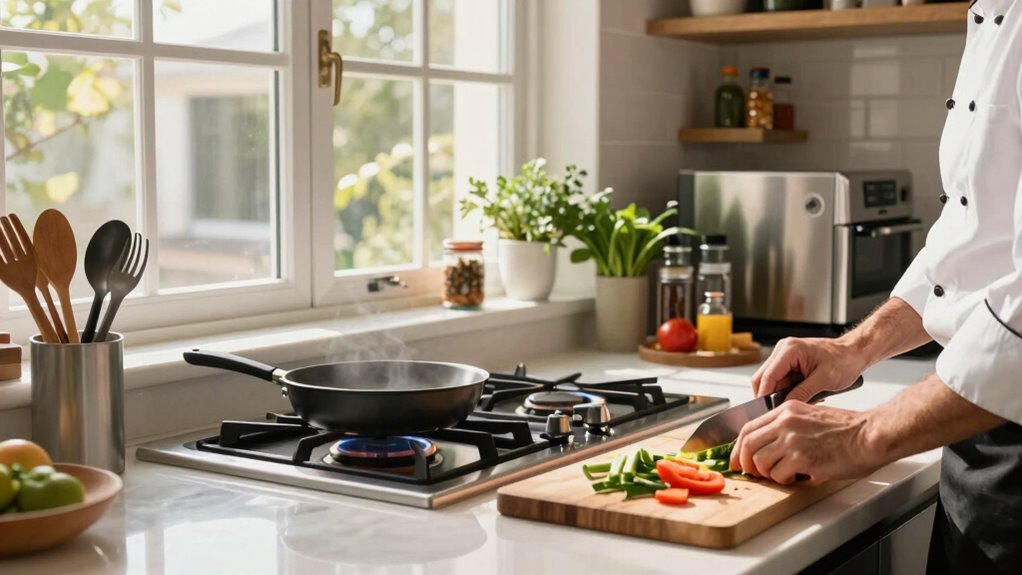

To improve your first-hour kitchen readiness, focus on thorough ingredient prep and organize your workspace efficiently. Gather all ingredients, measure, chop, and pre-cook where needed so you’re not searching or rushing later. Clear the countertops, arrange tools logically, and keep everything within easy reach. Prioritize tasks that can run simultaneously and use timers to stay on schedule. If you keep these steps in mind, you’ll set a strong foundation for a smooth cooking session. Keep going to learn more tips.

Get kitchen staples and gadgets delivered free with Prime
- Fast, free delivery on millions of items
- Prime Video, Amazon Music and more included
- Member-only deals all year
Key Takeaways
- Prepare all ingredients, tools, and equipment in advance to streamline initial setup and reduce delays.
- Organize your workspace by clearing clutter and arranging utensils for easy access.
- Plan your workflow to prioritize tasks that can be done simultaneously, saving time early on.
- Use timers to monitor multiple cooking processes and stay on schedule.
- Review and visualize your entire process before cooking to ensure readiness and smooth execution.
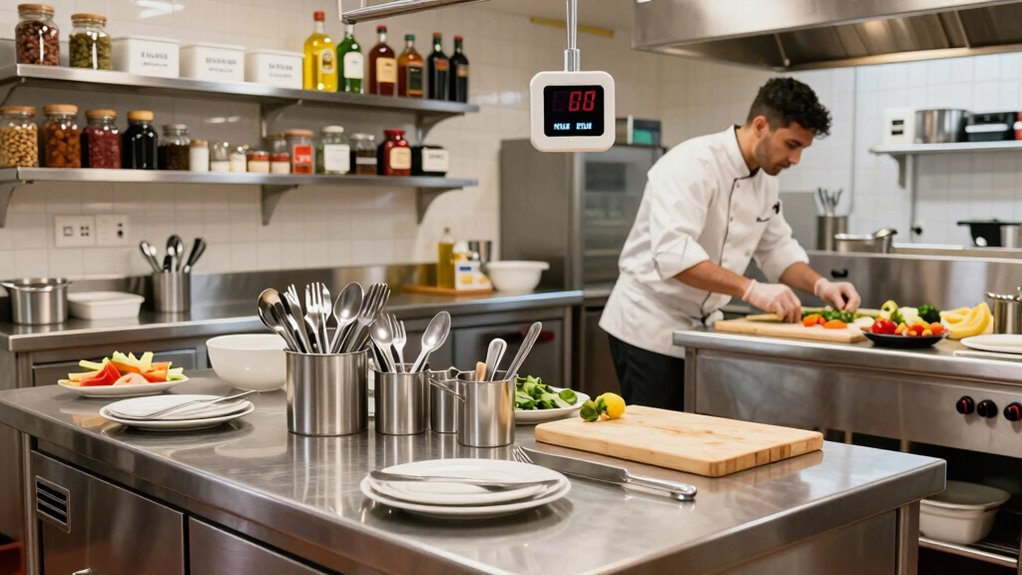
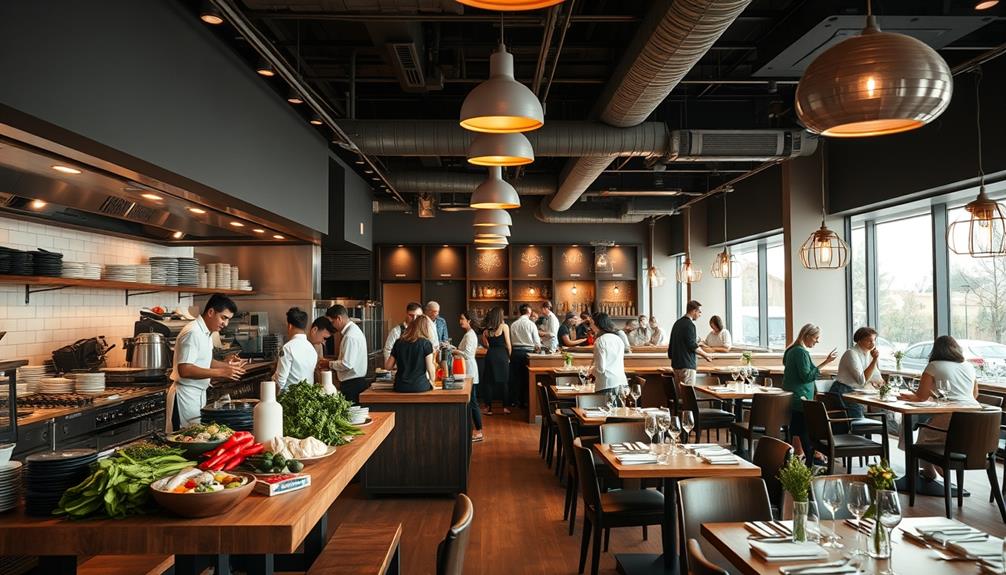
Getting your kitchen ready in the first hour sets the tone for a smooth and efficient cooking experience. When you focus on this initial period, you’re setting yourself up for better cooking efficiency throughout the entire process. The key is to streamline your ingredient prep and organize your workspace so you can move seamlessly from one task to the next.
Start by gathering all the ingredients you need for your recipe. Having everything within arm’s reach minimizes interruptions and saves precious time. As you do this, double-check your pantry and fridge to guarantee you haven’t forgotten anything. Precise ingredient prep, like chopping vegetables, measuring spices, or marinating proteins, is essential. When you prep ingredients in advance, you avoid scrambling later and keep your workflow steady. Keep your knives sharp, and use separate bowls for different ingredients to prevent cross-contamination and keep your workspace tidy.
Next, organize your workspace so everything you need is easily accessible. Clear your countertops of clutter—only leave out tools, utensils, and ingredients relevant to your immediate task. Placing utensils in a container nearby, setting out cutting boards, and arranging pots and pans in order of use helps create a logical flow. When your kitchen is organized, you won’t waste time searching for spatulas or measuring cups, which maintains your cooking efficiency high. Additionally, understanding kitchen workflow can help optimize your setup for faster meal prep. Incorporating kitchen ergonomics principles can further improve comfort and speed during your cooking process. Recognizing optimal kitchen layout can also contribute to reducing movement and streamlining your tasks. Being aware of kitchen safety protocols during this phase can prevent accidents and ensure a smooth cooking experience. Furthermore, establishing a consistent kitchen routine can help you develop habits that make your first-hour preparations even more efficient.
Timing is vital in the first hour. While you’re prepping ingredients, set timers for boiling water, baking, or simmering. Multitasking smartly—like starting a pot to boil while chopping vegetables—ensures no time is wasted. Keep a clean sponge or towel nearby to wipe down surfaces as you go; a tidy workspace reduces stress and prevents accidents.
Finally, review your plan once your ingredients are prepped and organized. Visualize the steps ahead to anticipate what’s coming next, so you stay focused and avoid unnecessary delays. When you start cooking with everything in place, you’ll find that your tasks flow smoothly, and your overall cooking efficiency improves. This initial hour of preparation isn’t just about getting ready—it’s about setting a rhythm that keeps your cooking process quick, organized, and enjoyable. By mastering this early phase, you’ll finish your meals faster, with less frustration, and more confidence in your skills.
As an affiliate, we earn on qualifying purchases.
Frequently Asked Questions
How Can I Reduce Early-Morning Prep Time?
To reduce early-morning prep time, streamline your morning routines by preparing ingredients and tools the night before. Conduct equipment checks the evening prior to guarantee everything’s in working order, saving time in the morning. Organize your workspace for quick access to essentials, and plan your menu ahead. This approach minimizes morning delays, allowing you to start the day more efficiently and confidently, with everything ready when you need it.
What Tools Optimize Kitchen Setup Efficiency?
Think of your kitchen as a well-oiled machine—tools that keep it running smoothly are your secret weapons. Smart storage solutions organize your space like a chessboard, making everything easy to find. Regular equipment maintenance prevents unexpected breakdowns, acting like a tune-up for your culinary engine. Invest in these tools, and you’ll discover efficiency, turning chaos into a symphony of seamless prep and service.
How Do I Train Staff for Quick Readiness?
You train staff for quick readiness by emphasizing clear staff communication and regular equipment maintenance. Conduct quick daily huddles to outline tasks, reinforce procedures, and address concerns. Make sure everyone understands their roles and expectations. Schedule routine equipment checks to prevent breakdowns that delay readiness. Practice quick-start drills to build familiarity and confidence. With consistent communication and maintenance, your team becomes more prepared, efficient, and ready to serve from the moment the kitchen opens.
What Are Common Kitchen Bottlenecks in the First Hour?
While chaos can seem inevitable, the biggest bottlenecks in your kitchen’s first hour often stem from disorganized meal prep and overlooked equipment maintenance. These issues slow down the flow, causing delays and frustration. To improve readiness, streamline prep stations, guarantee all tools are functioning, and establish clear routines. When equipment runs smoothly and meal prep is efficient, your team can hit the ground running, minimizing delays and maximizing productivity.
How Can Inventory Management Improve Initial Readiness?
You can improve initial readiness by focusing on inventory management. Guarantee inventory accuracy by regularly counting and updating stock levels, so you’re always aware of what’s available. Practice proper stock rotation to prevent spoilage and shortages, allowing your team to access fresh ingredients quickly. These steps help reduce delays, streamline prep, and ensure your kitchen is fully prepared from the moment service begins. Accurate inventory and effective stock rotation are key to smooth operations.
Conclusion
Think of your kitchen as a well-trained orchestra, ready to perform at a moment’s notice. By prepping efficiently, you’re tuning each instrument so everything harmonizes seamlessly in the first hour. When you streamline your process, you become the conductor, guiding your culinary symphony without a hitch. With practice, your kitchen will always be ready to produce a masterpiece, turning everyday cooking into a smooth, stress-free performance.
Halloween Picks
halloween
As an affiliate, we earn on qualifying purchases.