To build a recipe costing sheet, list all ingredients needed for each dish and determine their current prices per unit. Measure the exact amount of each ingredient per serving, then multiply by its unit cost to find the ingredient cost per portion. Add all ingredient costs plus any extra expenses like garnishes or overhead. Include your desired profit margin to set a competitive selling price. Keep updating prices regularly to stay accurate—continue exploring for detailed steps to perfect your sheet.
Key Takeaways
- List all ingredients needed for each recipe and determine their current unit prices.
- Measure and record exact ingredient portions per serving for accurate cost calculation.
- Calculate ingredient costs by multiplying portion sizes by their unit prices, then sum for total dish cost.
- Incorporate additional expenses like garnishes, overhead, and desired profit margin to set final pricing.
- Regularly update ingredient prices and review costs to maintain accuracy and optimize profitability.
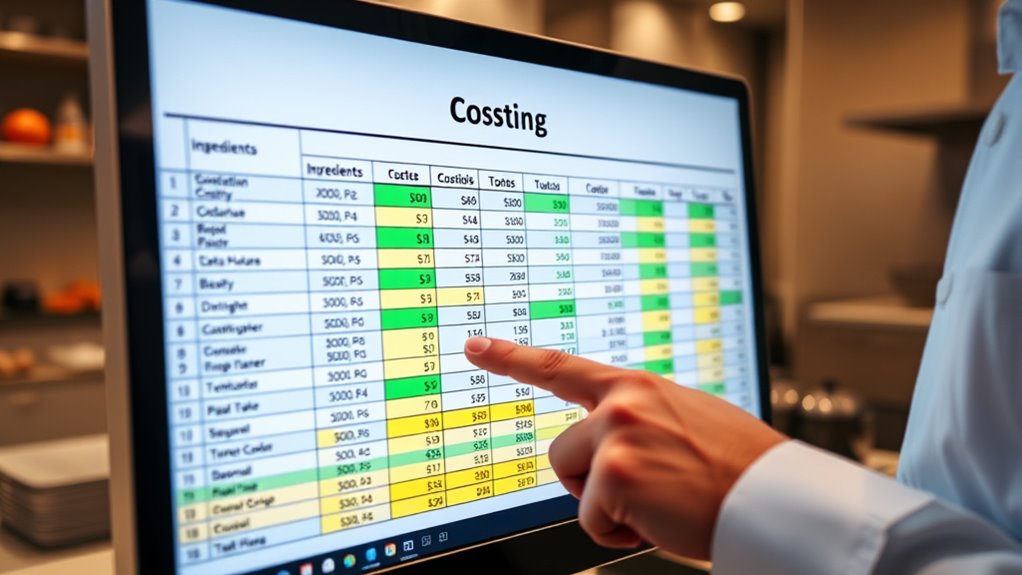
Recipe costing sheets are indispensable tools for managing food expenses and guaranteeing profitability in your kitchen. They help you track the true cost of each dish by breaking down every ingredient used. To build an effective sheet, start by listing all ingredients required for your recipe. For each item, identify the ingredient pricing—this is the cost per unit, whether it’s per pound, ounce, or piece. Accurate ingredient pricing is critical because it forms the foundation of your total dish cost. Be sure to use current prices, as fluctuations can drastically impact your profitability. Keep in mind that ingredient prices can vary by supplier or season, so regularly update these figures to maintain accuracy.
Recipe costing sheets are vital for controlling food costs and ensuring restaurant profitability.
Next, focus on portion control. This step involves determining the exact amount of each ingredient needed for a single serving. Precise portion control ensures that your costs are consistent and helps prevent waste. Measure each ingredient carefully and record these measurements in your sheet. For example, if your recipe calls for 2 ounces of cheese per serving, note that amount explicitly. When you multiply the ingredient price by the portion size, you get the cost per serving. Doing this for every ingredient allows you to calculate the total cost per dish accurately. Additionally, considering cost fluctuations and adjusting your pricing accordingly can help maintain your profit margins over time.
As you compile your recipe costing sheet, include a section for the total ingredient costs and then add any additional expenses, such as garnishes or toppings. Don’t forget to factor in overhead costs like utilities or labor if you want a thorough view of your expenses. Once you have the total cost, you can determine the selling price by adding your desired profit margin. This process makes it easier to set competitive prices while maintaining profitability.
Using your recipe costing sheet consistently is essential. It helps you identify any ingredients that are driving up costs and highlights where you might need to adjust portion sizes or find alternatives. The key to success is consistency: stick to your portion control guidelines and update ingredient prices often. Over time, this practice will streamline your pricing strategy, reduce waste, and improve your overall food cost management. Building and maintaining a detailed recipe costing sheet may take some effort upfront, but it’s an investment that pays off by giving you better control over your kitchen’s financial health.
Frequently Asked Questions
How Often Should I Update My Recipe Costing Sheet?
You should update your recipe costing sheet whenever ingredient pricing changes or if you adjust your menu offerings. Regular updates, at least monthly or bi-weekly, help you stay on top of fluctuating costs and guarantee accurate menu pricing. Staying proactive prevents profit loss and keeps your pricing competitive. Keep an eye on supplier quotes and market trends, updating your sheet promptly to reflect real-time costs.
What Software Is Best for Creating Costing Sheets?
You should use software like Excel, Google Sheets, or specialized tools like ChefTec for creating costing sheets. These programs let you easily incorporate ingredient markup and perform detailed cost analysis. They help you track ingredient costs, adjust for markup, and see how changes affect your profit margins. With these tools, you get a clear, organized way to manage your recipe costs and make informed pricing decisions quickly.
How Do I Handle Ingredient Price Fluctuations?
Oh, the irony of ingredient price fluctuations, right? To handle them, you should implement diligent ingredient price tracking and stay proactive with supplier negotiations. Regularly update your costing sheets to reflect current prices, and build good relationships with suppliers to negotiate better deals. This way, you keep your costs accurate and avoid surprises, ensuring your recipes remain profitable despite unpredictable market shifts.
Can Costing Sheets Be Customized for Different Portion Sizes?
Yes, you can customize costing sheets for different portion sizes by incorporating portion adjustments. When scaling recipes, adjust ingredient quantities proportionally to match the new portion size. This guarantees your costs reflect the actual servings you’re preparing. Be sure to update all ingredient costs accordingly, so your costing sheet remains accurate whether you’re working with small or large portions, helping you manage expenses effectively and maintain consistent pricing.
What Are Common Mistakes to Avoid in Recipe Costing?
Think of recipe costing like building a house—you need a solid foundation. Avoid common mistakes like neglecting ingredient markup or ignoring portion control, which can skyrocket costs. I once saw a chef underestimate ingredient costs, leading to lost profits. Always double-check your calculations, track portion sizes carefully, and include all ingredients in your sheet. This way, your costs stay accurate, and your menu remains profitable.
Conclusion
Think of your recipe costing sheet as the compass guiding your culinary ship through the vast ocean of ingredients and expenses. With each accurate entry, you’re steering toward profitable waters and delicious success. Keep your sheet steady, update it regularly, and watch your culinary voyage become smoother and more rewarding. Just like a skilled captain, mastering this tool guarantees you stay on course, savoring every delicious achievement along the way. Bon voyage to your culinary enterprise!