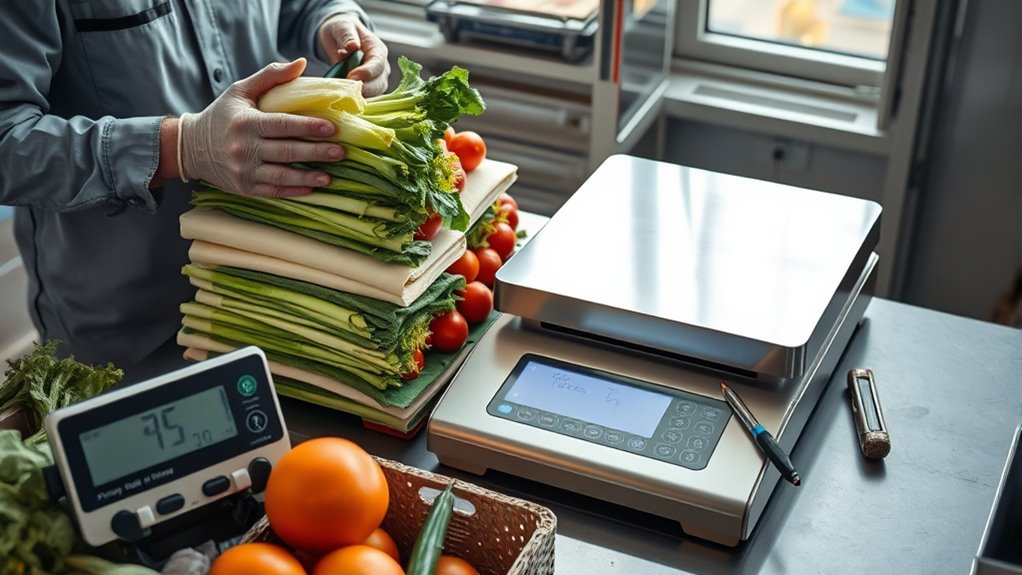

When performing receiving procedures, you should conduct quality checks to guarantee items are undamaged and meet standards, weighing shipments to verify accuracy against packing lists, and inspecting temperature-sensitive goods to confirm proper storage conditions. Make sure to document any deviations and communicate issues with suppliers promptly. Properly combining these steps helps prevent errors, protects product integrity, and ensures compliance. Keep going to discover more essential tips for effective receipt verification.
Key Takeaways
- Conduct quality inspections to verify items meet safety and performance standards upon receipt.
- Weigh shipments and compare with packing lists to ensure correct quantities.
- Perform temperature checks for perishable or sensitive goods to confirm proper storage conditions.
- Document any deviations in quality, weight, or temperature for supplier notification and resolution.
- Use calibrated tools and standardized procedures to ensure accurate and consistent checks.
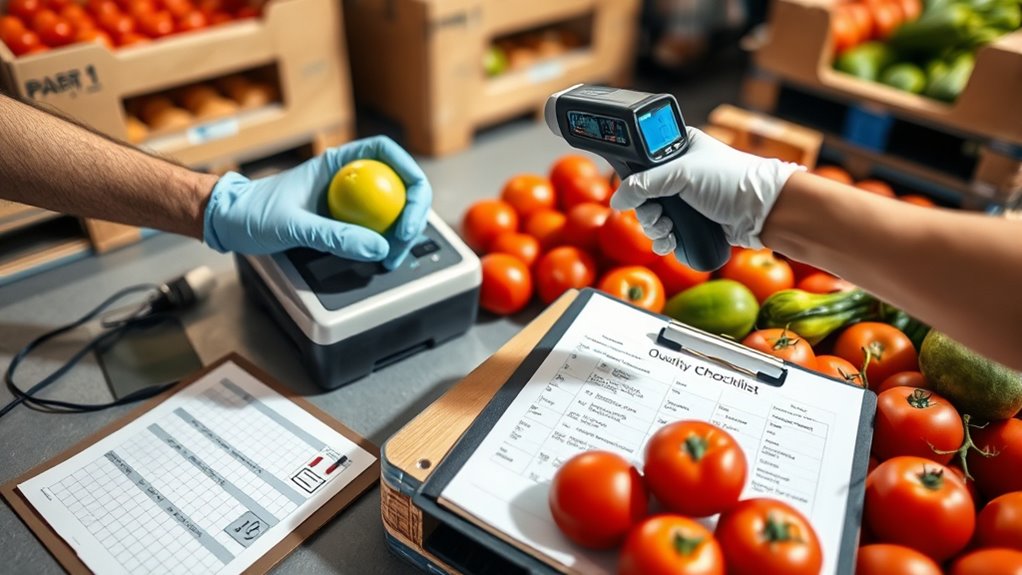
Have you ever wondered what steps are involved in properly receiving goods? It’s more than just opening a box and checking if everything’s inside. To guarantee quality, safety, and accuracy, you need to follow a systematic process that includes verifying the supplier’s details and reviewing delivery documentation. These initial steps set the foundation for smooth operations and prevent errors down the line.
Proper goods receipt involves verifying supplier details and reviewing delivery documentation for accuracy and safety.
When your shipment arrives, the first thing you should do is verify the supplier’s information. Confirm that the delivery matches the purchase order you issued, including the supplier’s name, contact details, and the expected delivery date. Supplier verification ensures that you’re receiving items from the correct source and helps prevent fraud or mistakes. Cross-check the supplier’s details with your records to confirm authenticity before proceeding. This step is essential because it establishes trust and accountability and reduces the risk of accepting incorrect or tampered goods.
Next, review the delivery documentation thoroughly. This documentation typically includes the bill of lading, packing list, and invoice. The bill of lading confirms that the carrier has delivered the correct shipment, while the packing list details what’s inside the package, including quantities and descriptions. The invoice provides the financial details, ensuring the billing aligns with your purchase order. Comparing these documents allows you to verify that the shipment is complete and matches what you ordered. Any discrepancies should be noted immediately and communicated to the supplier for resolution. Proper documentation review helps prevent issues like missing items, over-deliveries, or billing errors, saving you time and potential costs later.
Once you’ve confirmed the supplier’s identity and reviewed the paperwork, it’s time to inspect the goods themselves. Conduct quality checks by examining the condition of the items, ensuring they are undamaged and meet quality standards. Weight checks are also essential—verify that the weight of the shipment aligns with the specifications on the packing list. Temperature checks become critical if you’re handling perishable or temperature-sensitive goods. Use the appropriate tools to measure and document temperatures, making sure they fall within acceptable ranges. Additionally, understanding the importance of projector specifications such as contrast ratio and color accuracy can help you assess whether the items meet your technical requirements. Any deviations should be recorded immediately, and the supplier should be notified if there’s a breach in quality or safety standards.
Frequently Asked Questions
How Often Should Calibration of Measurement Tools Be Performed?
You should calibrate your measurement tools regularly to guarantee measurement accuracy. Typically, follow a calibration schedule based on manufacturer recommendations and how frequently you use the tools. For most equipment, calibrate at least once a month or whenever you notice discrepancies. Consistent calibration helps maintain precision, prevents errors during receiving procedures, and ensures quality standards. Keep a record of calibrations to track compliance and maintain reliable measurement accuracy over time.
What Are the Best Practices for Documenting Discrepancies?
You should document discrepancies immediately to prevent issues from slipping through the cracks. Follow your facility’s documentation standards carefully, making certain all details are clear and accurate. Use discrepancy reporting forms consistently, noting the date, time, and nature of the issue. Keep records organized and accessible, so you can track patterns over time. This proactive approach helps maintain quality and ensures accountability, making your process smoother and more reliable.
How Do We Handle Damaged or Spoiled Shipments?
When you encounter damaged or spoiled shipments, follow your inspection protocols and conduct a thorough damage assessment. Document everything clearly, noting the extent of damage and taking photos if necessary. Notify your supervisor immediately and segregate the affected items to prevent further use. Depending on company policy, you may need to arrange for return, disposal, or rework. Always prioritize safety and proper documentation to guarantee proper handling and accountability.
What Training Is Required for Staff Conducting Checks?
Think of staff training as equipping your crew for a voyage; they need to master check procedures like navigation tools. You must guarantee your team understands how to accurately assess quality, weight, and temperature checks, recognizing signs of spoilage or damage. Proper training ensures consistency and safety, so your staff can confidently identify issues and take swift action. Regular refreshers keep their skills sharp, anchoring your operation in quality and compliance.
How Can Technology Improve the Receiving Process Accuracy?
You can improve receiving process accuracy by leveraging digital verification systems that automatically record and compare data, reducing human errors. Integrating automation tools streamlines checks for quality, weight, and temperature, ensuring precise measurements every time. By adopting these technologies, you minimize discrepancies, enhance efficiency, and maintain consistent standards. This proactive approach helps catch issues early, saving time and ensuring products meet quality requirements seamlessly.
Conclusion
By following these procedures, you’ll guarantee every product meets quality standards like a finely tuned machine. Checking weight, temperature, and quality isn’t just routine—it’s your safeguard against issues down the line. Think of it as your personal filter, catching imperfections before they reach your customers. Stay diligent and consistent, and you’ll keep your operations running smoothly, just like a well-oiled engine. Remember, your attention to detail makes all the difference in delivering first-rate products every time.