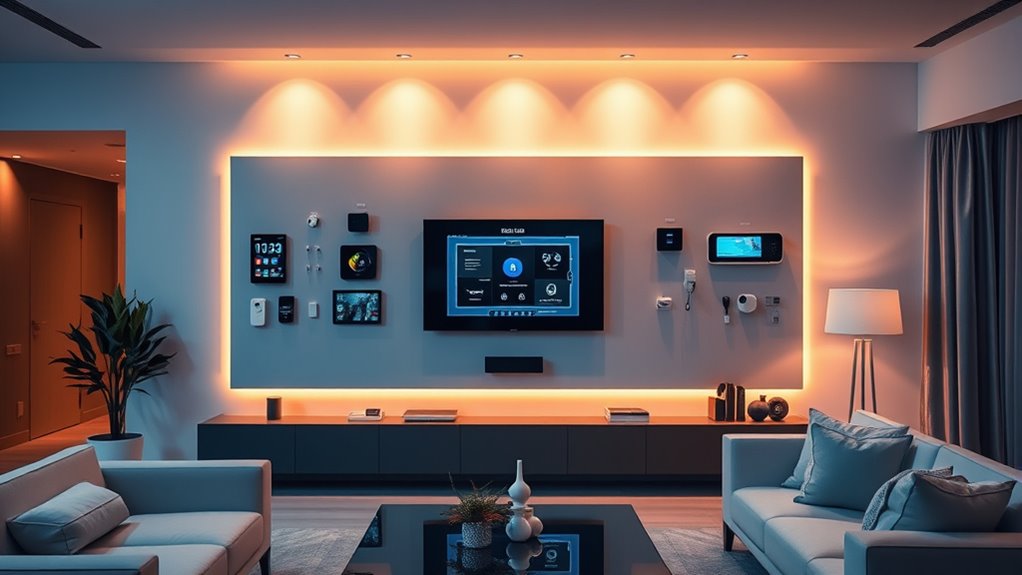

For those seeking the best in home automation, premium hubs offer advanced features, greater reliability, and seamless integrations. The Homey Pro stands out as the top overall choice thanks to its extensive protocol support and user-friendly interface. The Hubitat Elevation C-8 Pro is ideal for local control enthusiasts, while the Home Assistant Green offers cutting-edge automation capabilities for tech-savvy users. Each option balances performance, compatibility, and price differently, which can make choosing the right one challenging. Continue reading for a detailed breakdown of these premium hubs to find the best fit for your smart home needs.

Get kitchen staples and gadgets delivered free with Prime
- Fast, free delivery on millions of items
- Prime Video, Amazon Music and more included
- Member-only deals all year
Key Takeaways
- Compatibility across multiple protocols like Z-Wave, Zigbee, and Matter is essential for flexibility and future-proofing.
- Local control options are highly valued for reliability, especially during internet outages or system updates.
- Ease of setup and user interface vary significantly; more advanced systems often require technical knowledge.
- Support for automation complexity and integration with voice assistants distinguishes premium hubs from budget options.
- Price differences reflect build quality, protocol support, and additional features like IR or PoE; buyers should match these to their needs.
| Hubitat Elevation C-8 Pro Smart Home Hub, Local Control and Automations |  | Best Overall for Customizable Local Automation | Protocols Supported: Matter 1.5, Z-Wave 800 Series, Z-Wave Long Range, Zigbee 3.0, Bluetooth | Control: Local | Automation Features: Advanced routines, multi-condition scenes, geofencing, layered security | VIEW ON AMAZON | See Our Full Breakdown |
| Homey Pro (2026) Smart Home Hub with Z-Wave Plus, Zigbee, Wi-Fi, BLE, Infrared, Matter & Thread |  | Best for Wide-Ranging Device Compatibility and User-Friendly Automation | Protocols: Z-Wave Plus, Zigbee, Wi-Fi, BLE, Infrared, Matter, Thread | Device Compatibility: Over 50,000 devices from 1,000+ brands | Features: Double RAM, local processing, energy savings, automation flows | VIEW ON AMAZON | See Our Full Breakdown |
| Aeotec Smart Home Hub, Z-Wave, Zigbee, Matter Gateway, Compatible with Alexa and Google Assistant |  | Best for North American Ecosystems and Voice Assistant Integration | Connectivity: Wi-Fi, Ethernet | Protocols: Z-Wave, Zigbee, Matter | Compatibility: Alexa, Google Assistant, SmartThings | VIEW ON AMAZON | See Our Full Breakdown |
| Aqara Smart Hub M200, Matter Controller with Zigbee, Wi-Fi, IR, PoE |  | Best for Flexible Connectivity and Local Automation | Protocols Supported: Matter, Zigbee, Thread, IR | Device Capacity: 40 Aqara Zigbee, 40 Thread devices | Connectivity: Wi-Fi 2.4/5 GHz, PoE, USB-C | VIEW ON AMAZON | See Our Full Breakdown |
| Home Assistant Green Smart Home Hub with Advanced Automation |  | Best for Power Users Wanting Custom Ecosystem Control | Processor: Quad-core | Storage: 32GB | RAM: 4GB | VIEW ON AMAZON | See Our Full Breakdown |
| Aqara Smart Home Hub M3 with Matter Support, IR Blaster, and Multi-Protocol Compatibility |  | Best Overall for Versatile Multi-Protocol Integration | Protocols Supported: Zigbee, Thread, Matter | Device Capacity: 127 Zigbee devices, 127 Thread devices | Connectivity: Wi-Fi 2.4/5 GHz, PoE, USB-C | VIEW ON AMAZON | See Our Full Breakdown |
| Homey Pro Mini | Smart Home Hub for Home Automation with Zigbee, Ethernet, Matter & Thread |  | Best for Broad Protocol Compatibility and Home Automation Power | Protocols Supported: Zigbee, Matter, Thread, Ethernet | Compatibility: Apple Siri, Alexa, Google Home | Additional Modules: Homey Bridge (sold separately) for Z-Wave, Bluetooth, Infrared | VIEW ON AMAZON | See Our Full Breakdown |
| SwitchBot AI Hub with OpenClaw Support and Local Storage |  | Best for Local Storage and Camera Integration | OpenClaw Support: Yes | MicroSD Card Included: 16GB | MicroSD Expansion: Up to 1TB or 16TB external hard drive | VIEW ON AMAZON | See Our Full Breakdown |
| SmartThings Hub 3rd Generation |  | Best for Broad Protocol Compatibility and Easy Remote Control | Protocols: Zigbee, Z-Wave, Cloud-to-Cloud | Compatibility: Alexa, Google Home | Color: White | VIEW ON AMAZON | See Our Full Breakdown |
| premium home automation hub | Connectivity |
|---|---|
| Hubitat Elevation C-8 Pro Smar | — |
| Homey Pro | Wi-Fi, Zigbee, Z-Wave Plus, Infrared, BLE, Matter, Thread |
| Aeotec Smart Home Hub | Wi-Fi, Ethernet |
| Aqara Smart Hub M200 | Wi-Fi 2.4/5 GHz, PoE, USB-C |
| Home Assistant Green Smart Hom | USB expandability for Z-Wave, Zigbee, Thread |
| Aqara Smart Home Hub M3 with M | Wi-Fi 2.4/5 GHz, PoE, USB-C |
| Homey Pro Mini | Smart Home Hu | — |
| SwitchBot AI Hub with OpenClaw | — |
| SmartThings Hub 3rd Generation | — |
More Details on Our Top Picks
Hubitat Elevation C-8 Pro Smart Home Hub, Local Control and Automations
The Hubitat Elevation C-8 Pro stands out for prioritizing privacy and speed through local processing, making it a strong choice over cloud-dependent hubs like the Homey Pro. Its support for multiple protocols, including Matter, Z-Wave, Zigbee, and Bluetooth, offers unmatched versatility for complex setups. While setup can be more technical, the platform’s automation capabilities—advanced routines, geofencing, and layered security—make it ideal for tech-savvy users seeking total control. Compared with the Home Assistant Green, it provides a more plug-and-play experience but may require manual tweaks for advanced features. Its active community helps troubleshoot and customize, but the learning curve and device compatibility are potential hurdles. Best for those who value privacy, local control, and a flexible, customizable platform.
Pros:- Local control ensures fast response times and enhanced privacy
- Supports multiple protocols including Matter, Z-Wave, Zigbee, and Bluetooth
- No subscription fees and continuous free updates
- Active community for support and customization
Cons:- Setup and configuration may require technical knowledge
- Advanced features may need manual review and setup
Best for: Tech-savvy homeowners wanting robust, local automation with extensive protocol support
Not ideal for: Beginners or those preferring a simple, out-of-the-box setup without technical configuration
- Protocols Supported:Matter 1.5, Z-Wave 800 Series, Z-Wave Long Range, Zigbee 3.0, Bluetooth
- Control:Local
- Automation Features:Advanced routines, multi-condition scenes, geofencing, layered security
- Updates:Continuous, free software updates
Our verdict“Ideal for experienced users seeking a highly customizable, privacy-focused hub with broad protocol support.”
Homey Pro (2026) Smart Home Hub with Z-Wave Plus, Zigbee, Wi-Fi, BLE, Infrared, Matter & Thread
The Homey Pro (2026) offers unmatched device support, connecting over 50,000 devices across multiple protocols like Z-Wave Plus, Zigbee, Wi-Fi, BLE, and Thread. Its comprehensive compatibility surpasses the Hubitat Elevation, making it especially appealing for users with diverse ecosystems. The interface is user-friendly, with Homey Flow automation that simplifies creating custom routines without technical expertise. However, setup can be complex for newcomers, and the platform’s cloud reliance for some features may limit privacy. While its support for energy savings and local processing is a plus, the lack of clear pricing and regional restrictions could pose barriers. This pick makes the most sense for those who want broad device compatibility and easy automation creation.
Pros:- Supports a vast array of protocols and devices, including over 50,000 products
- Local processing for privacy and faster automations
- User-friendly interface with Homey Flows and Web App
- Supports energy monitoring and automation flows
Cons:- Setup and configuration can be complex for newcomers
- Limited information on pricing and regional availability
- Some features depend on internet connectivity
Best for: Homeowners with a large variety of smart devices and a preference for intuitive automation
Not ideal for: Beginners or those seeking a simple, plug-and-play solution without extensive setup
- Protocols:Z-Wave Plus, Zigbee, Wi-Fi, BLE, Infrared, Matter, Thread
- Device Compatibility:Over 50,000 devices from 1,000+ brands
- Features:Double RAM, local processing, energy savings, automation flows
- Connectivity:Wi-Fi, Zigbee, Z-Wave Plus, Infrared, BLE, Matter, Thread
Our verdict“Best suited for users who want extensive device support combined with easy-to-use automation features.”
Aeotec Smart Home Hub, Z-Wave, Zigbee, Matter Gateway, Compatible with Alexa and Google Assistant
The Aeotec Smart Home Hub provides reliable control with support for Z-Wave, Zigbee, and Matter, making it a solid choice for integrating voice assistants like Alexa and Google. Its straightforward setup via app over Wi-Fi or Ethernet simplifies initial configuration compared to more complex hubs like the Homey Pro. While its regional focus on North America might limit compatibility elsewhere, the ability to run automations locally ensures quick responses. However, its primary focus on North American markets and reliance on a smartphone app for management may be less suitable for international users or those seeking a more integrated experience without app dependency. This hub makes sense for North American users who prioritize voice control and local automations.
Pros:- Supports multiple protocols including Z-Wave, Zigbee, and Matter
- Easy setup via app with Wi-Fi or Ethernet
- Automations run locally for faster response times
- Compatible with Alexa, Google Assistant, and SmartThings
Cons:- Designed primarily for North American use, limiting regional compatibility
- Requires a smartphone app for setup and ongoing management
- Some features may need additional compatible devices
Best for: North American users needing reliable voice assistant integration and local control
Not ideal for: International users or those seeking a globally compatible, app-free experience
- Connectivity:Wi-Fi, Ethernet
- Protocols:Z-Wave, Zigbee, Matter
- Compatibility:Alexa, Google Assistant, SmartThings
Our verdict“A reliable, regional-focused hub best for North American users who want voice integration and local automations.”
Aqara Smart Hub M200, Matter Controller with Zigbee, Wi-Fi, IR, PoE
The Aqara Smart Hub M200 excels in supporting Matter, Zigbee, Thread, and IR protocols, making it a versatile choice for those wanting broad device integration. Its PoE and dual-band Wi-Fi options provide flexible setup and reliable operation, especially for wired environments. The built-in speaker adds a layer of security and customization, supporting alerts and doorbell functions. Compared to the Home Assistant Green, it offers more straightforward installation and physical connectivity options. However, IR functionality may be limited to controlling a single AC device, and the absence of included power adapters can add extra cost. While local automation is a key strength, some cloud-dependent automations may still need internet access. This hub is ideal for users who need flexible, wired, and wireless connectivity with local control.
Pros:- Supports Matter, Zigbee, Thread, and IR for broad compatibility
- Flexible connectivity via Wi-Fi, PoE, and USB-C
- Local automation ensures reliable performance
- Built-in speaker for alerts and doorbell functions
Cons:- IR control may be limited to a single AC device
- Power adapter not included, requiring additional purchase
- Some automations may depend on internet connectivity
Best for: Homeowners seeking flexible, wired/wireless setup with broad protocol support and local automation
Not ideal for: Users requiring extensive IR control or those who prefer all-in-one hubs with included power adapters
- Protocols Supported:Matter, Zigbee, Thread, IR
- Device Capacity:40 Aqara Zigbee, 40 Thread devices
- Connectivity:Wi-Fi 2.4/5 GHz, PoE, USB-C
- Features:Matter Bridge, IR Blaster, Local Automation, Built-in Speaker
Our verdict“Best for users wanting versatile, wired and wireless setup with reliable local automation support.”
Home Assistant Green Smart Home Hub with Advanced Automation
The Home Assistant Green offers a streamlined, fanless design paired with powerful hardware, making it ideal for users who prefer a DIY approach with complete control. Its support for Z-Wave, Zigbee, and Thread through USB expands compatibility, while the pre-installed Home Assistant software simplifies setup compared to configuring a separate server. This model is less versatile in protocol support than the Homey Pro, but its energy-efficient design and support for extensive automation make it suitable for dedicated smart home enthusiasts. The reliance on Ethernet for initial setup might be a barrier for some, yet it provides a stable foundation for automation. It’s best for users comfortable with the Home Assistant ecosystem and seeking a central hub with sophisticated automation capabilities.
Pros:- Easy to set up with pre-installed Home Assistant software
- Supports Z-Wave, Zigbee, and Thread via USB expansion
- Fanless and energy-efficient design reduces noise and power consumption
- Powerful hardware for complex automations
Cons:- Limited to the Home Assistant ecosystem, less flexible for multi-platform integration
- Requires Ethernet connection for initial setup
- Setup may be challenging for non-technical users
Best for: Power users and enthusiasts who want a dedicated, customizable smart home hub with extensive automation options
Not ideal for: Casual users or those unfamiliar with Home Assistant who prefer an out-of-the-box solution
- Processor:Quad-core
- Storage:32GB
- RAM:4GB
- Power Consumption:A couple of watts
- Connectivity:USB expandability for Z-Wave, Zigbee, Thread
Our verdict“Best for experienced smart home users who want deep customization and a dedicated automation hub.”
Aqara Smart Home Hub M3 with Matter Support, IR Blaster, and Multi-Protocol Compatibility
The Aqara M3 stands out for supporting Zigbee, Thread, and Matter, making it highly adaptable for integrating a wide array of smart devices. Compared with the Homey Pro Mini, it emphasizes local control and device compatibility, but it relies on a wired setup with PoE and USB-C, which may add complexity for some users. Its IR blaster broadens control over traditional electronics, making it a practical choice for those with remote-controlled devices. The main tradeoff is that it requires placement within 6 to 19 feet of the router for best performance, and some features still depend on internet connectivity. This pick makes the most sense for homeowners seeking a highly adaptable, privacy-focused hub with robust protocol support.
Pros:- Supports multiple protocols including Zigbee, Thread, and Matter for wide device compatibility
- Local automation and control for enhanced privacy and reliability
- Includes a smart IR blaster for controlling traditional remote devices
- Supports PoE and USB-C for flexible placement
Cons:- Requires placement between 6 to 19 feet from the router for optimal connectivity
- PoE port and USB power adapter are not included
- Some cloud-based notifications still depend on internet connection
Best for: Homeowners who want a flexible, multi-protocol hub with local control and IR capabilities
Not ideal for: Users who prefer wireless setup with minimal wiring or need plug-and-play simplicity
- Protocols Supported:Zigbee, Thread, Matter
- Device Capacity:127 Zigbee devices, 127 Thread devices
- Connectivity:Wi-Fi 2.4/5 GHz, PoE, USB-C
- Storage:8GB encrypted local storage
- IR Blaster:360° IR with feedback and learning
- Power:PoE, USB-C port (adapter not included)
Our verdict“Ideal for tech-savvy users seeking a versatile, multi-protocol hub with local control and IR support.”
Homey Pro Mini | Smart Home Hub for Home Automation with Zigbee, Ethernet, Matter & Thread
The Homey Pro Mini offers extensive protocol support, including Zigbee, Matter, and Thread, making it suitable for integrating over 1000 brands. Compared to the SmartThings Hub 3rd Generation, it provides more local control and automation options without subscription fees, but requires a separate purchase of the Homey Bridge for Z-Wave, Bluetooth, and Infrared. Its support for popular voice assistants like Siri, Alexa, and Google Home makes it versatile, while its focus on privacy through local control appeals to security-conscious users. The main drawback is that some features, such as Z-Wave and IR, need an additional module, which increases setup complexity. This hub is best suited for users who want a comprehensive, protocol-rich experience with maximum automation flexibility.
Pros:- Supports Zigbee, Matter, and Thread for extensive device compatibility
- No subscription fees for full feature access
- Local control and automation ensure privacy and reliability
- Compatible with major voice assistants
Cons:- Requires separate purchase of Homey Bridge for Z-Wave, Bluetooth, and IR modules
- Limited details on app interface and setup process
- Price and total setup cost can increase with additional modules
Best for: Advanced home automation enthusiasts who need broad protocol support and local control
Not ideal for: Casual users looking for an all-in-one, plug-and-play hub without extra purchases
- Protocols Supported:Zigbee, Matter, Thread, Ethernet
- Compatibility:Apple Siri, Alexa, Google Home
- Additional Modules:Homey Bridge (sold separately) for Z-Wave, Bluetooth, Infrared
- Control:Local and cloud-based automation
- Backup Options:Local and cloud backups
Our verdict“Best suited for users who prioritize protocol versatility and local automation without ongoing fees.”
SwitchBot AI Hub with OpenClaw Support and Local Storage
The SwitchBot AI Hub excels at supporting OpenClaw for camera and device integration, facilitating context-aware automation and chat control. It supports local storage via a microSD card, which is a significant advantage over cloud-only solutions like the Homey Pro Mini. Its pre-installed Home Assistant software and Matter Bridge streamline setup, making it appealing for those who prioritize speed and local processing. However, its AI features depend on a subscription, and it lacks IR control, limiting its utility with traditional electronics. Compatibility is also limited to supported cameras and devices, which could be restrictive for users with diverse ecosystems. This hub is ideal for security-focused users seeking local storage and faster automations, but less so for those wanting extensive device control without subscription costs.
Pros:- Supports local storage and expandable microSD options up to 1TB or 16TB
- Faster automations for compatible devices
- Pre-installed Home Assistant and Matter Bridge for easy setup
- Supports multiple cameras and smart devices
Cons:- AI features require a subscription, adding ongoing costs
- No IR control for TVs or air conditioners
- Compatibility limited to supported cameras and devices
Best for: Home security enthusiasts and users needing local storage for cameras
Not ideal for: Users seeking universal IR control or a purely subscription-free experience
- OpenClaw Support:Yes
- MicroSD Card Included:16GB
- MicroSD Expansion:Up to 1TB or 16TB external hard drive
- Supports Cameras:Yes, compatible with SwitchBot cameras, Video Doorbell, RTSP cameras
- Automation Speed:Up to 4x faster
- Pre-installed Software:Home Assistant
Our verdict“Best for users prioritizing local camera storage, faster automations, and integrated smart device control with an emphasis on security.”
SmartThings Hub 3rd Generation
The SmartThings Hub 3rd Generation provides a straightforward way to manage multiple smart devices through a single app, supporting Zigbee, Z-Wave, and cloud-to-cloud integrations. Compared with the Aqara M3, it relies more on cloud services for automation, which can introduce latency but offers broad device compatibility. Its support for popular voice assistants makes it suitable for users already invested in those ecosystems. However, setup can be complex for beginners, especially if integrating a diverse array of devices. While it offers reliable remote control and automation, its reliance on compatible devices and cloud connectivity means it may not suit those seeking maximum privacy or local-only control. This hub is best for users wanting a simple, widely compatible control point with cloud-based features.
Pros:- Supports Zigbee, Z-Wave, and cloud-to-cloud protocols for broad device compatibility
- Enables automation and remote control via a dedicated app
- Compatible with Alexa and Google Assistant for voice control
Cons:- Requires compatible devices for full functionality
- Setup can be complex for newcomers
- Dependent on cloud services, which may introduce latency
Best for: Homeowners looking for a reliable, multi-protocol hub that integrates easily with voice assistants and smart apps
Not ideal for: Tech-savvy hobbyists seeking extensive local automation without cloud dependency
- Protocols:Zigbee, Z-Wave, Cloud-to-Cloud
- Compatibility:Alexa, Google Home
- Color:White
Our verdict“Suitable for users who want a straightforward, multi-protocol hub with voice assistant integration and cloud connectivity.”
How We Picked
These products were selected based on their support for multiple protocols, build quality, ease of use, automation capabilities, and expandability. We prioritized hubs that offer reliable local control, compatibility with popular smart home ecosystems, and future-proof features like Matter support. Each device was evaluated for its performance in automations, setup process, and overall value, aiming to identify options suitable for serious smart home enthusiasts and professionals. The ranking reflects a balance between advanced features and user accessibility, helping buyers find solutions that match different levels of expertise and budget.| premium home automation hub | Connectivity |
|---|---|
| Hubitat Elevation C-8 Pro Smar | — |
| Homey Pro | Wi-Fi, Zigbee, Z-Wave Plus, Infrared, BLE, Matter, Thread |
| Aeotec Smart Home Hub | Wi-Fi, Ethernet |
| Aqara Smart Hub M200 | Wi-Fi 2.4/5 GHz, PoE, USB-C |
| Home Assistant Green Smart Hom | USB expandability for Z-Wave, Zigbee, Thread |
| Aqara Smart Home Hub M3 with M | Wi-Fi 2.4/5 GHz, PoE, USB-C |
| Homey Pro Mini | Smart Home Hu | — |
| SwitchBot AI Hub with OpenClaw | — |
| SmartThings Hub 3rd Generation | — |
Factors to Consider When Choosing Premium Home Automation Hubs
Choosing a premium home automation hub involves considering several key factors beyond basic device compatibility. The right hub should not only support your current devices but also anticipate future upgrades and integrations. Understanding these factors helps avoid common pitfalls like overpaying for features you won’t use or selecting a hub that doesn’t support your preferred protocols.Protocol Support and Compatibility
Look for hubs that support multiple protocols like Z-Wave, Zigbee, and Matter to maximize device compatibility. A hub limited to a single protocol can restrict your device choices and complicate future expansions. Consider whether the hub supports popular voice assistants such as Alexa or Google Assistant for seamless voice control, and check for compatibility with your existing smart home ecosystem to prevent integration issues down the line.
Local Control vs. Cloud Dependency
Local control ensures your automation runs reliably even if the internet goes down, which is crucial for security and consistent operation. Many premium hubs offer both local and cloud-based control, but prioritizing local processing can reduce latency and improve automation responsiveness. Be wary of systems heavily reliant on cloud servers, as this can introduce delays or service disruptions.
Ease of Setup and User Interface
A sophisticated hub is only as good as its usability. Some premium options offer intuitive apps and straightforward setup processes, making them accessible to non-technical users. Others, especially those geared toward automation experts, may require a learning curve. Consider your comfort level with technology and whether you prefer a plug-and-play experience or are willing to spend time configuring complex routines.
Automation and Integration Capabilities
Assess how advanced the automation features are—can the hub handle multi-step routines, conditional triggers, and custom scenes? Compatibility with third-party automation platforms like Home Assistant or Node-RED can extend functionality further. Also, check if the hub supports integration with your preferred voice assistants and smart devices, ensuring a cohesive experience across your ecosystem.
Build Quality and Expandability
Premium hubs often come with robust hardware, including Ethernet ports, PoE support, or IR blasters, which can enhance reliability and versatility. Consider whether the device allows for easy expansion via additional modules or sensors. A well-built hub reduces the need for frequent replacements and can adapt to your growing smart home system over time.
Frequently Asked Questions
Do I need a hub that supports Matter in 2026?
Supporting Matter can significantly future-proof your smart home setup, as it is designed to unify device communication across ecosystems. While not all devices require Matter support immediately, choosing a hub with this feature ensures better compatibility with upcoming products and standards. If you plan to expand your system over the next few years, prioritizing Matter support makes sense, but if you’re currently only using legacy devices, it might not be an urgent need.
Is local control more important than cloud-based automation?
Local control offers increased reliability and reduced latency, making it a highly desirable feature for a premium hub. Relying solely on cloud services can introduce delays or interruptions if servers go down or internet connectivity is lost. For critical automations—like security or lighting schedules—local processing ensures your system works consistently, which is why many high-end hubs prioritize this feature.
How much should I expect to pay for a premium home automation hub?
Prices for premium hubs typically range from around $150 to over $400, depending on features and expandability. More expensive options usually include better build quality, broader protocol support, and advanced automation features. Consider your specific needs—if you want extensive protocol support and future-proofing, investing in a higher-priced model may save money long-term by reducing the need for additional controllers or replacements.
Can I replace my existing smart home hub with a new one?
Replacing a hub can be straightforward if the new device supports the same protocols and ecosystems. However, it can also be complex if your existing setup relies on proprietary integrations or custom automations. Before switching, verify that your new hub supports all your current devices and automations, and plan for possible reconfiguration to avoid losing functionality during the transition.
Are more protocols supported always better?
Supporting multiple protocols offers greater flexibility and device compatibility, making it easier to expand your system. However, adding support for many protocols can sometimes increase complexity and cost. Focus on hubs that support the protocols you already use or plan to use, rather than overpaying for unnecessary features. A balanced approach ensures your system remains manageable and future-proof without excess complexity.
Conclusion
For most users seeking an all-around reliable and feature-rich experience, the Homey Pro offers outstanding protocol support and ease of use. Hubitat Elevation C-8 Pro is ideal for those prioritizing local control and privacy, while the Home Assistant Green appeals to tech-savvy enthusiasts wanting advanced automation. Budget-conscious buyers should consider options like the Aqara Smart Hub M200 for compatibility at a lower price. Ultimately, your choice should match your technical comfort, device ecosystem, and automation needs—whether you want the best overall, value, or specific features for your smart home setup.
As an affiliate, we earn on qualifying purchases.Columbus Day / Indigenous Peoples' Day Picks
long weekend sales