When planning your kitchen’s gas line, guarantee it has enough capacity for current and future appliances to prevent performance issues and costly upgrades. Prioritize safety by following proper installation standards, consulting professionals, and installing good ventilation to remove harmful byproducts. Consider flexibility in your system to allow for future expansions without major changes. With careful planning, you’ll create a safer, more efficient kitchen that adapts to your needs — there’s much more to explore ahead.
Key Takeaways
- Ensure gas lines are properly sized to handle current and future appliance loads safely and efficiently.
- Follow safety standards and codes during installation to prevent hazards and ensure compliance.
- Select high-efficiency appliances that optimize gas use and plan for future upgrades.
- Incorporate adequate ventilation solutions to safely remove combustion byproducts and maintain air quality.
- Design flexible gas line routing to allow easy expansion or addition of appliances later.
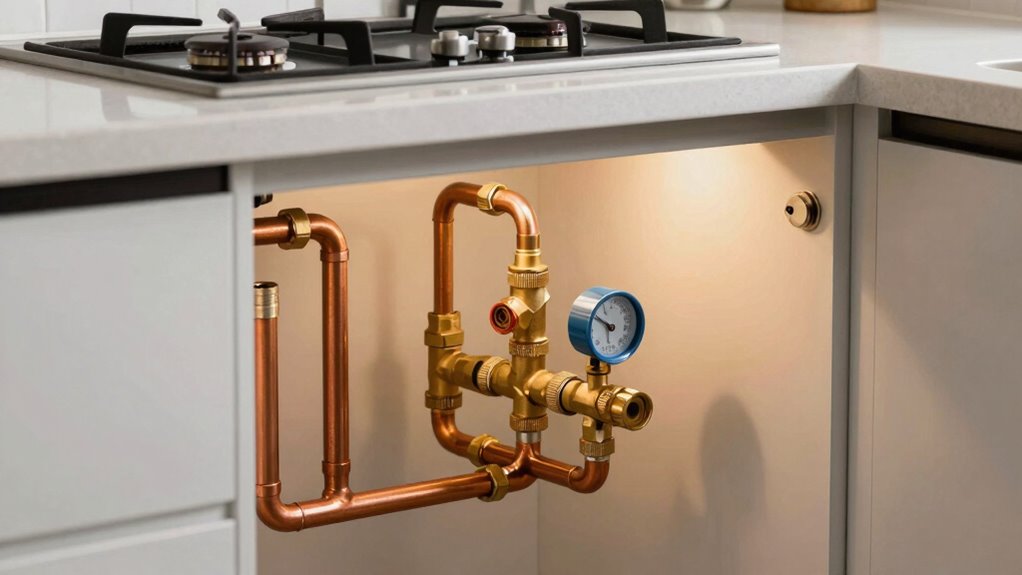
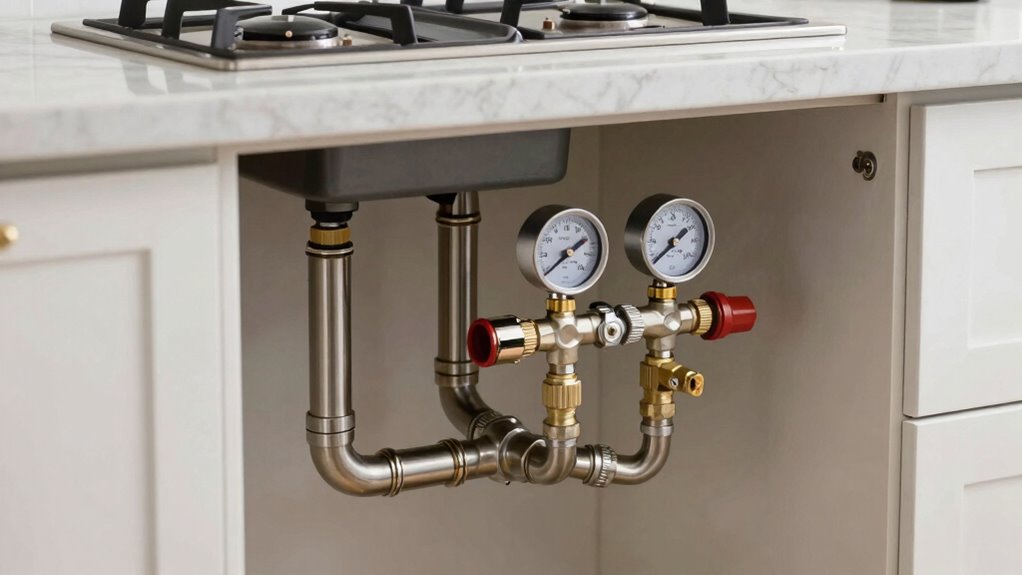
Are you planning to install or upgrade a gas line in your kitchen? If so, it’s important to think carefully about your current needs and future plans. Proper gas line planning isn’t just about getting your appliances powered; it’s about guaranteeing safety, efficiency, and flexibility for years to come. First, consider the capacity of your gas line. You want to make sure it can handle the total load of all the appliances you plan to connect, from your stove and oven to any additional gas-powered equipment. An undersized line can cause inconsistent performance and even pose safety risks, while an oversized line might be unnecessary and more expensive. Consulting with a professional can help determine the right size based on your appliance specifications and potential future additions. Additionally, understanding the importance of safety measures can help prevent accidents and ensure your kitchen remains a secure environment.
Next, think about appliance efficiency. Choosing efficient appliances means you’ll use less gas, which translates to lower utility bills and a more environmentally friendly kitchen. When planning your gas line, guarantee it can support high-efficiency models and any new appliances you might consider down the road. This foresight prevents you from needing costly upgrades later if you decide to replace an older, less efficient unit. Considering gas line capacity during the planning stage can help you avoid costly modifications as your needs evolve. Being aware of local building codes and regulations is also essential to ensure your setup complies with safety standards and legal requirements.
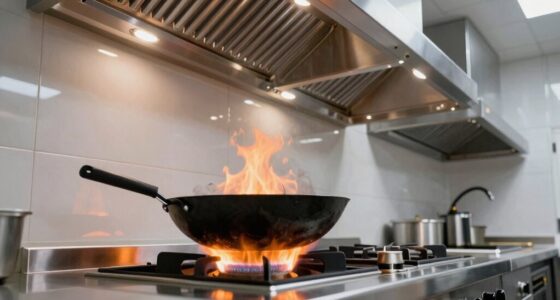
Ventilation considerations are equally critical. Gas appliances produce combustion byproducts like carbon monoxide, which can be hazardous if not properly vented. You need to plan for adequate ventilation to keep your kitchen safe and comfortable. This involves installing proper range hoods, exhaust fans, or even dedicated ventilation ducts that direct fumes outside. Good ventilation also helps manage heat and moisture, preventing mold and reducing the strain on your HVAC system. When designing your gas line layout, keep ventilation needs front and center, as poor ventilation can compromise safety and appliance performance.
Finally, think about future expansion. Gas lines aren’t just for today’s needs—they should accommodate potential upgrades or additional appliances you might install later. Planning for expansion involves leaving enough capacity and flexibility in your gas line route. It’s a smart move that saves you time and money later, avoiding the need for major modifications. By working with a qualified professional, you ensure your gas line system is safe, efficient, and adaptable for all your kitchen’s evolving needs.
As an affiliate, we earn on qualifying purchases.
Frequently Asked Questions
How Often Should Gas Lines Be Inspected for Safety?
You should inspect your gas lines at least once a year, following general safety guidelines. Gas line regulations recommend regular inspections to prevent leaks and guarantee safety. If you notice any signs of trouble—such as gas odors, hissing sounds, or reduced appliance performance—schedule an inspection immediately. Regular inspections help catch issues early, keep your kitchen safe, and ensure compliance with safety standards and local regulations.
Can I Upgrade My Gas Line Myself?
Upgrading your gas line isn’t a DIY project you should take lightly; think of it as maneuvering a tightrope over a safety net. While you might feel tempted to do a DIY installation, it’s best left to professionals, ensuring your line is secure and up to code. After any upgrade, seek a professional inspection to catch hidden hazards, keeping your kitchen safe and reliable.
What Are the Signs of a Gas Leak?
If you suspect a gas leak, look for a strong gas odor or the smell of rotten eggs. You might also notice signs like corrosion detection around the gas line or fittings. If you smell gas or see corrosion, turn off the gas supply immediately, leave the area, and call your utility company or a professional plumber. Don’t ignore these signs—they’re critical for your safety.
How Does Altitude Affect Gas Line Performance?
Altitude effects can turn your gas line performance into a comedy of errors. As you climb higher, the thinner air reduces the oxygen available for combustion, causing your gas appliances to struggle or underperform. This means lower efficiency, inconsistent flames, and potential safety concerns. To keep things running smoothly, you’ll need to adjust gas pressure or upgrade your system. Otherwise, your kitchen’s performance might just take a nosedive with every elevation gain.
Are There Eco-Friendly Gas Line Options Available?
Yes, eco-friendly options are available for gas lines. You can choose sustainable materials like recycled or biodegradable piping, which reduce environmental impact. Some manufacturers now produce flexible, corrosion-resistant materials that are safer and more sustainable. By selecting these eco-friendly options, you help lower your carbon footprint while maintaining safety and efficiency in your kitchen’s gas supply system. Always consult with professionals to guarantee proper installation and compliance with local regulations.
Conclusion
Planning your kitchen gas line isn’t something to take lightly—you want it to be safe, efficient, and ready for future needs. By considering capacity, safety measures, and potential expansion from the start, you set yourself up for a smooth cooking experience down the road. Remember, a little foresight can save you from headaches later on. So, don’t put all your eggs in one basket; think ahead and get it right the first time.