🔍 Read the full analysis: Bistecca Alla Fiorentina: Sourcing, Searing, And Slicing The Great Steak on Mad Tasting

Get kitchen staples and gadgets delivered free with Prime
- Fast, free delivery on millions of items
- Prime Video, Amazon Music and more included
- Member-only deals all year
TL;DR
Bistecca alla Fiorentina is a thick, bone-in T-bone associated with Florence and Tuscany, traditionally cooked over high heat and served rare. A home cook can focus on cut and thickness, ask the butcher about provenance and aging, use a thermometer rather than fixed cooking times, and carve the two loin sections across the grain. The source guide does not identify a new event; it offers practical cooking and sourcing advice, including food-safety considerations.
Mad Tasting’s guide to bistecca alla Fiorentina sets out how to choose and cook the thick, bone-in T-bone associated with Florence and Tuscany, while stressing that the dish’s name does not guarantee a particular breed or place of origin. The advice matters to home cooks and diners because thickness, cooking method and comfort with rare beef all affect how the steak is bought, prepared and served.
In its description of the cut, Mad Tasting’s guide identifies bistecca alla Fiorentina as a substantial T-bone, with a T-shaped bone separating the tenderloin from the strip loin. It recommends asking for a cut at least 3–4 centimetres thick, or thicker. The guide says a substantial cut gives the cook more time to brown the outside before the centre cooks through, but does not present thickness as a guarantee of any particular result.
At the butcher counter, the guide advises checking that both loin sections are present and asking about breed, raising region and aging. It describes Chianina cattle, a large white breed native to central Italy, as associated with the dish, while noting that “Fiorentina” describes a preparation and tradition rather than certifying Chianina beef, Tuscan raising or a single origin. According to the guide, dry aging may concentrate flavour and soften texture; wet-aged or fresh beef can also be used.
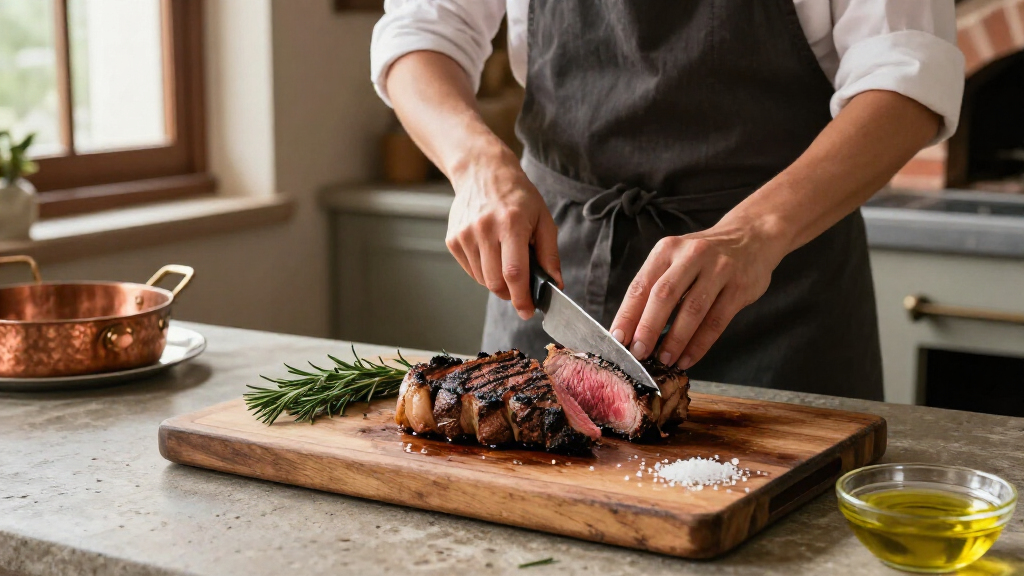
For cooking, Mad Tasting recommends drying and salting the surface, then using very high heat to brown both faces and render the fat edge. If the crust develops before the centre reaches the cook’s preferred doneness, the guide says the steak can finish over gentler heat. Because timing changes with thickness, starting temperature and equipment, it favours an instant-read thermometer over a fixed cooking-time formula. After a brief rest, carve the meat from the bone and slice both loin sections across the grain for sharing.
Tuscany · Butcher’s Guide · Fire & Craft
Bistecca Alla Fiorentina: Sourcing, Searing, And Slicing The Great Steak
A practical guide to the thick, bone-in T-bone associated with Florence: choose the cut with care, build a deep sear, check doneness with a thermometer, and carve it for sharing.
The useful rule
Let the steak’s temperature guide the finish—not the clock.
Thickness, starting temperature and cooking equipment all affect timing.01 / Understand the steak
Bone, two loins, one shared centrepiece
The signature format is substantial beef on the bone, cooked over intense heat with restrained seasoning. It is often presented whole, then carved at the table.
Cut anatomy
The T-bone
A T-shaped bone separates the smaller tenderloin from the strip loin. Check that both portions are present when buying.
Texture contrast
Two distinct bites
The tenderloin is typically smaller and tender; the strip side can feel firmer and show more visible marbling.
Tradition
Format over folklore
Origin stories and customs vary. The more consistent description is beef, bone, high heat and simple seasoning.
02 / At the butcher counter
Ask what the name cannot tell you
“Fiorentina” alone does not establish where the animal was raised or what breed it was. Ask for the details known about this specific steak.
A short sourcing checklist
Look for: a thick T-bone with both loin sections intact, ideally around 3–4 centimetres thick or more.
Ask about: breed, raising region, provenance and aging. Chianina cattle are associated with the dish, but the name does not guarantee Chianina beef.
Consider aging: dry aging may concentrate flavour and soften texture. Wet-aged or fresh beef can also be used.
03 / From prep to platter
A flexible four-step cook
Build colour first, then manage the centre. A charcoal fire is traditional; a hot gas grill or heavy pan can also sear the steak, with different results.
Prepare
Dry the surface well and salt it. Keep raw beef safely handled and avoid leaving it out for an extended period.
Surface firstSear
Use very high heat to brown both faces and render the fat edge.
Build the crustFinish
If the crust develops before the centre reaches your preferred doneness, move the steak to gentler heat.
Thermometer over timerRest & carve
Rest briefly, cut the meat away from the bone, then slice both loin sections across the grain.
Share at the table04 / Choose a cooking route
Match the setup to the steak
These are practical options, not identical cooking experiences. Heat control and the steak itself shape the result.
Heat map
The bars indicate the role each method can play in the guide—not a measured performance rating. Gas grills can offer a hot searing zone and a cooler finishing area.
Keep the decision grounded
Choose the doneness that suits the diners. Very rare beef is traditional, but it may not suit everyone.
The source guide gives no internal-temperature target and makes no universal safety guarantee for rare beef. Follow reliable food-safety guidance for the diners and the cut.
Use an instant-read thermometer because timing shifts with thickness, starting temperature and equipment.
05 / Quick reference
What the guide does—and doesn’t—claim
A useful distinction between cooking advice, culinary association and information the source leaves open.
| Question | What the guide says | Practical takeaway |
|---|---|---|
| Does the name guarantee Chianina? | No. Chianina is associated with the dish; the name does not certify breed or origin. | Ask the butcher or restaurant what is known about the beef. |
| Is there one exact cook time? | No. Thickness, starting temperature and equipment vary. | Track progress with an instant-read thermometer. |
| Is rare beef right for everyone? | Not necessarily. The guide describes rare as traditional but gives no universal safety guarantee. | Choose a suitable doneness and follow reliable food-safety advice. |
| Is there a new event to report? | No. The material is a practical cooking guide, with no publication date or recent development supplied. | Use it as cooking and sourcing advice, not breaking news. |
06 / Before the meal
Four questions, answered
Use these details to buy confidently, cook with control and serve the steak in its classic shared style.
What cut is it?
A thick, bone-in T-bone with tenderloin on one side and strip loin on the other. The guide recommends around 3–4 centimetres thick or more.
How is it served?
Often presented whole for sharing. Remove the meat from the bone and slice both loin sections across the grain; a warm board is suggested.
What should I ask the seller?
Ask about breed, raising region, provenance and aging. Do not infer those details from “Fiorentina” alone.
What should guide doneness?
Your diners’ preferences, suitable food-safety guidance and thermometer readings—not a universal number of minutes.
The through-line
From provenance to the shared platter
Keep each decision connected: buy the cut you want, cook for your diners, and carve for the table.
Source: Mad Tasting. The supplied material does not identify a publication date, a new event, specific internal-temperature targets or a universally safe rare preparation.
Choosing the Cut and Doneness
The guide’s practical emphasis is on decisions made before and during cooking, rather than treating a famous dish as a recipe with one exact timing. A thick steak gives cooks more control over the balance between browned exterior and centre doneness; a thermometer can help account for differences in equipment and cut. That makes the advice useful even to people who do not have a charcoal grill.
It also separates culinary style from claims of provenance. Diners ordering the steak in Florence, or shoppers buying one elsewhere, can ask what the seller knows about the beef instead of assuming the dish name identifies its breed or origin. The serving method matters too: a large steak is commonly presented whole and carved for several people, turning the bone-in cut into a shared meal rather than an individual portion.
There is a safety tradeoff. The traditional preference for very rare beef may not suit every diner, while the source material does not give a single temperature recommendation or establish a universally safe rare preparation. A cook should use a food thermometer, follow reliable food-safety guidance for the diner and cut, and avoid leaving raw beef at room temperature for an extended period.
Products Worth Considering

Le Creuset Enamemed Cast Iron Oval Dutch Oven, 5 qt., White/Crucible

Le Creuset Signature 6.5-Quart Deep Round Dutch Oven with Light Gold Crucible Knob, Enameled Cast Iron, Bleu Riviera

Le Creuset Enameled Cast Iron Round Bread Oven, 9.5-Inch, Cerise
As an affiliate, we earn on qualifying purchases.
Florentine Steak, Cut and Tradition
Bistecca alla Fiorentina is associated with Florence and Tuscany and is commonly described as a thick T-bone cooked over intense heat with restrained seasoning. Its two loin portions offer different textures: the tenderloin is smaller and tender, while the strip side can have a firmer bite and more visible marbling. The bone also provides a natural way to present the steak before carving.
The source notes that stories linking the name and customs to Florentine celebrations and local steakhouse culture vary. It treats those accounts as local tradition, not settled history. The more consistent description is the dish’s format: beef, bone, high heat and simple seasoning. In restaurants, the steak may be sold by weight and shared, reflecting its size.
For home cooks, the traditional charcoal fire is not the only option named in the guide. A gas grill can provide a hot searing zone and a cooler finishing area; a heavy pan can also brown the meat. These methods may produce different results, and the source does not claim they are identical to cooking over a Tuscan fire.
Origin and Doneness Questions
The source material does not provide a publication date, identify a recent announcement or report a change in restaurant practice. Its subject is a cooking guide, so there is no new event or breaking development to verify from the supplied information.
Some details are presented as variable rather than settled: origin stories differ, and the name does not establish the steak’s breed or provenance. Cooking times are also not specified as a fixed rule because thickness, equipment and heat vary. The material recommends a thermometer but does not set out specific internal-temperature targets, nor does it quantify food-safety risks for rare beef.
Questions Before the Meal
There is no scheduled follow-up or next milestone in the source. For a cook planning the dish, the next step is to ask a butcher for a thick T-bone with both loin sections and confirm what can be established about its breed, origin and aging. Those answers can guide the purchase, but should not be inferred from “Fiorentina” alone.
Before cooking, decide how rare the diners are comfortable eating beef and consult suitable food-safety guidance. Dry the surface, salt it, sear over high heat, and use a thermometer to check progress rather than relying on a universal number of minutes. Rest the steak briefly, remove the meat from the bone, and slice both sides across the grain for serving.
Key Questions
What cut is bistecca alla Fiorentina?
It is a thick, bone-in T-bone with tenderloin on one side of the bone and strip loin on the other. The source recommends a steak around 3–4 centimetres thick or more.
Does Fiorentina mean the beef is Chianina?
No. The guide says the dish is associated with Chianina, but the name does not guarantee breed or origin. Ask the butcher or restaurant what is known about the specific beef.
How should I cook the steak?
Dry and salt it, sear both faces over very high heat, and move it to gentler heat if the outside browns before the centre reaches your preferred doneness. Use an instant-read thermometer because timing varies with the steak and equipment.
How is bistecca alla Fiorentina served?
It is often presented whole and shared. Carve the meat away from the bone, then slice the tenderloin and strip across the grain. The source suggests serving it on a warm board.
Is rare beef safe for everyone?
The source describes very rare cooking as traditional but does not give a temperature target or a guarantee of safety. Diners should follow reliable food-safety advice and choose a doneness appropriate to their circumstances; keep raw beef safely handled and do not leave it out for an extended period.
Source: Mad Tasting