To build a safer cooling workflow, start by training your staff to recognize the danger zone and use proper cooling techniques, like dividing large batches into shallow containers or using blast chillers. Establish clear procedures with specific time and temperature targets, and guarantee equipment is well-maintained and properly used. Regularly monitor and document cooling processes, supervise staff, and address issues immediately. Keep safety top of mind, and you’ll create a more secure food environment—discover more ways to improve.

Get kitchen staples and gadgets delivered free with Prime
- Fast, free delivery on millions of items
- Prime Video, Amazon Music and more included
- Member-only deals all year
Key Takeaways
- Establish clear time and temperature targets, cooling hot foods from 135°F to 70°F within 2 hours, then to 41°F within 4 hours.
- Use proper equipment like shallow pans, blast chillers, and cooling racks to facilitate rapid and uniform cooling.
- Train staff regularly on safe cooling procedures and proper handling practices to ensure compliance and consistency.
- Monitor temperatures frequently with calibrated thermometers and document all cooling processes for accountability.
- Assign supervision to verify adherence, address issues promptly, and maintain equipment to prevent unsafe cooling practices.
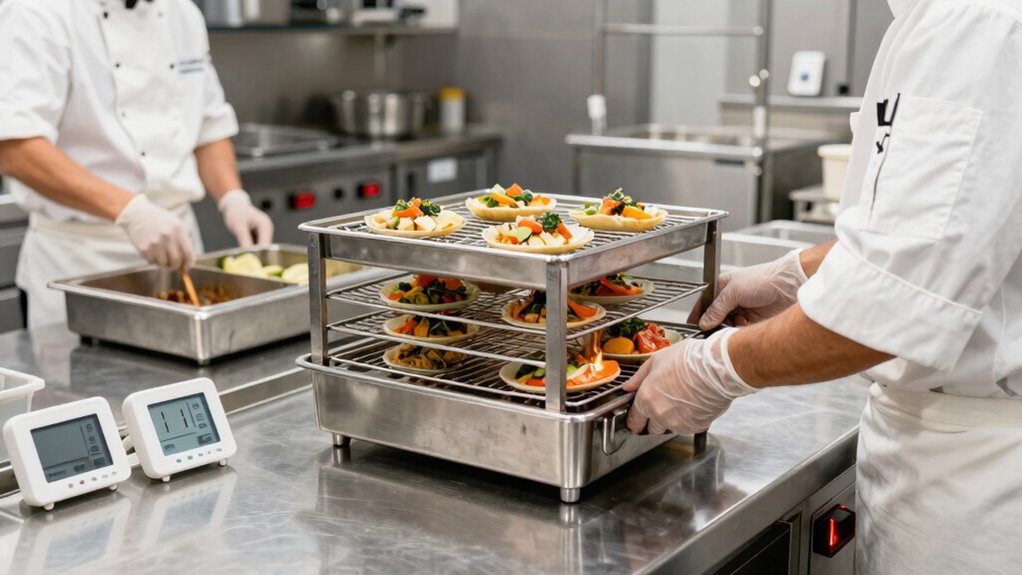
Ensuring a safe cooling workflow in your restaurant is essential to prevent foodborne illnesses and maintain high standards of hygiene. When it comes to food safety, proper cooling is one of the most critical steps. If you don’t cool food correctly, bacteria can multiply rapidly, leading to potential health risks for your customers. To build a safer cooling process, you need to develop clear procedures and ensure everyone on your team understands their role.
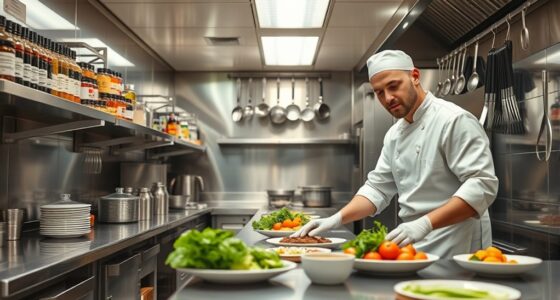
Start with employee training. Every staff member involved in food prep and handling must know the importance of proper cooling techniques. Train your team to recognize the danger zone, which is between 40°F and 140°F, where bacteria thrive. Teach them the proper methods for cooling hot foods quickly, such as dividing large batches into smaller, shallow containers, or using blast chillers if available. Emphasize that cooling large quantities of hot food at room temperature isn’t just unsafe—it’s a recipe for contamination. Incorporating proper food handling practices can further enhance safety during cooling.
Train staff to recognize the danger zone (40°F–140°F) and use quick cooling methods like shallow containers and blast chillers.
Implementing standardized procedures is vital. You should establish clear time and temperature guidelines, like cooling hot foods from 135°F to 70°F within two hours and then from 70°F to 41°F or lower within an additional four hours. Use thermometers regularly to verify temperatures during the process. Document these procedures and hold routine training sessions, so your staff stays current on best practices. Consistency is key to minimizing mistakes and ensuring food safety. Regular monitoring also helps identify potential issues early and prevent unsafe practices from continuing. Incorporating proper equipment that facilitates rapid cooling is equally important, as it directly impacts the effectiveness of your cooling workflow. Utilizing temperature monitoring devices can help track cooling progress more accurately and efficiently.
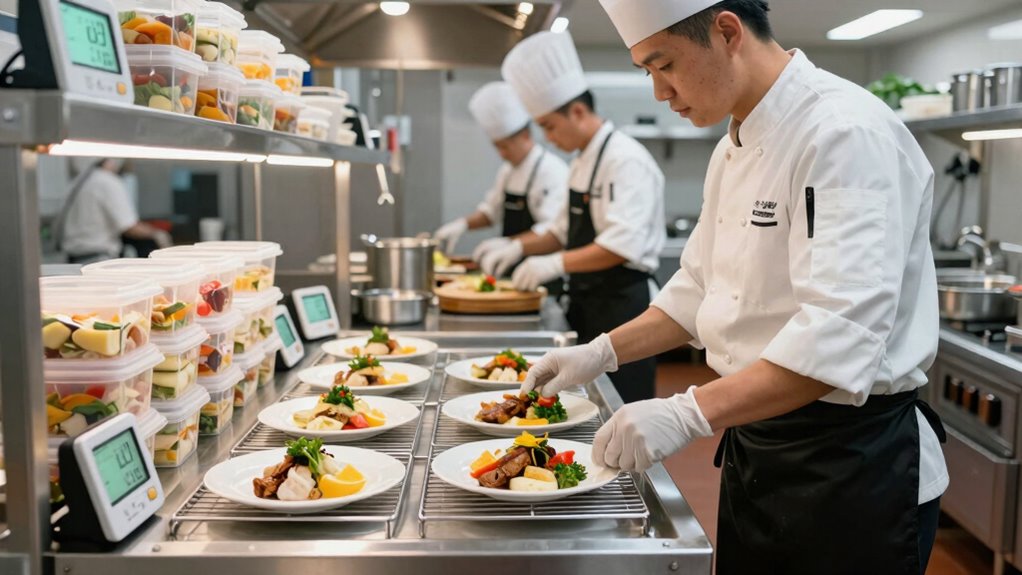
Another crucial element is the use of proper equipment. Invest in shallow pans, cooling racks, or blast chillers that facilitate rapid cooling. Avoid stacking hot food containers directly into storage, which traps heat and slows down the cooling process. Instead, ensure that foods are cooled in a way that maximizes airflow and heat dissipation. Regularly clean and maintain all cooling equipment to prevent contamination and mechanical failure. Proper equipment maintenance is essential for consistent safety. Properly functioning equipment ensures that cooling times are met and food remains safe throughout the process. Additionally, keeping equipment well-maintained minimizes downtime and maintains compliance with health standards.
Monitoring and supervision also play a critical role. Designate a responsible manager or supervisor to oversee cooling procedures daily. They should verify that all steps are followed, temperatures are recorded, and any issues are addressed immediately. Reinforce the importance of food safety through ongoing employee training sessions, emphasizing that every team member’s diligence protects your customers and your restaurant’s reputation. Having a dedicated supervisor helps maintain accountability and ensures adherence to safety standards.
As an affiliate, we earn on qualifying purchases.
Frequently Asked Questions
How Often Should Cooling Equipment Be Inspected for Safety?
You should inspect cooling equipment at least once a month for safety. During inspections, focus on temperature monitoring to guarantee proper cooling levels and check equipment calibration to maintain accuracy. Regular inspections help catch issues early, preventing food safety risks. Keep detailed records of each inspection, and immediately address any discrepancies or malfunctions. This proactive approach ensures your cooling workflow remains safe, reliable, and compliant with health standards.
What Training Is Necessary for Staff on Cooling Safety Protocols?
Do you realize how vital staff training is for cooling safety? You need to guarantee your team understands safety protocols thoroughly, including proper handling of cooling equipment, correct temperature checks, and timely inspections. Regularly update training to reflect industry standards and safety regulations. This proactive approach helps prevent accidents, maintains food safety, and keeps your restaurant compliant. Are your staff fully equipped with the knowledge they need to prioritize safety every shift?
Are There Specific Regulations Governing Cooling Procedures in Restaurants?
Yes, there are specific regulations governing cooling procedures in restaurants. You must follow food storage rules that require rapid cooling of hot foods to safe temperatures, typically within two hours. Temperature monitoring is essential; you need to regularly check and record temperatures during cooling. These regulations aim to prevent bacterial growth, ensuring your cooling workflow remains safe and compliant with health department standards.
How Can Technology Improve the Cooling Workflow Safety?
Technology transforms your cooling workflow with innovative sensors that instantly detect temperature changes, ensuring safety standards stay intact. Automated monitoring continuously checks conditions, reducing human error and enabling quick responses. This seamless system streamlines safety, safeguards food quality, and sustains compliance effortlessly. By integrating these tech tools, you create a safer, smarter cooling process that minimizes risks and maximizes efficiency—keeping both your customers and your reputation secure.
What Are Common Mistakes to Avoid During Cooling Processes?
During the cooling process, avoid rushing or leaving food uncovered, as these mistakes can lead to contamination and unsafe temperatures. Don’t neglect proper container placement; overcrowding hampers effective cooling. Always monitor temperatures regularly to guarantee food cools quickly and safely. Prevent contamination by practicing good hygiene and covering foods properly. These steps help maintain a safe cooling workflow, reducing risks and ensuring food stays safe for consumption.
Conclusion
By following these steps, you guarantee your restaurant’s cooling workflow is both safe and efficient, much like a well-oiled steam engine chugging through the 19th century. Remember, safety isn’t a one-time task but an ongoing process—think of it as your culinary blueprint for success. Stay vigilant, train your staff, and keep your workflow as smooth as a jazz tune, so you can serve up quality dishes without a hitch.
NFL season / tailgating Picks
team gear
As an affiliate, we earn on qualifying purchases.