
To create a better restaurant allergen response process, start by establishing clear procedures for handling allergy disclosures and communicating with guests. Train your staff regularly on recognizing allergy symptoms, cross-contact risks, and proper food handling techniques, using simulations to boost confidence. Implement accessible allergy information systems and enforce protocols to prevent cross-contact. Building a transparent, prepared environment reassures guests and improves safety. Keep refining your approach—there’s more to discover for a safer dining experience.

Get kitchen staples and gadgets delivered free with Prime
- Fast, free delivery on millions of items
- Prime Video, Amazon Music and more included
- Member-only deals all year
Key Takeaways
- Develop clear, detailed procedures for allergy disclosures, communication, and cross-contact prevention.
- Train staff regularly with scenario-based drills to ensure quick, confident allergy response skills.
- Use accessible, up-to-date allergy information systems for accurate and efficient communication.
- Foster open, empathetic communication with guests to build trust and confirm allergy details.
- Implement safety standards and dedicated equipment to minimize cross-contact and enhance allergy safety.
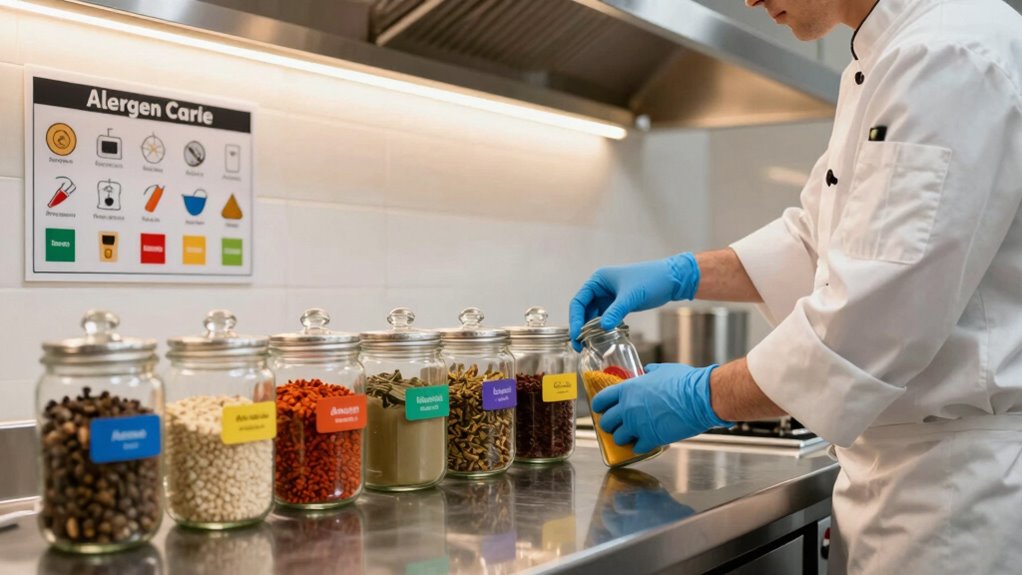
Have you ever wondered how restaurants handle allergen emergencies? It’s a critical issue that demands a clear, well-practiced response. The foundation of an effective allergen response process starts with staff training. You need to guarantee that every team member understands food allergies, the severity of reactions, and the importance of strict adherence to allergen protocols. Regular training sessions should cover recognizing allergy symptoms, cross-contamination risks, and proper food handling techniques. By continuously educating your staff, you empower them to act confidently and swiftly when an allergy concern arises. Remember, a knowledgeable team reduces the risk of mistakes, which can be life-threatening. Incorporating technology tools to manage allergy information can further enhance accuracy and response times.
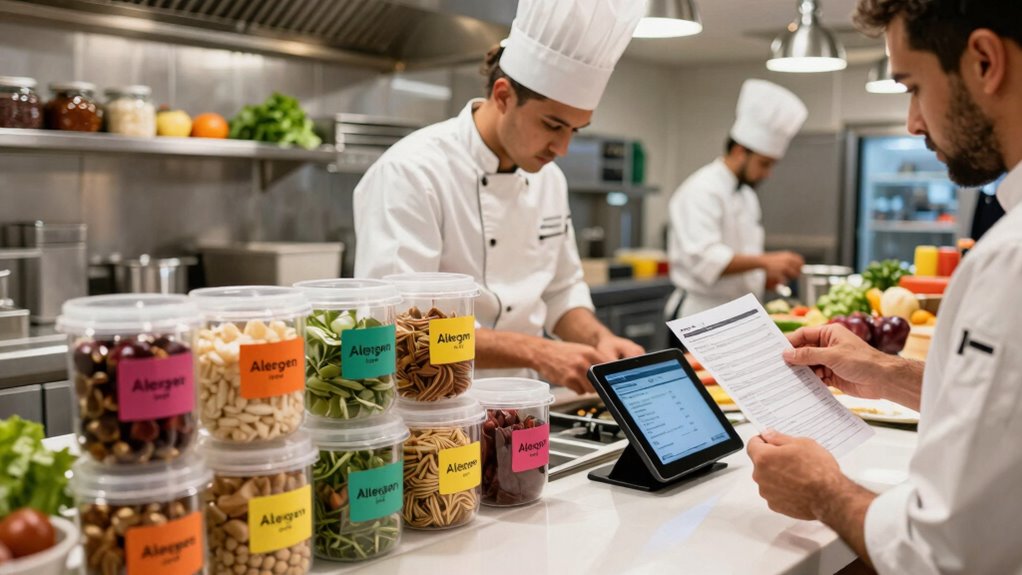
Customer communication is equally essential. When a guest discloses a food allergy, you must listen carefully, show empathy, and confirm understanding. Clear communication helps prevent misunderstandings and reassures the customer that their safety is your priority. Train your staff to ask specific questions about allergies, such as “Is there a particular ingredient you need to avoid?” and to repeat back the information to confirm accuracy. It’s also crucial to inform the kitchen staff immediately so they can modify the order or take extra precautions in handling the meal. Transparency and openness build trust, making customers feel safe and valued. Implementing effective communication strategies can significantly improve allergy management and customer confidence.
Effective communication with guests ensures safety, trust, and accurate allergy management in restaurant service.
Creating a better allergen response process involves establishing detailed procedures that everyone follows consistently. Start by developing clear guidelines for handling allergy disclosures, including how to communicate with the customer and how to relay information to the kitchen. Make sure your staff knows to avoid any cross-contact, such as using separate utensils or preparing allergen-free meals in designated areas. You should also keep allergy information easily accessible, whether through printed guides or digital systems, so that staff can reference it quickly. Regularly reviewing and practicing these procedures ensures everyone remains prepared and aware of best practices. Additionally, understanding food allergy severity can help tailor responses to different levels of risk and urgency. Incorporating training methods such as simulations and scenario-based drills can further solidify response readiness and build confidence in handling emergencies. Keeping up with lab equipment and safety standards is also vital to maintaining accurate allergy documentation and reducing potential errors.
restaurant allergen response training kit
As an affiliate, we earn on qualifying purchases.
As an affiliate, we earn on qualifying purchases.
Frequently Asked Questions
How Often Should Staff Undergo Allergen Response Training?
You should schedule staff training on allergen protocols at least twice a year. Regular updates guarantee everyone stays current with allergen response procedures and safety measures. Incorporate refresher sessions into your staff training to reinforce knowledge and address any new allergen information. Consistent training helps prevent cross-contact, improves customer safety, and ensures your team responds confidently during allergen incidents. Staying proactive with allergen protocols ultimately enhances your restaurant’s safety standards.
What Are the Legal Requirements for Allergen Labeling?
Imagine your menu as a clear window into your kitchen, where allergen labels act as protective filters. Legally, you must accurately disclose allergens for menu items, especially when offering customization. You’re required to provide clear, written allergen information, guarantee staff awareness, and update labels with any recipe changes. By doing so, you protect your customers and your business, creating a safe dining environment where trust is built through transparency.
How to Handle Cross-Contact During Food Preparation?
To handle cross-contact during food prep, you need to prioritize cross-contact prevention by thoroughly cleaning and sanitizing surfaces and utensils between tasks. Use separate equipment for allergen-free dishes and practice ingredient segregation to prevent accidental contact. Train your staff to recognize cross-contact risks and follow strict procedures. Consistent monitoring and clear communication with the team help guarantee allergen safety and protect your customers.
What Technology Tools Can Improve Allergen Tracking?
You can improve allergen tracking by using specialized allergen software that helps you monitor and manage ingredient information efficiently. Incorporate digital checklists into your daily routines to guarantee staff consistently verify allergen safety protocols. These tools streamline communication, reduce errors, and provide real-time updates, enabling your team to respond quickly to allergen concerns. Embracing technology like allergen software and digital checklists enhances accuracy and safety in your restaurant’s allergen response process.
How to Communicate Allergen Information to Customers Effectively?
You should clearly communicate allergen information through menu customization options and staff communication. Make sure your menu highlights allergen details and offers customizable dishes to meet dietary needs. Train your staff to confidently discuss allergens with customers, ensuring they understand how to convey accurate information. This approach helps customers make informed choices, builds trust, and demonstrates your commitment to their safety and satisfaction.
Conclusion
By implementing a clear and efficient allergen response process, you’re not just protecting your customers—you’re transforming your restaurant into a fortress of trust and safety. Every step you take can prevent a disaster and turn a potentially catastrophic situation into a showcase of your commitment to care. Remember, your attention to detail can save lives—you’re the hero in this culinary adventure. Embrace these practices, and watch your restaurant become legendary for safety and excellence.
Halloween Picks
halloween
As an affiliate, we earn on qualifying purchases.