
Regularly cleaning your condenser coil is essential to keep your system running efficiently and avoid costly repairs. When dirt, dust, and debris build up, they block airflow and reduce heat transfer, which strains the compressor. This can cause overheating and system breakdowns over time. By maintaining clean coils, you improve performance, extend your AC’s lifespan, and save energy. If you’d like to discover simple steps to keep your coil in top shape, there’s more to learn below.
Key Takeaways
- Regular cleaning prevents dirt buildup, ensuring efficient heat transfer and reducing compressor strain.
- Maintaining clean coils minimizes system overheating and cycling, extending compressor lifespan.
- Removing debris from condenser coils improves airflow, enhancing overall system performance.
- Proper coil maintenance lowers energy consumption, reducing utility bills and preventing costly repairs.
- Clean coils help sustain good outdoor air quality, protecting the compressor from pollutants and dust.
Regularly cleaning your condenser coil is essential for keeping your air conditioning system running efficiently. When the coil is free of dirt, dust, and debris, your system can transfer heat more effectively, which directly improves evaporator efficiency. This means your AC works less hard to cool your space, saving energy and reducing wear on your compressor. Plus, a clean condenser coil ensures that outdoor air quality doesn’t impact your system’s performance. When dirt accumulates, it acts like a barrier, preventing proper airflow and causing your unit to strain, often leading to higher energy bills and potential breakdowns.
Neglecting to clean the condenser coil can cause your system to overheat or cycle on and off more frequently, both of which diminish overall efficiency. When the outdoor air is filled with pollutants, pollen, or dust, these particles settle on the coil’s surface, further obstructing airflow. Regular maintenance helps you remove these contaminants, ensuring that outdoor air quality doesn’t negatively influence your system’s ability to operate at its best. This is especially important if you live in an area with high pollution or during seasons when pollen counts spike. Additionally, proper airflow is crucial for maintaining the longevity of your system and preventing damage.
Neglecting coil cleaning allows pollutants to block airflow, reducing efficiency and increasing system strain.
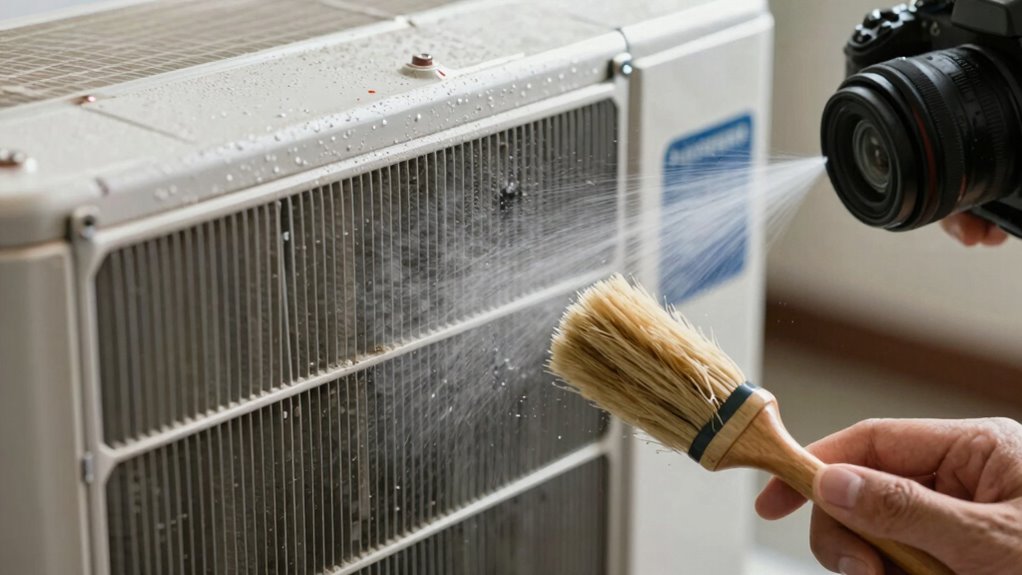
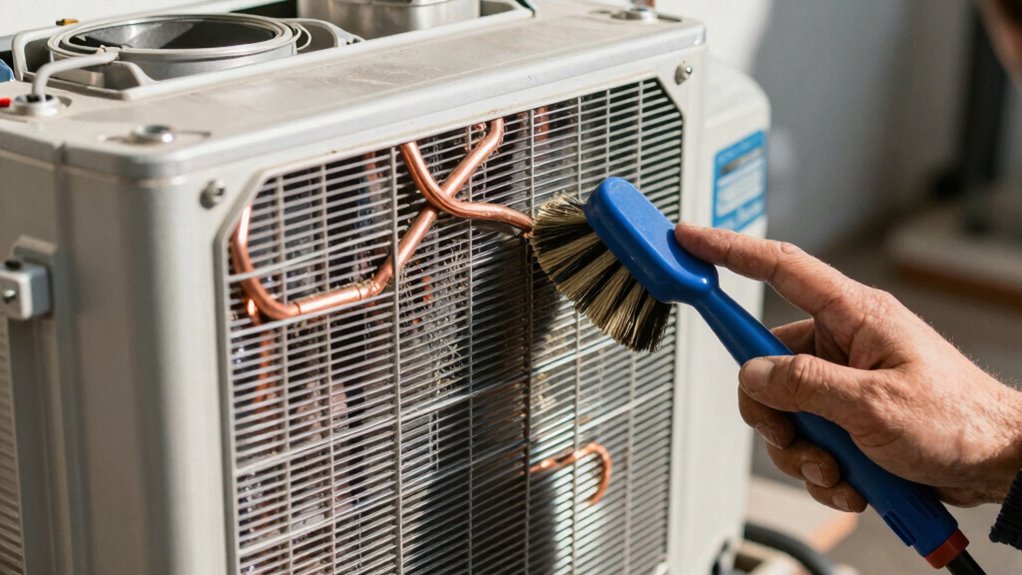
Cleaning your condenser coil isn’t complicated, but it does require consistent effort. Start by turning off the power to your unit to avoid any electrical hazards. Remove the outer protective grille or cover, then gently brush away loose debris using a soft brush or vacuum with a brush attachment. Next, spray the coil with a garden hose, using a gentle stream to dislodge stubborn dirt and grime. Avoid using high-pressure water, which can damage the fins. For more stubborn buildup, you can apply a coil cleaner specifically designed for HVAC systems, following the manufacturer’s instructions carefully. This thorough cleaning not only boosts evaporator efficiency but also maintains good outdoor air quality around your unit, preventing dirt from being blown into your home through leaks or poor airflow.
In addition to improving system performance, regular coil cleaning extends the lifespan of your air conditioner. It helps prevent unnecessary strain on components, reducing the likelihood of costly repairs or replacements down the line. Remember, a clean condenser coil is your best defense against inefficient operation caused by dirt and debris, especially when outdoor air quality fluctuates. By staying on top of this simple maintenance task, you ensure your AC runs smoothly, consumes less energy, and keeps your indoor environment comfortable all season long.
Frequently Asked Questions
How Often Should I Schedule Condenser Coil Cleaning?
You should schedule condenser coil cleaning every 1 to 3 months, depending on your environment. Regular DIY tips include checking for dirt and debris and cleaning the coils gently. If you’re unsure or the coil’s heavily soiled, consider professional services for a thorough clean. Consistently maintaining your condenser coil helps your compressor run efficiently, prevents costly repairs, and extends the lifespan of your HVAC system.
Can I Clean the Coil Myself or Hire a Professional?
You can definitely clean your condenser coil yourself or hire professional services, depending on your comfort level. For DIY tips, use a gentle brush and coil cleaner, turning off the unit first. If you’re unsure or the coil’s hard to reach, hiring a professional guarantees thorough cleaning without risking damage. Both options help maintain efficiency, extend your compressor’s life, and save you money in the long run.
What Signs Indicate My Coil Needs Cleaning?
If you notice dust buildup on your condenser coil or refrigerant flow seems sluggish, it’s a clear sign your coil needs cleaning. Reduced airflow caused by dirt can cause your system to work harder, risking damage. Keep an eye out for overheating or higher energy bills, which also point to dirty coils. Regular inspections help maintain peak performance and prevent costly repairs, so don’t ignore these signs.
Will Cleaning Improve My HVAC System’s Energy Efficiency?
Cleaning your condenser coil definitely improves your HVAC system’s energy efficiency. When you clear away dirt and debris, you reduce airflow restriction, allowing your system to operate smoothly. This enhances refrigerant efficiency because the coil can transfer heat more effectively. As a result, your system doesn’t have to work as hard, saving energy and lowering your utility bills. Regular cleaning keeps your system running efficiently and extends its lifespan.
Are There Any Risks Involved With Cleaning the Condenser Coil?
Did you know that improper coil cleaning can cause up to 15% more energy loss? Risks include chemical hazards if you use harsh cleaners and electrical hazards from exposed wiring. To stay safe, always turn off power before cleaning, use appropriate cleaning agents, and avoid electrical contact. If unsure, consider hiring a professional to prevent chemical risks or electrical hazards, ensuring your system stays safe and efficient.
Conclusion
Regularly cleaning your condenser coil is like giving your compressor a breath of fresh air—without it, it struggles to perform and can even overheat. Think of your AC as a well-tuned orchestra; each part depends on the others for harmony. By keeping the coil clean, you guarantee smooth operation and extend your system’s life. Don’t wait for trouble to knock—stay proactive and maintain your condenser coil to keep everything running smoothly.