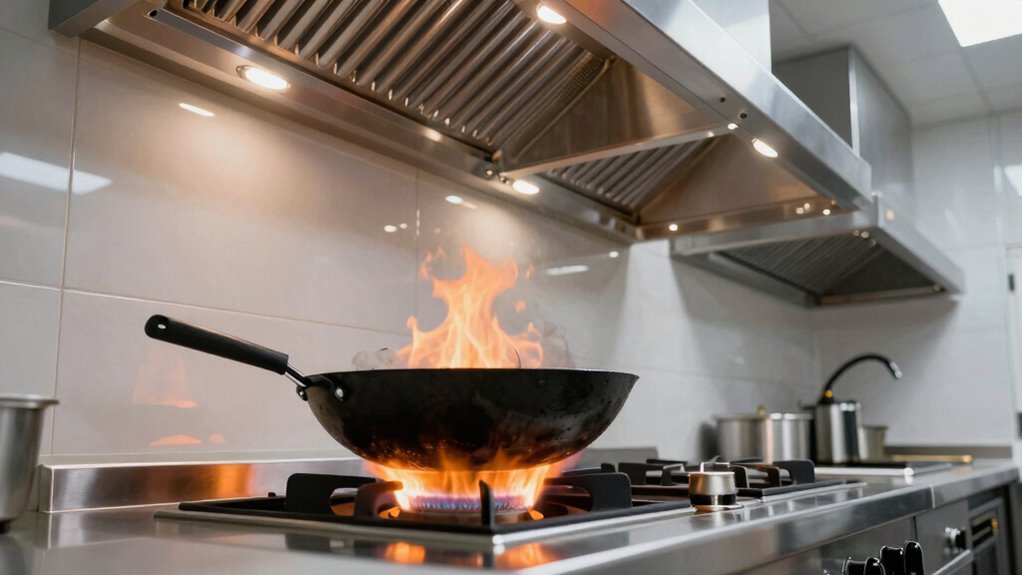
To guarantee your wok range has proper ventilation, start by positioning the hood directly above the wok for ideal smoke and fume capture. Choose a powerful enough exhaust fan, considering the size and cooking intensity, and make sure ductwork is sealed and well-maintained. Regularly clean filters and check for blockages to prevent buildup. Proper setup keeps your kitchen safe, odor-free, and efficient—stay with us for detailed steps that can save your space.
Key Takeaways
- Properly position the hood directly above the wok for optimal smoke and fume capture.
- Select an exhaust fan with adequate CFM to handle high heat and smoke levels.
- Ensure ductwork is sealed, insulated, and vented outside for maximum efficiency.
- Regularly clean filters and duct components to prevent buildup and maintain airflow.
- Continuously review and adjust the ventilation setup to ensure safety and optimal performance.
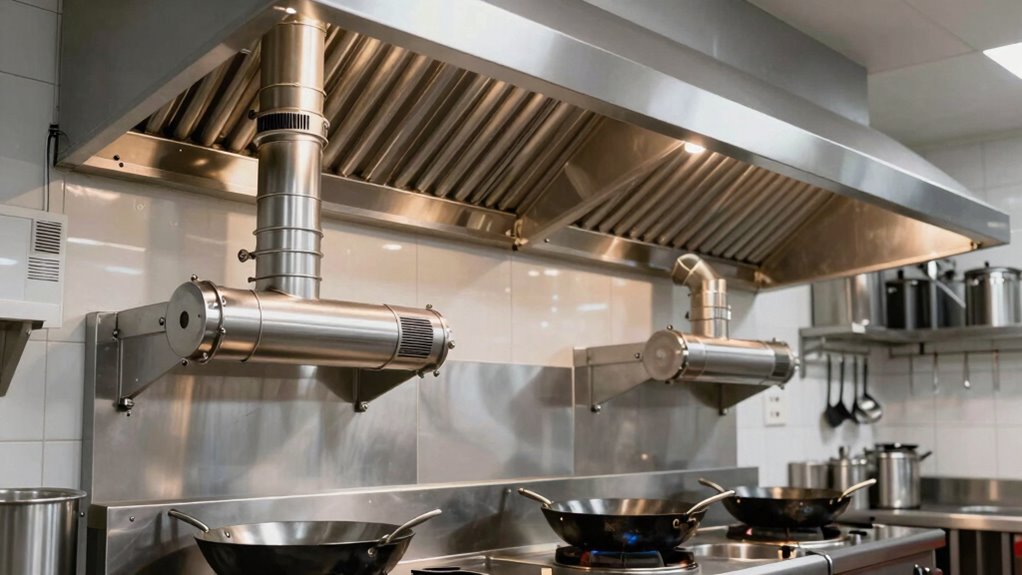
Setting up proper ventilation for your wok range is vital to guarantee a safe and efficient cooking environment. It’s not just about keeping smoke and odors at bay; it’s about protecting your health and maintaining a functional kitchen. The first step involves paying close attention to hood placement. You want your hood positioned directly above your wok range, ideally within a few inches of the cooking surface. Proper hood placement ensures that smoke, grease, and fumes are captured before they spread throughout your space. If the hood is too high, it won’t effectively trap airborne particles, leaving your kitchen smoky and unventilated. Conversely, if it’s too low, it could interfere with your cooking or be a hazard. Find that sweet spot where the hood’s opening aligns just above your wok, optimizing airflow and capturing fumes efficiently.
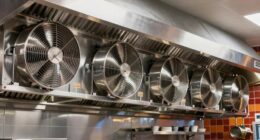
Once the hood placement is sorted, you need to focus on exhaust fan selection. Choosing the right exhaust fan is essential because it determines how effectively your kitchen clears out smoke and odors. Look for a fan with sufficient cubic feet per minute (CFM) rating to handle the size of your wok range and the intensity of your cooking. An underpowered fan will struggle to vent fumes, leading to lingering smoke and potential buildup of grease. On the other hand, a fan with too high a CFM might be noisy or create excessive drafts. It’s vital to balance power with noise level and energy efficiency. You’ll also want to consider the type of exhaust fan—whether it’s a ducted or ductless system. Ducted fans are generally more effective because they vent fumes outside, but they require proper duct installation. Ductless systems use filters and recirculate air, which can be a practical alternative if external venting isn’t feasible. Additionally, proper duct design and regular maintenance are crucial for ensuring your ventilation system works optimally over time.
Beyond selecting the right fan, ensure that the ductwork is properly designed, sealed, and insulated to prevent leaks and maintain airflow efficiency. Regular maintenance is key—clean or replace filters, check for blockages, and ensure the duct connections remain airtight. Proper ventilation setup isn’t a one-and-done task; it requires ongoing attention to keep your kitchen safe and comfortable. By prioritizing correct hood placement and choosing an exhaust fan suited to your cooking needs, you’ll create a ventilation system that effectively manages smoke, heat, and fumes. This setup not only prolongs the life of your appliances but also makes your cooking experience safer and more enjoyable.
Frequently Asked Questions
What Are the Common Signs of Poor Ventilation With Wok Ranges?
If you notice a persistent odor buildup around your wok range, it’s a sign your ventilation might be poor. Grease accumulation on surfaces or filters also indicates inadequate airflow. You may feel heat trapped or see smoke lingering longer than usual. These signs mean your ventilation system isn’t effectively removing fumes and grease, so it’s time to check and upgrade your setup to guarantee safety and cleanliness.
How Often Should Ventilation Systems Be Inspected or Cleaned?
Think of your ventilation system like a car engine—regular checkups keep it running smoothly. You should inspect and clean your ventilation system at least quarterly, especially focusing on air filter maintenance. Neglecting this can shorten the ventilation system lifespan and compromise air quality. Regular inspections prevent grease buildup and guarantee efficient operation, saving you money and avoiding costly repairs down the line. Keep it fresh and functional with consistent upkeep.
Can I Retrofit an Existing Kitchen for Proper Wok Range Ventilation?
Yes, you can retrofit your existing kitchen for proper wok range ventilation, but be prepared for retrofitting challenges. Upgrading your ventilation system involves evaluating current ductwork, airflow capacity, and space constraints. You’ll need to work with professionals to ensure proper ventilation upgrades that meet safety standards. Proper planning minimizes disruptions and maximizes effectiveness, ultimately creating a safer, more efficient cooking environment tailored to your wok range needs.
What Are the Safety Regulations Related to Wok Range Ventilation?
You must follow fire safety and building codes to guarantee proper wok range ventilation. These regulations require adequate exhaust systems to prevent grease buildup and reduce fire hazards. Make sure your ventilation system is UL-listed and meets local standards for airflow and fire suppression. Regular inspections are necessary to stay compliant. Ignoring these rules risks fines, shutdowns, and dangerous conditions, so prioritize adherence for safety and legal compliance.
How Do Ventilation Needs Differ Between Residential and Commercial Kitchens?
Did you know commercial kitchens require up to 10 times more airflow circulation than residential ones? You’ll find that ventilation needs differ greatly because commercial setups prioritize grease extraction and air quality due to high-volume cooking. In residential kitchens, smaller hoods often suffice, but in commercial spaces, you must guarantee powerful ventilation systems that handle significant grease build-up and maintain proper airflow, keeping everyone safe and comfortable during busy hours.
Conclusion
Think of your wok range’s ventilation as a gentle breeze guiding the aroma of your cooking out into the world. When set up correctly, it quietly guarantees your space stays fresh and inviting, even as flavors dance fiercely on the flame. A well-ventilated kitchen is like a calm harbor after a storm—protecting your comfort while letting your culinary passions flourish. So, take care with your setup, and enjoy the harmony of a safe, vibrant cooking environment.