Accurate dough divider-rounders help you minimize ingredient waste by ensuring each portion is exactly right, which cuts your food costs overnight. When the machine is properly calibrated and dough consistency is maintained, you reduce errors and over-portioning that lead to leftovers and rejections. This efficiency not only lowers expenses but also guarantees consistent product quality, keeping your costs predictable. To discover proven methods for optimizing your process and saving even more, keep exploring the key factors that influence accuracy.
Key Takeaways
- Precise dough portioning prevents ingredient overuse, reducing food costs overnight.
- Accurate machine calibration ensures consistent batch sizes, minimizing waste and rework.
- Proper dough consistency supports uniform division, lowering reject rates and associated costs.
- Maintaining accuracy in division speeds up production, optimizing labor and energy expenses.
- Consistent dough rounding and sizing improve product quality, reducing spoilage and return costs.
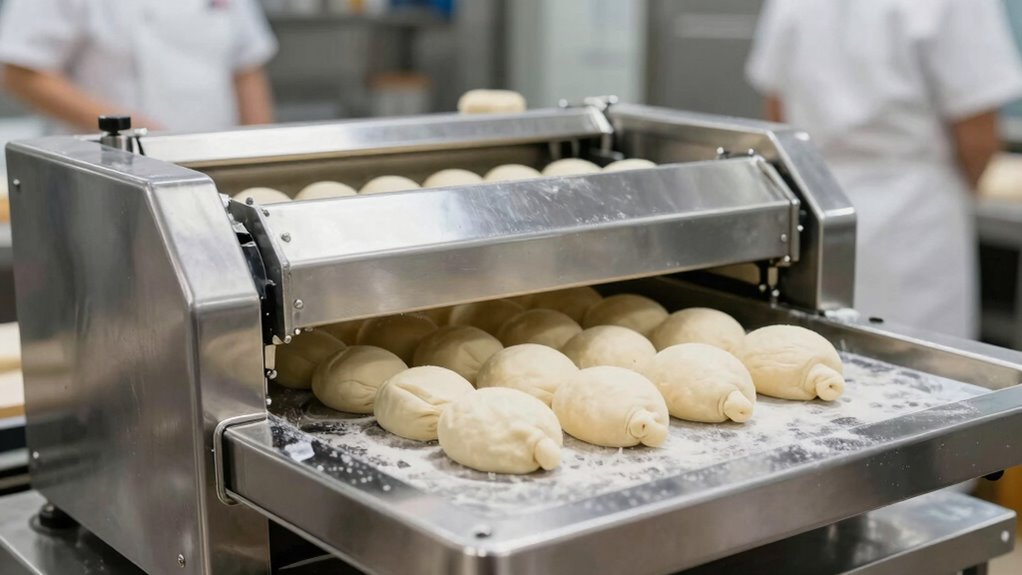
Have you ever wondered how bakeries produce perfectly uniform dough portions quickly and efficiently? The secret lies in the use of dough divider-rounders, machines designed to streamline the process while maintaining high standards. When you’re focused on maximizing productivity and minimizing waste, understanding how these machines work can make a significant difference. One key factor is controlling the batch size—how much dough you load into the machine at once. Proper batch sizing ensures consistency in the dough portions, which is essential for uniform baking and customer satisfaction. Too large a batch can lead to uneven divisions, while too small may slow down production and increase handling time. Striking the right balance allows the dough divider-rounder to operate smoothly, producing consistent pieces every time. Additionally, the calibration process of these machines is vital for maintaining accuracy over time, especially when handling different dough types or batch sizes.
Dough consistency plays an equally important role in achieving accurate portions. If the dough is too sticky or too dry, the machine can struggle to divide it evenly, resulting in waste or uneven sizes. When your dough has the right consistency—smooth, pliable, and just firm enough—you enable the machine to perform at its best. Properly mixed dough feeds more reliably into the divider, reducing errors and rework. This precision not only improves product quality but also impacts your bottom line. Consistent dough portions mean less trimming, fewer rejects, and more predictable baking times, all of which directly influence your food costs.
The accuracy of your dough divider-rounder impacts your operational costs overnight. Over-portioning leads to wasted ingredients, while under-portioning can cause product inconsistencies that hurt your reputation. When the machine divides dough accurately, you optimize ingredient usage, which translates into cost savings over time. This accuracy also simplifies inventory management because you know exactly how much dough to prepare for each batch, avoiding overproduction or shortages. As a result, you can plan your orders more precisely, cutting down on excess ingredients that might spoil or require disposal.
Additionally, the speed and reliability of these machines mean you can scale your production without sacrificing quality. This efficiency lets you meet increased demand without needing to hire additional staff or invest heavily in manual labor. Over time, the investment in a quality dough divider-rounder pays for itself through reduced waste, improved consistency, and faster turnaround times. Ultimately, maintaining proper batch size and dough consistency with these machines ensures that your bakery stays competitive, profitable, and capable of delivering fresh, uniform products every time—overnight, and beyond.
Frequently Asked Questions
What Is the Typical Lifespan of a Dough Divider-Rounder?
A dough divider-rounder typically lasts about 5 to 10 years, depending on machine durability and usage. You can prolong its lifespan by regular maintenance, which helps prevent costly breakdowns. Keep in mind, neglecting proper care can lead to increased replacement costs sooner. Investing in quality and routine checks ensures you get the most out of your machine, maintaining efficiency and controlling food costs effectively.
How Much Maintenance Does a Dough Divider-Rounder Require?
You’ll find that a dough divider-rounder requires regular maintenance, including machine calibration and cleaning protocols. Proper calibration guarantees consistent portioning, while cleaning prevents dough buildup that can cause wear or malfunction. Typically, scheduling routine checks and thorough cleaning after each shift keeps the machine running smoothly. This proactive approach minimizes downtime, extends its lifespan, and maintains accuracy, ultimately saving you money and ensuring consistent product quality.
Can Dough Divider-Rounders Handle Gluten-Free or Specialty Doughs?
Dough divider-rounders can handle gluten-free and specialty doughs, but you need models with gluten-free compatibility and specialized settings. These machines are designed for precise portioning and shaping, ensuring consistency even with delicate or unique doughs. Make sure to select equipment that’s compatible with your specific ingredients, and clean it thoroughly between uses to prevent cross-contamination. Properly configured, they streamline your process and maintain high-quality results.
What Are the Safety Features of Modern Dough Divider-Rounders?
Modern dough divider-rounders prioritize food safety and user safety with features like safety guards, emergency stop buttons, and interlock systems. These safety features prevent accidental contact with moving parts, reducing injury risk. Additionally, they incorporate easy-to-clean surfaces and sanitation protocols to guarantee food safety. You’ll find non-slip bases and ergonomic designs that enhance stability and comfort, making operation safer and more efficient for you.
Are There Energy Efficiency Considerations for These Machines?
Yes, energy efficiency is a key consideration for dough divider-rounders. You should look for machines with lower energy consumption to reduce operational costs and environmental impact. Modern models are designed with enhanced machine efficiency, utilizing advanced motors and insulation to minimize energy use without sacrificing performance. By choosing energy-efficient equipment, you guarantee smoother operations, lower energy bills, and a more sustainable bakery environment.
Conclusion
Diligence with dough divider-rounders doesn’t just deliver dough; it drives down deficits. By balancing precision and patience, you prevent waste and improve your bottom line. Remember, small, steady steps simplify your success, saving you stress and scraps. So, stay sharp, stay strict, and let accuracy be your ally. Because when you prioritize precision, profits flourish, and your food costs fade into the background. Master your machinery, and money will follow.