To prevent sticky, patchy spots on your griddle, develop a routine of proper seasoning and cleaning. Always clean the surface after cooking with a scraper and a damp cloth, then lightly oil it to protect against rust. Regularly reapply oil and heat the griddle to build a strong, even patina. Proper maintenance keeps the surface smooth and non-stick, ensuring it performs well for years. Keep going, and you’ll discover how to maintain your griddle’s perfect condition.
Key Takeaways
- Allow the griddle to cool slightly before cleaning to prevent damaging the seasoning layer.
- Use a metal scraper and coarse salt for effective debris removal without stripping seasoning.
- Wipe the surface with a damp cloth or paper towels, avoiding harsh soaps that can damage the patina.
- Apply a thin layer of high-smoke-point oil after cleaning to seal the surface and prevent rust.
- Regularly reseason the griddle by heating, applying oil, and baking to repair sticky or patchy areas.

Seasoning and cleaning your griddle are essential steps to guarantee it performs well and lasts longer. Proper cast iron maintenance isn’t just about occasional scrubbing; it’s about establishing a routine that keeps your cooking surface smooth, non-stick, and free of sticky, patchy spots. If you neglect these steps, you risk rust formation, uneven heating, and food sticking, which can ruin meals and shorten your griddle’s lifespan. To keep things in top shape, you need to master effective seasoning techniques and develop a consistent cleaning routine that preserves the seasoning layer. Maintaining a clean and seasoned surface not only improves cooking results but also helps prevent damage to your cast iron over time.
When it comes to seasoning your griddle, think of it as creating a natural, durable coating that protects the surface and improves non-stick qualities. Seasoning techniques involve applying a thin layer of oil—preferably one with a high smoke point like flaxseed or grapeseed oil—then heating the griddle until the oil polymerizes onto the surface. This process should be repeated several times initially and maintained regularly afterward to build up a strong, even coating. Each time you cook, the heat helps the oil bond with the metal, enhancing your griddle’s performance. Proper cast iron maintenance is all about consistency; the more you season and care for your surface, the better your results become.
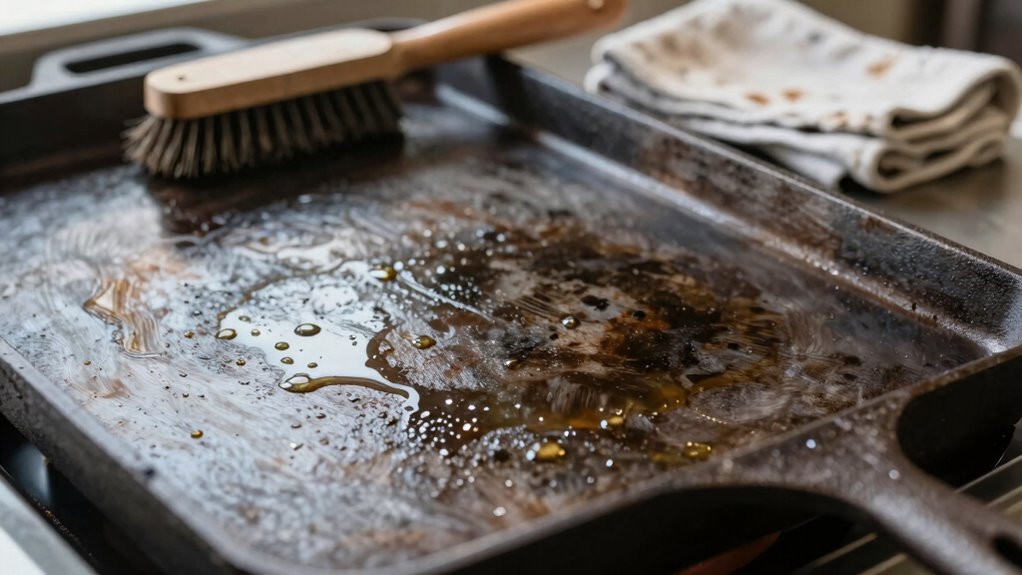
Cleaning your griddle correctly is just as important as seasoning it. After cooking, let the surface cool slightly, then use a metal scraper to remove food debris. Avoid harsh soaps, which can strip away the seasoning layer. Instead, use a damp cloth or paper towels to wipe down the surface, and if necessary, scrub stubborn spots with coarse salt and a scrub pad. This method helps lift stuck-on bits without damaging the seasoned surface. Once cleaned, apply a light coat of oil before storing it away—this step seals the surface and prevents rust. Regularly maintaining your cast iron griddle by cleaning it properly and reapplying seasoning as needed keeps sticky spots at bay and ensures an even, shiny surface for every cookout.
Over time, your griddle will develop a dark, glossy patina that indicates a well-maintained surface. This patina is the result of consistent seasoning techniques and proper cast iron maintenance. When you notice areas where food tends to stick or spots that look dull or patchy, it’s time to reseason those sections. Reseasoning involves heating the surface, applying a fresh layer of oil, and baking it until the layer bonds with the metal. With regular seasoning and cleaning, you’ll prevent the formation of sticky, uneven patches, and your griddle will deliver evenly cooked, delicious meals every time. Keep up with these routines, and your griddle will serve you well for years to come.
Frequently Asked Questions
How Often Should I Re-Season My Griddle?
You should re-season your griddle every 1 to 3 months, depending on how often you use it. Follow a consistent maintenance schedule, especially after heavy cooking or cleaning. If you notice sticky or patchy spots, it’s time to re-season. Regular seasoning builds a natural non-stick surface and protects your griddle, so stay attentive to its condition and re-season as needed to keep it in top shape.
Can I Use Soap to Clean My Seasoned Griddle?
Imagine your seasoned griddle as a cherished garden, flourishing with proper care. Yes, you can use dish soap, but sparingly. Use gentle cleaning techniques to preserve its seasoning, avoiding harsh scrubbing that could strip the protective layer. A small amount of dish soap helps remove stubborn grease, but always rinse thoroughly and dry afterward. Treat your griddle like your garden—gentle, attentive, and mindful to keep it thriving.
What’s the Best Oil for Seasoning My Griddle?
The best oil for seasoning your griddle is one with a high smoke point, like flaxseed oil, canola oil, or vegetable oil. When selecting oil, consider its seasoning properties and how it bonds during cooking. Use proper seasoning techniques by applying a thin layer, heating it evenly, and repeating the process for a durable, non-stick surface. This approach guarantees a smooth, sticky-free cooking area every time.
How Do I Remove Rust From My Griddle Surface?
You can effectively remove rust from your griddle surface by gently scrubbing it with a steel wool pad or a wire brush, then wiping it clean with a damp cloth. To prevent future rust, prioritize proper metal care by drying your griddle thoroughly after each use and applying a light coat of oil. Regular maintenance keeps your surface smooth and rust-free, ensuring it stays ready for your next cooking session.
Is It Safe to Cook Acidic Foods on a Seasoned Griddle?
Yes, you can cook acidic foods on a seasoned griddle, but do so cautiously. Acidic foods can weaken the seasoning over time, affecting its durability. To prevent damage, limit the cooking time and clean the surface thoroughly afterward. This helps maintain your seasoning’s integrity and guarantees the griddle stays in good condition. Regular seasoning touch-ups will keep your surface smooth and ready for all types of cooking.
Conclusion
By maintaining a regular seasoning and cleaning routine, you’ll keep your griddle in top shape, preventing sticky patches and uneven spots. Think of it as giving your cooking surface a fresh start every time, ensuring every meal turns out just right. Don’t let small issues snowball into bigger problems; stay on top of it before it’s too late. With consistent care, your griddle will serve you well, proving that a stitch in time really saves nine.