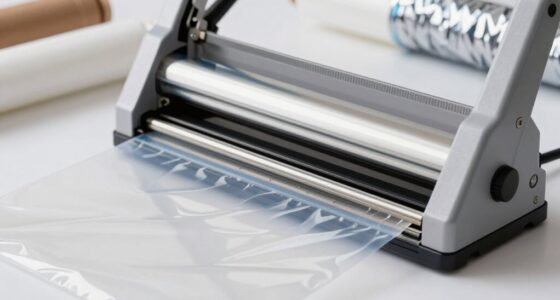
The key difference between chamber and suction vacuum sealers is how they handle bags and items. Chamber sealers can accommodate thicker and more diverse bag materials, making them ideal for bulk or heavy-duty use, while suction sealers are better for small jobs and thinner bags. Suction sealers are portable and quick for occasional tasks, whereas chamber sealers provide more versatility and efficiency for larger volumes. Keep exploring to discover which type fits your needs best.

Get kitchen staples and gadgets delivered free with Prime
- Fast, free delivery on millions of items
- Prime Video, Amazon Music and more included
- Member-only deals all year
Key Takeaways
- Chamber sealers can handle a wider variety of bag materials and thicker or reinforced bags compared to suction sealers.
- Suction sealers are portable, faster for small batches, and ideal for occasional or household use.
- Chamber sealers are designed for larger volumes, bulk sealing, and commercial or heavy-duty applications.
- Suction sealers have simpler maintenance with fewer exposed parts, while chamber sealers require regular chamber and pump cleaning.
- The choice depends on volume, item size, sealing frequency, and whether versatility or portability is the priority.

When choosing between chamber and suction vacuum sealers, understanding their differences can help you make the right decision for your needs. One of the key considerations is how each machine handles bag material. Suction sealers typically require specific bag types, like heat-sealable plastic bags, which need to be compatible with the machine’s sealing mechanism. These bags are usually thinner and more flexible, making them easy to work with for small batches or occasional use. On the other hand, chamber sealers often accommodate a wider variety of bag materials, including thicker or specially reinforced bags, because the entire bag goes inside the chamber and is sealed under vacuum. This versatility can be especially beneficial if you’re sealing different types of items or larger quantities regularly. Additionally, chamber sealers are often designed to meet industrial standards, providing greater flexibility for various sealing applications.
Another factor to keep in mind is machine maintenance. Suction vacuum sealers tend to be simpler in design, with fewer parts exposed to the vacuum process. They often require less routine upkeep, making them a good choice if you want a low-maintenance option. However, because they rely heavily on the seal bar and heating element, you should regularly check and clean these parts to prevent issues like weak seals or machine malfunction. Chamber sealers, although more robust, involve more components and can require more frequent cleaning and maintenance. The chamber itself needs to be kept free of debris, and the vacuum pump may need occasional servicing to ensure ideal performance. Regular maintenance can extend the lifespan of a chamber sealer, but it also means you’ll need to allocate time for upkeep to prevent costly repairs down the line.
The differences in how each machine operates also impact your workflow. Suction sealers are generally more portable and faster for small batches, which is perfect if you’re sealing food or small items occasionally. They are also more compact, saving space in your kitchen or storage area. Chamber sealers, however, excel when sealing larger quantities or bulky items, since they can handle more volume in one go and deliver a more consistent vacuum. They are typically used in commercial settings or for serious home preservation projects.
Products Worth Considering

Cuisinart Portable Tabletop Propane Patio Heater, 11,000 BTU, Red

Ninja Artisan 5-in-1 Portable Electric Pizza Oven, Blue & Gold

Le Creuset Signature 6.5-Quart Deep Round Dutch Oven with Light Gold Crucible Knob, Enameled Cast Iron, Bleu Riviera
As an affiliate, we earn on qualifying purchases.
Frequently Asked Questions
Which Vacuum Sealer Is More Energy-Efficient?
You’ll find that chamber vacuum sealers are generally more energy-efficient than suction models. They consume less energy because they operate with a more efficient sealing process, reducing overall energy consumption. This makes them a better choice for cost efficiency over time, especially if you seal large quantities regularly. While the initial cost might be higher, their lower energy use helps save money in the long run, making them a smart investment.
Can Both Types Preserve Liquids Effectively?
You can seal liquids effectively with both types, but each has its quirks. Suction vacuum sealers often struggle with liquids, risking spills and messes, so you might need special bags or techniques. Chamber vacuum sealers excel at liquid preservation because they can handle more moisture without spills, making sealing liquids smoother. So, if you frequently seal liquids, a chamber sealer offers a more reliable solution for preserving liquids.
Are Chamber Sealers Suitable for Home Use?
Yes, chamber sealers are suitable for home use, especially for domestic applications. They’re user-friendly and perfect for sealing liquids and moist foods without mess. You’ll find them easy to operate, making them a great addition to your kitchen. Their consistent sealing quality and ability to handle larger volumes make them ideal for home chefs who want professional results. Overall, chamber sealers bring convenience and efficiency to your food preservation efforts.
How Do Maintenance Requirements Differ Between Models?
If you use your vacuum sealer daily, you’ll notice chamber models generally require less maintenance, thanks to their sealed environment reducing wear. For example, a homeowner sealing bulk foods might find chamber sealers maintain consistent sealing speed and quieter operation over time. Suction models may need more frequent gasket checks and cleaning. Overall, chamber sealers tend to have lower noise levels and less frequent upkeep, making them easier to maintain at home.
Which Sealer Offers Better Long-Term Durability?
You’ll find that chamber vacuum sealers generally offer better long-term durability because they’re built with industrial efficiency in mind. Their robust construction withstands frequent use, maintaining sealing precision over time. Suction models may wear out faster with heavy-duty tasks, but chamber sealers provide consistent performance, making them ideal for long-term, high-volume sealing needs. If durability matters most, go for a chamber sealer to guarantee reliable, precise sealing for years.
Conclusion
Choosing between chamber and suction vacuum sealers is like selecting the right key for your treasure chest. Each has its own strength, but it’s your dedication to preservation that truly unlocks the value. When you invest in the right sealer, you’re safeguarding your memories, your meals, your future. Remember, it’s not just about sealing food—it’s about sealing moments, hopes, and dreams for the days ahead. Trust your choice; let it protect what matters most.