
To create a cleaning plan with floor scrubbers in kitchens that won’t leave floors slick, start by choosing the right cleaning solutions and diluting them properly to prevent residue buildup. Always inspect cords, brushes, and squeegees before use, and wear slip-resistant shoes for safety. After cleaning, thoroughly rinse and dry the floor to eliminate dampness. Proper maintenance and attention to safety precautions make certain your floors stay clean and slip-free—keep exploring for detailed tips.
Key Takeaways
- Use appropriate cleaning solutions and proper dilution to prevent slippery residues on kitchen floors.
- Ensure thorough rinsing and squeegeeing to remove excess water and minimize slickness.
- Regularly inspect and replace worn brushes and squeegees for effective water removal.
- Clearly mark wet areas and use slip-resistant mats during and after cleaning.
- Maintain good ventilation to help floors dry faster and reduce safety hazards.
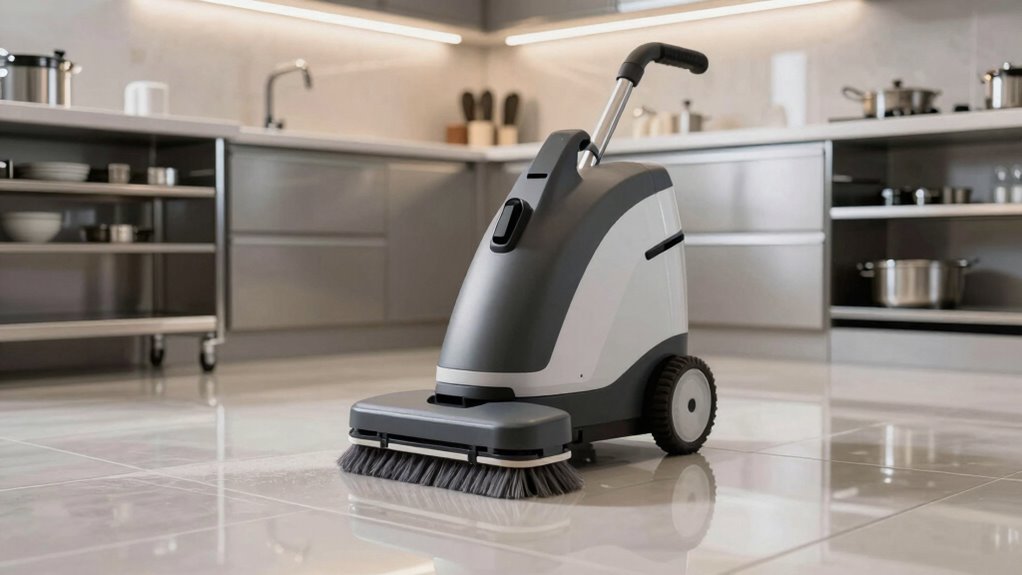
Have you ever wondered how busy kitchens keep their floors spotless and safe? The secret often lies in the clever use of floor scrubbers designed specifically for commercial environments. These machines are essential tools that help maintain hygiene standards without turning floors into dangerous, slick surfaces. To guarantee safety and efficiency, it’s critical to follow proper safety precautions and maintenance tips when using floor scrubbers in a kitchen setting.
First, safety precautions should be your top priority. Before starting the scrubber, check that all cords are in good condition and properly connected. Make sure the machine’s brushes and squeegees are securely attached and functioning correctly. Always wear slip-resistant shoes, gloves, and eye protection if necessary, to prevent injuries from splashing chemicals or moving parts. It’s important to keep the area well-ventilated during cleaning to avoid inhaling fumes from cleaning solutions. Also, clearly mark wet floors with warning signs to avoid slips and falls by staff or customers. Never operate a floor scrubber when you’re tired or distracted, as mishandling can lead to accidents or damage to the machine.
Maintenance tips are just as essential. Regularly inspect and clean the scrubber after each use to guarantee it’s in the best condition. Empty the recovery tank and wash it thoroughly to prevent mold and bad odors. Check the brushes and squeegees for wear and replace them as needed—worn brushes won’t clean effectively and can damage the floor surface. Keep the filters clean and replace them periodically to maintain suction power and prolong the machine’s lifespan. Use the right cleaning solutions recommended by the manufacturer; using improper chemicals can harm the equipment or leave residues that create slick patches. Also, schedule routine maintenance, like checking the battery or power cord, to prevent unexpected breakdowns during busy hours. Additionally, understanding proper equipment maintenance is key to ensuring longevity and safety when operating these machines.

Walk Behind Commercial Floor Scrubber Machine
- High Cleaning Coverage: Cleans 24,000 sq ft per hour
- Versatile Surface Compatibility: Works on various floor types
- Large Tank Capacity: 5-gallon clean, 6-gallon recovery tanks
As an affiliate, we earn on qualifying purchases.
As an affiliate, we earn on qualifying purchases.
Frequently Asked Questions
How Long Do Kitchen Floor Scrubbers Typically Last?
Kitchen floor scrubbers typically last between 3 to 5 years, depending on durability factors like usage frequency, maintenance, and water quality. Proper upkeep can extend their lifespan, saving you on replacement costs. Regular cleaning of brushes and tanks, along with timely repairs, ensures peak performance. Keep an eye on wear and tear to avoid premature replacements, and remember that investing in quality equipment can reduce long-term costs.
Are There Eco-Friendly Floor Scrubber Options Available?
Yes, eco-friendly floor scrubber options are available. You can choose models that use biodegradable detergents, which break down naturally and reduce environmental impact. Additionally, look for scrubbers powered by rechargeable batteries, eliminating the need for disposable power sources. These features help you maintain a clean, sustainable kitchen while minimizing your ecological footprint. Opting for eco-conscious equipment assures effective cleaning without compromising environmental values.
Can Floor Scrubbers Be Used on All Types of Kitchen Flooring?
Think of your kitchen floors as a vibrant canvas; not every floor material reacts the same. Floor scrubbers can be versatile, but you need to verify their compatibility with your specific surface. When used correctly, they boost cleaning effectiveness without damage. You’ll want to select a scrubber suited for your floor type—ceramic, hardwood, or tile—to ensure thorough cleaning and preserve your flooring’s integrity.
What Maintenance Is Required for Kitchen Floor Scrubbers?
You need to regularly check and replace floor scrubber filters to guarantee ideal cleaning. Keep an eye on battery maintenance by charging it properly and inspecting for any corrosion or wear. Regularly clean the brushes and squeegees, and follow the manufacturer’s guidelines for routine servicing. Scheduling these maintenance tasks keeps your floor scrubber running efficiently, prolongs its lifespan, and maintains the safety of your kitchen floors.
How Noisy Are Commercial Kitchen Floor Scrubbers During Operation?
You’ll find that commercial kitchen floor scrubbers produce moderate noise levels during operation, which can vary depending on the model. The operational sound is generally loud but manageable, especially if you’re in an open kitchen space. While they’re not completely silent, their noise levels are designed to be acceptable for busy environments. Using sound barriers or scheduling cleaning during off-peak hours can help minimize disruption.
Conclusion
By implementing effective floor scrubbers in your kitchen, you not only guarantee a cleaner, safer environment but also boost overall hygiene. Did you know that proper floor cleaning can reduce slip-and-fall incidents by up to 50%? Staying ahead with the right cleaning plan keeps your floors spotless without turning them slick, giving you peace of mind and a more efficient workspace. Invest in quality scrubbers today—you’ll notice the difference in safety and cleanliness tomorrow.