
To build a cleaner ice handling routine, start by storing ice in sealed, sanitized containers kept at proper freezing temperatures. Wash your hands thoroughly and use gloves when serving or handling ice, and clean all tools with hot water and sanitizer after each use. Regularly disinfect storage areas, monitor temperatures, and discard any cloudy or contaminated ice immediately. Consistently follow sanitation procedures and train staff on proper practices to keep ice safe—continue to explore more tips to improve your routine.

Get kitchen staples and gadgets delivered free with Prime
- Fast, free delivery on millions of items
- Prime Video, Amazon Music and more included
- Member-only deals all year
Key Takeaways
- Implement strict sanitation protocols for hands, gloves, utensils, and storage containers before handling ice.
- Regularly clean and sanitize ice storage units and equipment to prevent bacteria buildup.
- Use dedicated, sealed containers for ice storage and handling to avoid cross-contamination.
- Monitor temperature levels consistently to ensure ice remains below freezing and safe for use.
- Train staff regularly on hygiene practices, proper handling procedures, and the importance of cleanliness.
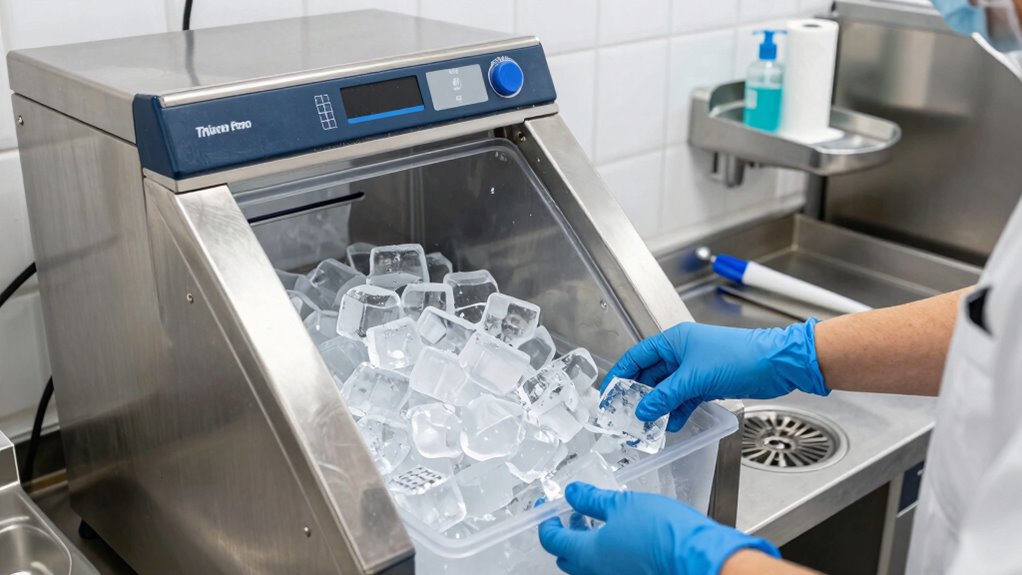
Maintaining a clean ice handling routine is essential for ensuring food safety and preventing contamination. When you handle ice, you’re directly influencing the health of your customers or household members, so establishing strict procedures is crucial. One of the most important aspects is proper ice storage. You want to keep your ice in clean, sealed containers that are designed specifically for ice storage. This prevents exposure to dirt, pests, and other contaminants that can compromise its purity. Regularly inspect your storage units to ensure they remain clean and dry, and clean them thoroughly with soap and water at least once a week. Using a sanitizer afterward helps eliminate any lingering bacteria or mold. Additionally, implementing proper storage practices can significantly reduce the risk of contamination.
Keeping ice in clean, sealed containers and inspecting weekly safeguards against contamination and ensures purity.
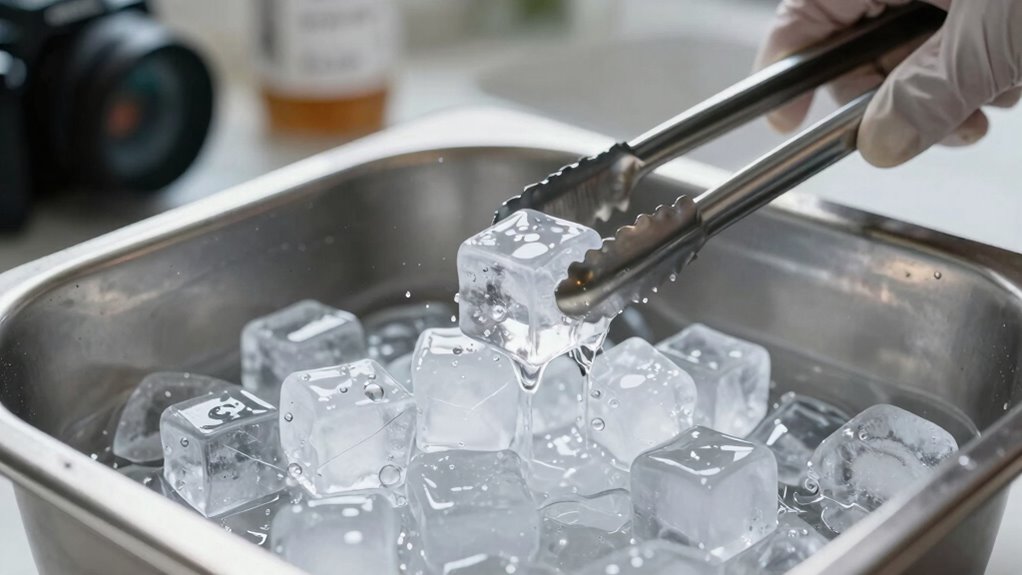
Sanitation procedures are at the heart of a safe ice handling routine. Always wash your hands thoroughly with soap and water before touching ice or any equipment involved in ice handling. Use gloves when necessary, especially if you’re serving food or beverages. Clean all utensils, scoops, and containers with hot water and a food-safe sanitizer after each use. Never leave ice sitting out in open air for extended periods, as this increases the chances of contamination. Instead, keep it covered or stored in sanitized containers until needed. When refilling ice bins or transferring ice, take care to avoid cross-contamination from other surfaces or raw foods. Use dedicated equipment for ice handling to minimize the risk of transferring bacteria or residues from other tasks.
It’s also vital to establish a routine for cleaning and sanitizing your ice storage areas and handling tools. This means wiping down the surfaces with approved cleaning solutions regularly and ensuring all equipment is completely dry before reuse. Additionally, monitor the temperature of your storage units to ensure they stay below freezing, which helps prevent bacterial growth within the ice. If you notice any cloudy or discolored ice, discard it immediately, as this indicates potential contamination or freezer malfunction. Implementing these sanitation procedures consistently helps reinforce your routine, making it easier to maintain a safe environment for your ice. Proper ice storage practices are essential to prevent contamination and ensure the quality of the ice you serve. Regular staff training on hygiene protocols can further improve compliance and safety. Incorporating ongoing training ensures everyone stays informed about best practices and emerging safety standards.
Finally, training anyone involved in ice handling is key. Make sure everyone understands the importance of hygiene, proper storage, and sanitation procedures. Reinforce these practices through regular reminders and checklists. Developing a comprehensive training program can help ensure all staff are knowledgeable about safety protocols and procedures. When you build a routine centered on cleanliness and proper ice storage, you significantly reduce the risk of contamination, ensuring the ice remains safe for consumption and your operation stays compliant with health standards. By paying attention to these details, you create a safer, more reliable ice handling process that protects everyone who uses it.
sanitized ice storage containers
As an affiliate, we earn on qualifying purchases.
As an affiliate, we earn on qualifying purchases.
Frequently Asked Questions
What Tools Are Essential for Cleaning Ice Handling Equipment?
You need essential tools like scrapers, brushes, and food-safe sanitizers for cleaning ice handling equipment. These tools help maintain proper equipment maintenance and guarantee thorough cleaning protocols are followed. Use scrapers to remove ice buildup, brushes to scrub surfaces, and sanitizers to eliminate bacteria. Regularly inspecting and maintaining your tools will keep your equipment clean, safe, and compliant with health standards, ensuring quality ice for your customers.
How Often Should Ice Handling Routines Be Reviewed and Updated?
You should review and update your ice handling routines at least quarterly to maintain ideal ice quality and equipment maintenance. Regular reviews help identify potential issues early, guaranteeing cleanliness and safety standards are met. By consistently monitoring and refining your procedures, you prevent contamination, extend equipment lifespan, and keep your ice pristine. Staying proactive with routine updates ensures your ice handling process remains efficient, compliant, and aligned with industry best practices.
Are There Specific Sanitizers Recommended for Ice Handling?
Think of your ice storage as a pristine, untouched glacier—cleanliness is essential. For sanitizers, opt for those specifically compatible with ice equipment, like quaternary ammonium compounds or hydrogen peroxide-based solutions. These sanitize without leaving harmful residues or affecting ice quality. Always verify sanitizer compatibility with your storage system to guarantee effective disinfection. Regularly maintaining this routine keeps your ice fresh, safe, and inviting, protecting your customers from contamination.
What Training Is Needed for Staff on Clean Ice Handling Practices?
You need to train your staff on proper hygiene and handling procedures through clear training protocols. Focus on emphasizing staff hygiene, like handwashing and glove use, to prevent contamination. Use practical demonstrations and regular refreshers to reinforce best practices. Ensuring your team understands these protocols helps maintain clean ice handling, reduces risks, and promotes a safe environment for everyone. Consistent training is essential for sustained cleanliness and health standards.
How Can Contamination Risks Be Minimized During Peak Hours?
During peak hours, you can minimize contamination risks by strictly following peak hour protocols that emphasize contamination prevention. Guarantee staff regularly disinfect tools and surfaces, avoid cross-contact, and use gloves when handling ice. Limit the number of staff handling ice simultaneously, and organize workflow to reduce unnecessary contact. Consistent adherence to these protocols helps maintain ice cleanliness, even during busy times, protecting your customers and maintaining high standards of hygiene.
Conclusion
By committing to this ice handling routine, you’ll not only keep your workspace spotless but also become a hero in your own kitchen. Imagine never again battling mold or bacteria—your ice will be as pure as mountain spring water, sparkling like diamonds. This isn’t just cleaning; it’s transforming your environment into a sanctuary of freshness. Embrace these steps, and watch your ice become the envy of every chef and host. Your future self will thank you forever!
Fall Picks
fall essentials
As an affiliate, we earn on qualifying purchases.